Foreign Intervention: How Terror ended with Prabakaran and Political Subservience Began
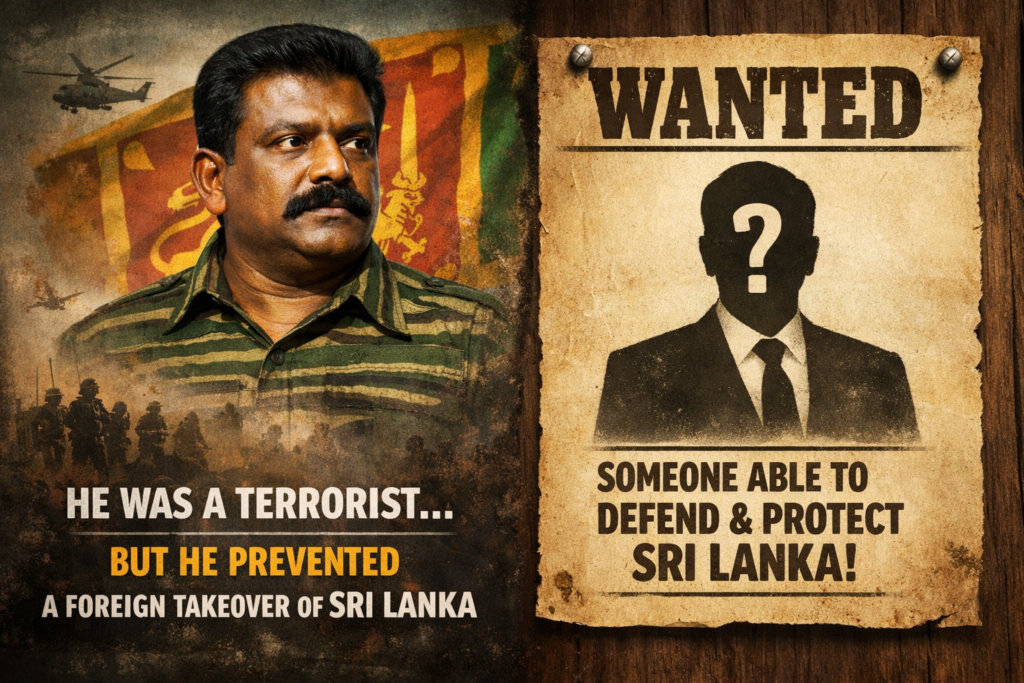
Two dates that changed Sri Lanka’s destiny. Two moments in Velupillai Prabakaran’s political evolution deserve serious reflection. The first date was 22 May 1972, the day Sri Lanka adopted its Republican Constitution—it was the very same day Prabakaran formed the Tamil New Tigers (TNT). This could not have been a coincidence. It symbolised the birth of a violent separatist project that directly challenged the authority and territorial integrity of the Sri Lankan state. The second date was 5 May 1976, when TNT was renamed the Liberation Tigers of Tamil Eelam (LTTE), immediately before the 14 May 1976 Vaddukoddai Resolution, which openly called upon Tamil youth to take up arms to establish a separate state. From that point onward, Sri Lanka entered one of the most violent insurgencies in modern history.
Let us view the scenario from a different angle of thought.
The story of the LTTE is usually told purely as a narrative of terrorism and part of a “deliberately manufactured ethnic conflict” narrative. At no point of time were Tamils or Sinhalese fighting each other while LTTE has killed more Tamils – the same ethnic group he claims to have taken arms to defend.
What remains largely unexplored is the geopolitical consequence of Prabakaran’s existence: the paradoxical role he played as a hard-power firewall against foreign penetration of Sri Lanka is ironically important given the current trend of transactional governance, where strategic national interests are increasingly exchanged for short-term political survival.
This article does not seek to morally justify Prabakaran. His crimes are undeniable.
Instead, it seeks to analyse a strategic paradox: how a brutal insurgent leader unintentionally became a barrier to foreign domination and intervention, and how his elimination since 2009 opened Sri Lanka to unprecedented soft-power intervention, external control, and sovereignty erosion.
The Brutal Reality – No Romanticising Terror
Prabakaran and the LTTE were responsible for extraordinary brutality.
They killed:
- Sinhalese civilians
- Muslim civilians
- Tamil civilians
- Political rivals
- Tamil dissenters within the LTTE
- Leaders of armed Tamil militant groups.
- Moderates who rejected separatism
- Even foreigners
This violence was systematic, calculated, and institutional — not incidental.
The LTTE enforced obedience through fear, assassinations, forced recruitment, suicide bombings, ethnic cleansing, and internal purges. No historical analysis can gloss over this. What better example than the fact that 99% of the diaspora groups were created only after the death of Prabakaran for fear of setting up while he was alive.
The JVP insurrections of 1971 and 1987–89 also shed blood, wiping out thousands of talented Sinhalese youth and intellectuals. Yet, the JVP’s violence remained largely internal and political, while the LTTE’s terror operated across ethnic lines, reshaping Sri Lanka’s demographic, political, and security landscape.
Acknowledging this brutality is essential — because credibility begins with truth.
But acknowledging brutality does not prevent us from examining strategic outcomes.
Let there be no confusion: this article does not, in any way, justify Prabakaran’s terror. Thousands of lives were lost. Children, civilians, dissenters — all suffered. We are not arguing for terrorism, nor romanticising a violent insurgent.
This article is a strategic observation, not a moral endorsement.
The argument is: sometimes, even the harshest actors unintentionally serve a function that democracy and diplomacy alone failed/fail to achieve.
The distinction is critical, and must be understood when reading this by all without compromise.
Prabakaran’s Paradox – The Hard Firewall Against Foreign Influence
Despite his terror, Prabakaran exercised something no democratic government has been able to do democratically: Prabakaran exercised absolute territorial control through hard power.
This control blocked the entry of foreign influence into large parts of Sri Lanka for nearly three decades.
- Western NGOs
- Faith-based conversion organisations
- Foreign intelligence-linked civil agencies
- Western-funded media and activist networks
All struggled to operate in LTTE-held territory.
Their access was:
- Restricted
- Monitored
- Regulated
- Or violently rejected
- Some NGO operatives who violated LTTE boundaries were kidnapped or killed.
This created a geopolitical firewall of fear.
This did not stop them from planning and plotting but while alive they were heavily restricted.
While the Sri Lankan state was diplomatically constrained, Prabakaran imposed total deterrence.
As a result:
- Western soft-power penetration remained limited
- Ideological re-engineering was blocked
- Social engineering was restricted
- External political manipulation was minimal
This raises an uncomfortable but necessary question:
Was the greater threat to Sri Lanka’s sovereignty the armed terrorist, or the soft-power apparatus that entered after his elimination?
A bitter truth we all inevitably have to admit.
It must be said clearly:
Prabakaran’s blocking of foreign intervention was not an act of patriotism. It was calculated self-interest — securing his own separatist project, his control over territory, and his survival.
Yet, paradoxically, Sri Lanka’s sovereignty benefited from this selfishness for nearly three decades.
Imagine a Sri Lanka without that terror: what parts of the nation’s land, resources, and strategic advantage would today be claimed, influenced, or administered by foreign interests?
Consider the LTTE’s hard fight to eject Indian Peacekeeping forces — a reality the JVP never enforced beyond rhetoric.
Selfishness met national protection, and history paid the price in paradox.
In the past 16 years post 2009 – list what the nation has lost in terms of territory / resources / assets / sovereignty.
Ask yourself, readers — how would you feel if decades of foreign interference had quietly stripped your nation of land, culture, and resources, all under the guise of aid, humanitarian work, or reform?
That is the lesson buried within the history of terror and the vacuum it left.
Tactical Compromises – Understanding the CFA Without Naivety
The 2002 Norwegian-brokered Ceasefire Agreement (CFA) is often framed as betrayal on the part of the Government of Sri Lanka, for it gave terrorists territory, subjected the armed forces to barracks while allowing LTTE to freely roam the island with arms. An unprecedented number of intel operatives were gunned down during this period.
For Prabakaran, agreeing to sign came at a significant time.
Global ‘war against terror” in 2001 saw a concerted attack on terrorist organizations requiring LTTE to change modus operandi – signing CFA was a tactical survival maneuver
That signing came under extreme military, financial, and diplomatic pressure
But Prabakaran used it as an opportunity to buy time, consolidate territory, and regroup.
It was not ideological surrender.
It was strategic breathing space for Prabakaran & LTTE.
Yet, the CFA exposed LTTE-controlled areas to foreign NGO penetration, which later became a permanent feature.
Interestingly, many of those who publicly mourned Prabakaran’s death were less concerned about Tamil civilians or LTTE losses — and more about what they personally lost:
- Fundraising pipelines
- Political access
- Diaspora leverage
- International visibility
The CFA demonstrated the fundamental weakness of soft diplomacy when confronting hardened ideological insurgency — and foreshadowed the even greater vulnerability Sri Lanka would later face against international soft-power warfare.
Post-2009: From Hard Deterrence to Soft Colonisation
The moment Prabakaran and the LTTE were militarily eliminated in 2009, Sri Lanka’s geopolitical environment transformed overnight.
Note the manner the US automatically changed its Asian strategy – pivot to Asia.
Into the vacuum rushed:
- Western NGOs
- UN agencies
- Foreign diplomats
- Faith-based organisations
- Policy influencers
- Ideological advocacy networks
- Intelligence-linked civil platforms
- And of course countless LTTE Diaspora groups thumping their breasts calling for “accountability”.
Suddenly:
- Secret MOUs were signed
- Policy frameworks were externally drafted
- Curriculum reforms were externally influenced
- UN Human Rights Council and its Rapporteurs began a virtual witch hunt against Sri Lanka
- Social engineering programs multiplied
- Drug networks expanded
- Gender ideology penetrated education
- Cultural erosion accelerated
What Prabakaran blocked any of the above entering Sri Lanka using fear – fast forward to post 2009, foreign powers now achieved through bureaucracy, funding, diplomacy, litigation, and narrative warfare.
None of these penetrations occurred through invasion — all occurred through consent manufacturing, institutional embedding, and elite capture.
The Diaspora – From Separatism to Commercialised Victimhood
The LTTE diaspora that emerged post-2009 operates:
- Safely abroad
- Without personal risk
- With full Western protection
- Very happy to use “Tamils” back home.
They have:
- Monetised the Eelam narrative – an audit of their wealth post 2009 will prove.
- Turned tragedy into fundraising empires
- Created forced souvenir economies
- Built political lobbying networks
- Secured VIP access using victim narratives
- Weaponised UNHRC mechanisms against Sri Lanka
Unlike Prabakaran, who faced existential battlefield risk, the diaspora functions as a soft-power proxy — advancing foreign geopolitical objectives under humanitarian branding.
This fundamental asymmetry transforms the Eelam cause from insurgency into industry.
This raises another disturbing possibility:
Has the LTTE diaspora become the West’s most useful instrument against Sri Lanka’s sovereignty?
Ironically, the JVP that gained people’s empathy for its anti-India stand is now happy to embrace India and hand over to India its Sri Lanka-wish-list without a whim of defiance.
The Ultimate Irony – What Did Those Deaths Achieve?
Hundreds of thousands died.
But today:
- Youth are trapped in drug epidemics
- Education is ideologically manipulated
- Sexual confusion is mainstreamed and normalized
- Family structures are destabilised
- Foreign NGOs shape social policy
- Foreign governments are re-writing our history, claiming land, bringing foreign labor, given investment concessions
- Diplomatic coercion overrides national will
This represents not liberation — but civilisational collapse
This raises a haunting question:
What is the value of lives saved if subsequent generations are now lost to narcotics, identity engineering, and cultural erosion with land belonging to foreigners?”
Sovereignty Lessons – A Global Case Study
Sri Lanka now represents a textbook example of soft-power conquest.
The removal of violent actors without erecting soft-power defences leads to:
- NGO dominance
- Legal warfare
- Narrative colonisation
- Cultural disintegration
- Political dependency
- Sovereignty decline
This is not unique to Sri Lanka.
It is visible in:
- Afghanistan
- Iraq
- Libya
- Syria
- Ukraine
- African states subjected to NGO-state capture
This pattern confirms a new model of domination — conquest without armies, occupation without borders, and control without accountability.
Sri Lanka’s experience offers a powerful lesson:
Hard enemies can be defeated. Soft conquerors are far harder to detect & defeat.
Understanding the Paradox without Romanticism
Prabakaran was a terrorist.
He killed mercilessly.
He crushed dissent.
But he also constructed a hard barrier against foreign infiltration, something democratically elected Sri Lankan governments have completely failed to replicate since his elimination.
His legacy is not one of heroism.
It is one of strategic paradox.
Prabakaran’s legacy is not a moral endorsement, but a geopolitical warning: sometimes the harshest actors preserve sovereignty where diplomacy and peace fail.
The tragedy is that Sri Lanka defeated the armed enemy — but failed to defend itself against the far more sophisticated, invisible, and devastating forces that followed.
In short, Sri Lanka’s political leadership and governance systems failed to defend the nation against soft conquest — a failure that paradoxically the armed insurgent had once prevented.
You may next ask – “So what are you proposing — another terrorist?”
Absolutely not.
Sri Lanka does not need another armed insurgent.
Sri Lanka needs a sovereign state capable of defending itself against modern soft-power warfare.
Prabakaran’s deterrence functioned through fear and force.
A democracy cannot replicate the method nor can we call applications for new terrorists – instead we must replicate the function: protecting national sovereignty.
Today, domination no longer requires armies.
It operates through NGOs, legal pressure, education, loans, debts, reforms, diplomacy, media, ideology, and financial leverage.
Sri Lanka is already a frontline target of this silent war.
What must replace violent deterrence is institutional deterrence:
- Tight NGO governance and foreign funding control
- Educational sovereignty and curriculum protection
- Strategic communication and narrative defense
- Legal and diplomatic warfare readiness
- Cultural and civilizational security policy
This is not militarisation. It is national self-defence in the 21st century.
The war ended in 2009. The conquest did not.
Sri Lanka’s survival now depends on recognising this battlefield — and building defences that do not rely on terror, but on intelligence, institutions, law, culture, and strategic clarity.
For nearly three decades, Sri Lanka existed inside a paradox: brutal terror internally — yet impenetrable sovereignty externally.
After 2009, terror ended, but so did resistance.
Strategic ports were leased, land governance rewritten, military access negotiated, economic policy surrendered, legal structures penetrated, and cultural identity reshaped and now history is even being re-written to justify tourism promotion.
What bullets failed to seize, contracts quietly acquired.
What bombs could not conquer, soft power absorbed.
Terror vanished — but subservience began.
Shenali D Waduge