Refugees, Asylum Seekers and Immigration Oversight in Sri Lanka since 2009
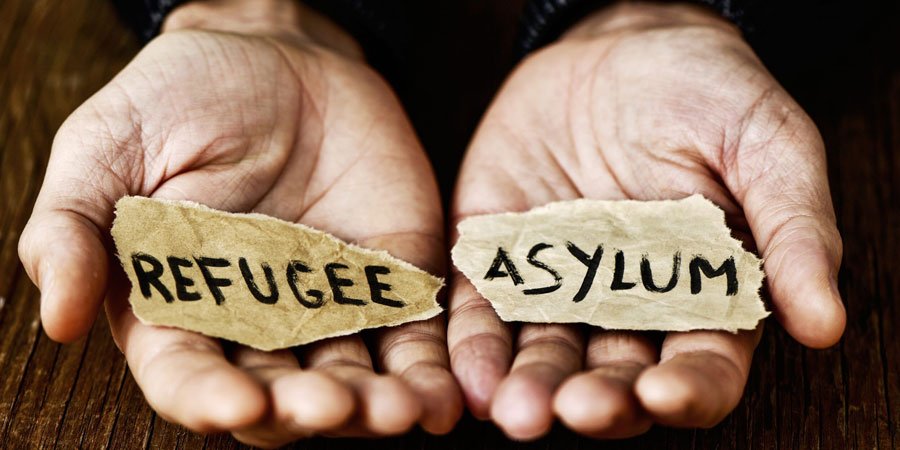
Since the end of Sri Lanka’s 30 year conflict in 2009, the country has experienced sporadic arrivals of refugees and asylum seekers from several regions including South Asia, the Middle East, and Africa. Unlike many countries that receive asylum claims, Sri Lanka has not ratified the 1951 Refugee Convention or its 1967 Protocol and does not possess a dedicated domestic refugee law. As a result, refugees and asylum seekers exist in a legal grey area, often managed through immigration regulations and limited arrangements facilitated by the United Nations High Commissioner for Refugees (UNHCR) under a 2005 Memorandum of Understanding with the Government of Sri Lanka.
Over the years, small numbers of individuals from countries such as Myanmar, Afghanistan, Pakistan, Iraq, Somalia, Bangladesh, and Iran have entered Sri Lanka through various channels. While the overall numbers appear small, the absence of a formal legal framework, inconsistent data, internal lobbying and limited public disclosure of figures has generated growing public concern regarding monitoring, governance oversight, financial costs, and potential long-term demographic or security implications.
The closure of the UNHCR office in Colombo in late 2024 has further complicated the landscape, as formal registration and resettlement processes have largely ceased. At the same time, irregular migration patterns, visa overstays, and occasional criminal cases linked to undocumented foreigners have raised questions about the adequacy of immigration controls and the broader implications for national security and social stability.
We examine the legal status of refugees and asylum seekers in Sri Lanka, the role previously played by UNHCR, known arrival patterns since 2009, financial implications, monitoring gaps, and emerging governance challenges.
It also highlights unresolved questions relating to registration, settlement patterns, identity verification, and policy oversight that may shape Sri Lanka’s future approach to irregular migration and humanitarian arrivals.
- Definitions
Refugee
A refugee is a person who has fled their country because they fear persecution due to race, religion, nationality, social group, or political opinion.
Asylum Seeker
An asylum seeker is someone who has applied for refugee status but is still waiting for a decision.
Not all asylum seekers are eventually recognized as refugees.
Legal Position in Sri Lanka
Sri Lanka has not signed the 1951 Refugee Convention or the 1967 Protocol and has no domestic refugee law.
Asylum seekers have no formal legal status; irregular arrivals are treated as immigrants. Entry requires valid visas, and the country relies on immigration enforcement to track overstays.
- In 2025, 155 Indian nationals were caught overstaying.
- Rohingya boat arrivals intercepted in 2024–2025.
- In 2023, 121 people caught at airports for illegal entry/overstays.
Sri Lanka does not publish total figures, creating a major loophole and public concern. There is no clear mechanism to include all irregular arrivals in an official system, leaving the public to speculate based on unusual individuals, languages, or behaviors observed living around them.
The UNHCR office in Colombo closed in late 2024, ending formal registration and resettlement processing.
UNHCR’s credibility is also questioned, as past operations were misused during the LTTE period, with LTTE holding UNHCR cards arrested abroad posing as “refugees”.
Implication:
Without formal law or oversight, irregular arrivals pose long-term governance, security, and social challenges, leaving Sri Lanka vulnerable to unmonitored settlements.
Refugee Arrivals since 2009 & UNHCR Operations
Sri Lanka is not legally obliged to accept, register, or fund refugees, which questions UNHCR operations in Sri Lanka.
| Country / Group | Approx. Numbers | Years of Arrival | Notes |
| Myanmar (Rohingya) | 100–150 | 2024–2025 | Muslim in batches |
| Afghanistan | 50–80 | 2010s–early 2020s | Arrived over several years Muslim |
| Pakistan | 30–50 | 2010s–2020s | Muslim |
| Iraq | 20–30 | 2010s–early 2020s | Muslim |
| Somalia | 15–20 | 2010s–2020s | Muslim |
| Bangladesh | 10–15 | 2010s–2020s | Muslim |
| Iran | 5–10 | 2010s–2020s | Muslim |
| Other countries (Eritrea, Sudan, Syria, Palestine, Tunisia, Yemen, Nigeria) |
15–25 | 2010s–early 2020s | Muslim |
Estimated total refugees/asylum seekers (non‑Sri Lankan): ~250–380
UNHCR figures are inconsistent, with inability to provide exact figures.
UNHCR ~250–380 refugees/asylum seekers in Sri Lanka
UNHCR Spending in Sri Lanka (2024)
- Total resources allocated:US $1,082,689, with 94% funded
“The percentage funded (94 %) and total funding amount ($1,082,689) are indicative… Contributions to Sri Lanka are shown by the earmarking modality as defined in the Grand Bargain.” — UNHCR Funding Update, 30 Nov 2024
- Cost per refugee (annual, 250–380 persons):
- 250 persons → $4,330/person/year → ~$11.86/day
- 380 persons → $2,850/person/year → ~$7.81/day
Implication: If Sri Lanka had to provide similar support, over $1million/year would be required. Costs would rise with increasing numbers.
Confusion in the numbers
The write-ups and accounts given by various sources since 2009 clearly point to the discrepancies in refugee/asylum seeker figures.
UNHCR cannot provide the exact registered number of refugees/asylum seekers while Sri Lanka cannot provide likely illegal refugees/asylum seekers/visa-overstays as well.
- The true number of unregistered or illegal arrivals is unknown, https://www.thedailystar.net/news/asia/south-asia/news/sri-lanka-navy-rescues-boat-102-rohingya-refugees-3781061?utm_source=chatgpt.com (102 Rohingyas)
- https://lki.lk/blog/the-rohingya-crisis-and-implications-for-sri-lanka/ (First, in 2008, 55 Rohingya; then in 2013, 170 Rohingya; and most recently, in April 2017, 30 Rohingya) As of January 2018, Sri Lanka had 822 refugees and 628 asylum-seekers from other countries (Lakshman Kadiragamar Institute)
- 55 Rohingya refugees arrive March 2008 / left Sri Lanka July 2012
- 170 Rohingya refugees arrive February 2013 (2 boats 138 & 32) / left Sri Lanka in November 2015
- 30 Rohingyas arrive April 2017 / left Sri Lanka in Sept 2017
- Rohingyas: Why are They in Sri Lanka and What Should We Do? (Groundviews)
“Since 2008, Sri Lanka has hosted about 300 Rohingya refugees until the latest arrivals in December last year (2025)”
“Most have received permanent resettlement in other countries and left Sri Lanka so only about 100 remain”
“Rohingya refugees rescued off the seas of Jaffna by the Navy and brought ashore when their boat was in distress in December 2022” (still remain)
“latest group of Rohingyas to arrive in Sri Lanka was seen off the shores of Mullaitivu on December 19, 2024 and were taken to Trincomalee by sea” (presently at Air Force camp in Mullaitivu)
https://groundviews.org/2025/01/20/rohingyas-why-are-they-in-sri-lanka-and-what-should-we-do/
Rohingya Refugees Detained in Sri Lanka (Global Detention Report – 2 FEBRUARY 2023)
https://www.globaldetentionproject.org/02-february-2023-sri-lanka
104 Rohingyas rescued by Sri Lanka Navy (46 children)
Moved to Mirihana & Welisara immigration detention centres
https://www.undp.org/srilanka/blog/migrants-refugees-and-asylum-seekers-sri-lankan-context – Refugees and Asylum Seekers in Sri Lanka by Sarika Warusavitarana (April 2019)
At present there 844 refugees and 826 asylum seekers awaiting the determination of their claims in Sri Lanka. This living allowance, however, is only available to refugees. Asylum seekers have to rely on the support of non-governmental organizations such as ZOA and Muslim Aid as well as support from family back home to meet their basic needs (how can foreign asylum seekers have bank accounts in Sri Lanka to send remittances)
While primary education is made available to refugee children, children under the age of 5 and over 12 receive no official schooling (who is paying for this)
https://economynext.com/sri-lanka-obligated-to-respect-rights-of-afghan-asylum-seekers-main-opposition-sjb-85350/ (Sri Lanka obligated to respect rights of Afghan asylum seekers says SJB-August 2021)
“The SJB wishes to remind the Sri Lankan government of its international obligations during a crisis of this nature. It specifically calls upon the government to respect the obligation of non-refoulement, which forbids a country from returning asylum seekers to a country in which they would be in likely danger of persecution,”
MOU between GoSL and UNHCR
- Asylum-seekers in Sri Lanka are under the care of the UNHCR, pursuant to a 2005 Memorandum of Understanding with the Government of Sri Lanka—regarding the status of‘refugees’ and provide limited financial support.
- Asylum-seekers and refugees registered with the UNHCR receive state healthcare in Sri Lanka but they cannot be employed and their children are not entitled to free education (then who is paying).
Key Issues & Questions
- Arrivals are from Muslim-majority countries.
- What legal basis is UNHCR registering and processing these individuals in Sri Lanka, which has not ratified the Convention?
- Why were registered refugees not resettled in countries that have signed the Convention (e.g., Canada, Europe, Australia) before UNHCR closed its Colombo office in late 2024?
- How many refugees have given birth, and what is the status of their children? Could unmonitored settlements gradually affect local demographics?
- How is the Sri Lankan government funding refugees when it is not legally bound to do so?
Registration & UNHCR Cards
- Not all refugees have UNHCR cards – why?
- Early arrivals (Afghan, Pakistani, Iraqi, Somali) may have cards, granting temporary recognition.
- Recent boat arrivals, especially Rohingya (2024–2025), mostly do not have UNHCR cards, meaning:
- They are unregistered
- Treated as irregular migrants
- Subject to immigration detention or deportation
- Have limited accessto healthcare, education, or legal protections
Implications
- Unregistered arrivals, births, and extended stays create financial, demographic, and governance challenges.
- Costs are mounting in a country already under economic strain, and previous governments failed to insist that UNHCR resettle refugees in Convention states before closing.
- Lack of monitoring could also increase security risks, as seen in arrests, illegal stays, and associated crimes in other countries.
Political Influence
- SomeMuslim MPs from multiple parties have publicly advocated for humanitarian treatment of these refugees.
- This creates across-party lobbying force, influencing government decisions on:
- Settlement
- Health
- Food & Nutrition
- Housing
- Welfare support
- and even schooling
- The increase in numbers and the hidden costs are likely to triggerpolitical debates among the public over resource allocation, security, and demographic impact that is being ignored due to lobbying and influence.
Meanwhile, after end of 2009, large areas around Musali, Marichchikaddi and nearby forest regions bordering Wilpattu were cleared and settlements established under the Ministry of Resettlement, then headed by Rishad Bathiudeen. Reports and court petitions indicated that about 1,500 families were resettled in these areas with houses, roads and other infrastructure constructed.
The official position was that these were Northern Muslims expelled by the LTTE in 1990 returning to their original villages. However, the process raised several concerns: why settlements were created in forested areas rather than established villages, how many families were actually resettled, and whether full citizenship verification through National Identity Cards and official records was carried out legally remains unanaswered.
Allegations also circulated that foreign Islamic charitable donors, including those linked to the Middle East, may have contributed funding for housing or religious infrastructure, though detailed public records identifying specific donors have not been transparently released. The absence of clear beneficiary lists, funding disclosures, and verification records has therefore continued to raise questions about oversight, legality of settlements, and possible demographic implications in the region.
Illegals involved in scams / drugs / violence
Sri Lankan law enforcement has also arrested individuals for immigration violations and for offences such as drug possession and fraud; in some cases, the individuals were found to be staying in the country without valid visas or status.
This mirrors the rise in violence scams and other nefarious activities related to illegal immigrants in UK and Europe and warrants the Govt of Sri Lanka to take sterner action.
In 2025, Sri Lankan authorities made a high‑profile arrest of an Assistant Controller of the Department of Immigration and Emigration who was charged with issuing three forged Sri Lankan passports to an underworld figure, reportedly to help the fugitive travel abroad under false documentation; the official was taken into custody by the Criminal Investigation Department (CID) as part of the probe into passport fraud and organized crime linkages
Strategic Risks
- Security:Unregistered populations are difficult to track, creating potential risks if extremist networks exploit irregular movements.
- Social:Settlements in sensitive areas (e.g., Mannar, Wilpattu) may generate community tensions.
- Governance:Lack of law and oversight can make Sri Lanka vulnerable
- International Pressure:UN, India, US, and other stakeholders may engage diplomatically or monitor activities closely.
Key Threats
- Legal and Monitoring Gap:UNHCR registration poor in the past while Sri Lanka has no proper mechanism.
- Potential Long-Term Settlement:Families staying without formal oversight could grow informal communities.
- Political Lobbying:Cross-party MP support for a particular ethnic refugee/asylum seekers can push for settlement, bypassing normal immigration control.
- Security Exposure:Difficult to screen or monitor arrivals, raising strategic concerns.
- Social Friction:Local populations may react negatively to sudden demographic changes.
Current Iranian Arrivals (2026)
- Close to 300 Iranians from 3 ships were provided temporary humanitarian relief.
These Iranian naval personnel are neither refugees nor asylum seekers. Sri Lanka has no legal obligation to support them long-term, yet the country must absorb costs until they are repatriated. It is a different issue in the event they claim asylum. It will pose a new diplomatic issue for Sri Lanka while also showcasing a larger international outcome where in 300 plus Iranian crew chose to desert the Iranian state which may kickstart a wave of deflections within Irans’ military as a domino effect.
Be that as it may, we have seen how extremists have embedded themselves as refugees and asylum seekers to cross borders where they have unleashed fresh tensions and conflict amongst communities posing law & enforcement nightmare. The UK, Europe and even Canada and Australia are witnessing a wave of immigrant crimes which they are unable to handle. Sri Lanka needs to quickly strengthen its law enforcement to deal with such unseen eventualities as well as spruce up its intel network without demoralizing it by unwarranted arrests.
Shenali D Waduge