Colonial Divide & Rule in Sri Lanka — How the British Weaponized Race, Education & Political Engineering
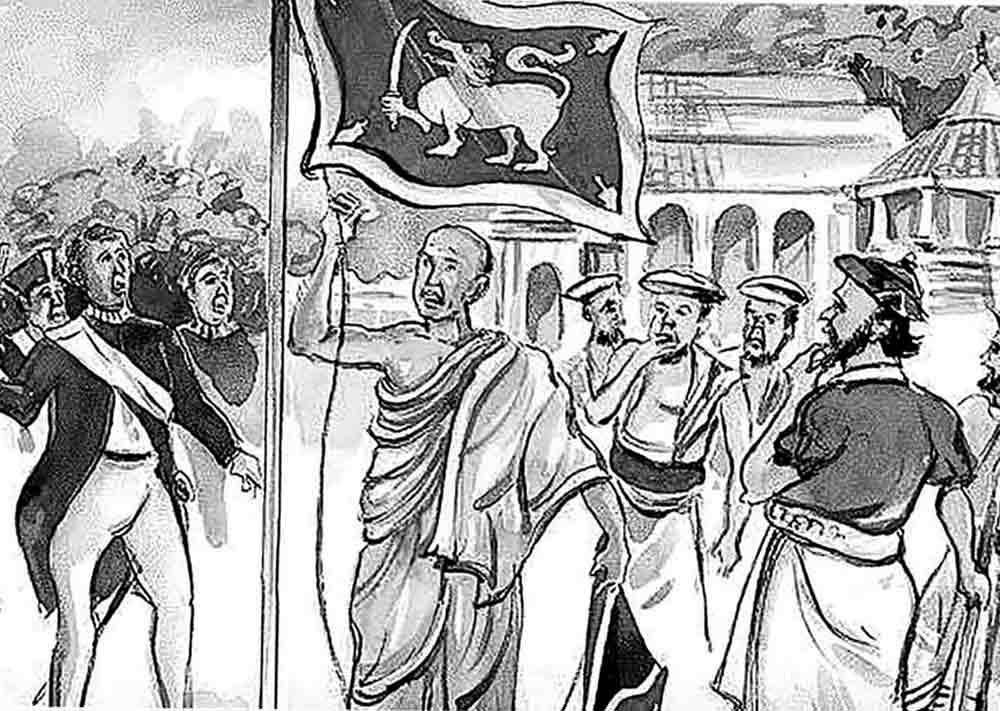
British Entry into Sri Lanka — Strategic Context (1795–1796)
The British did not enter Sri Lanka as liberators or protectors of indigenous sovereignty.
They entered as a hostile imperial power exploiting European war dynamics, seeking to:
- Eliminate Dutch colonial presence
• Capture the Indian Ocean trade corridor
• Secure naval dominance between India and the East
• Integrate Sri Lanka into the British Indian imperial system
Their arrival was imperial expansion, not humanitarian intervention.
Geopolitical Catalyst
Britain entered Sri Lanka during the Napoleonic Wars, when:
• The Netherlands fell under French control (1795)
• Dutch colonies became legitimate British military targets
Thus, British occupation of Dutch Ceylon was a strategic imperial maneuver, not a bilateral transition.
British Military Entry — (1795–1796)
Mode of Entry: Naval-military occupation with Indian colonial regiments
Troop Composition:
British forces were predominantly Indian colonial soldiers, not British nationals.
- Madras Presidency sepoy regiments
• South Indian auxiliary battalions
• British officer command
• Indian logistical and infantry backbone
Landing Points:
- Trincomalee
• Batticaloa
• Jaffna
• Mannar
• Colombo
This constituted a foreign Indian military occupation of Sri Lankan territory under British command.
How many of these Indian military personnel actually returned to India?
Indian Auxiliary Forces — Demographic & Military Engineering
Composition:
British forces included:
• Tamil sepoys
• Telugu soldiers
• Malay regiments
• South Indian logistical units
Estimated Numbers:
Across 1796–1815, over tens of thousands Indian troops rotated through Ceylon under British service.
Settlement Pattern:
- Many remained post-service
• Some were granted land
• Others entered colonial administration
• Military encampments became permanent settlements
This created new demographic concentrations, particularly in:
• Jaffna
• Trincomalee
• Colombo
• Batticaloa
This accelerated South Indian demographic infusion, especially in the North & East.
British Capture of Dutch Ceylon (1796)
Combatants:
British Indian Army + Royal Navy
vs
Dutch colonial forces
Outcome:
- Minimal resistance
• Dutch capitulation
• Transfer of coastal Ceylon to British control
Significance:
- British replaced Dutch as colonial rulers
• Ceylon absorbed into British Indian imperial system
• Local sovereignty remained unrecognized
British Military Campaigns against Indigenous Sinhalese Resistance (1796–1818)
British conquest of Sri Lanka did not end in 1796.
The interior Kandyan Kingdom and rural Sinhalese population mounted sustained armed resistance for over two decades.
1) First Kandyan War (1803)
Combatants:
British Indian Army
vs
Kandyan Kingdom forces
Outcome:
→ Decisive Kandyan Victory
Details:
• Entire British garrison in Kandy annihilated
• British commanders Major Davie & Captain Rumley killed
• British forces ambushed during retreat
• Over 1,500 British–Indian troops eliminated
Significance:
• Proved British vulnerability inland
• Demonstrated Sinhalese guerrilla superiority
• Delayed British conquest by over a decade
This was one of the worst British defeats in South Asia.
2) Kandyan Convention War & Betrayal (1815)
Unable to defeat Kandyan resistance militarily, the British shifted to:
- Elite bribery
• Court intrigue
• Internal sabotage
• Religious manipulation
• Minority patronage
• Psychological warfare
This culminated in elite betrayal, not military conquest.
3) Uva–Wellassa Rebellion (1817–1818) — British Colonial Genocide
Mass national uprising by Kandyan peasantry.
British Response:
• Scorched earth warfare
• Village annihilation
• Mass executions
• Agricultural extermination
• Starvation strategy
Governor Robert Brownrigg’s Proclamation (1818):
“All lands in Uva and Wellassa are hereby confiscated to the Crown. Any person giving shelter or food to rebels shall be executed.”
British Actions:
• Entire villages burnt
• Paddy fields destroyed
• Food sources eliminated
• Civilians executed
• Children orphaned
• Monks killed
• Temples destroyed
Outcome:
• Tens of thousands killed
• Kandyan civilization militarily shattered
• Traditional leadership eliminated
• Permanent British dominance achieved
This constitutes one of the earliest genocidal counter-insurgency campaigns in South Asia.
Kandyan Kingdom — British Strategy of Deception & Subversion (1796–1815)
Initial British Stand:
Publicly recognized Kandyan sovereignty.
Actual British Objective:
→ Absorb Kandyan Kingdom
→ Eliminate last indigenous monarchy
→ Achieve total territorial control
Strategy:
- Diplomatic manipulation
• Court intrigue
• Elite bribery
• Internal destabilization
• Religious manipulation
• Minority patronage
The Role of John D’Oyly (Colonial Administrator & Translator)
Critical for his linguistic and cultural infiltration. He mastered the Sinhala language, Kandyan court etiquette and indigenous political customs, enabling him to:
- Gain the personal trust of Kandyan chiefs
• Penetrate royal court communications
• Manipulate diplomatic negotiations
• Misrepresent British intentions
• Engineer internal elite defections
As official translator, advisor, and intermediary, D’Oyly functioned not merely as a linguist, but as a strategic psychological operator, shaping perceptions inside the Kandyan court while covertly advancing British objectives.
His linguistic fluency allowed the British to:
→ Bypass cultural barriers
→ Exploit elite rivalries
→ Feed misinformation
→ Orchestrate court intrigue
→ Manufacture elite consent
This strategic linguistic deception directly enabled the betrayal of Kandyan sovereignty, culminating in the Kandyan Convention of 1815.
If not for D’Oyly’s linguistic infiltration & political manipulation, British annexation of the Kandyan Kingdom would have faced greater resistance – even failure.
The Kandyan Convention (1815) — Treaty of Betrayal
What Was Promised:
- Protection of Buddhism – which remained official on paper & has continued post-independence
• Protection of Kandyan customs
• Respect for Sinhala monarchy traditions
What Was Executed:
- Immediate abolition of monarchy
• Transfer of sovereignty to British Crown
• Rapid erosion of Kandyan authority – Kandyan lands, temple lands,
• Administrative centralization – subtle dismantling of the Sinhala power base & manipulating minorities by giving them greater power & opportunities.
Strategic Reality:
This was a sovereignty transfer treaty signed under coercion, deception, and elite collaboration.
Historical Verdict:
The Kandyan Convention represents Sri Lanka’s greatest political betrayal, not voluntary unification.
Uva–Wellassa Rebellion (1817–1818) — British Counter-Insurgency Genocide
Nature:
Indigenous national rebellion against British rule.
British Response:
- Scorched earth warfare
• Mass executions
• Village destruction
• Crop annihilation
• Population displacement
Outcome:
- Tens of thousands killed
• Kandyan peasantry decimated
• Traditional leadership destroyed
Significance:
This permanently broke Sinhala military resistance and consolidated British control.
British Racial Engineering — Census, Identity & Divide-and-Rule
Introduction of Race-Based Census (1824 onwards)
British administration introduced racial classification, dividing society into:
- Sinhalese
• Tamils – initially kept Malabar name
• Moors
• Burghers
• Malays
• Europeans
This created racial consciousness where none existed institutionally before.
Invention of “Ceylon Tamil” — 1911 Census Engineering
The British created the category “Ceylon Tamil” in the 1911 census, separating:
- Locally born Malabars
from
• Indian migrant labor
Strategic Purpose:
- Manufacture permanent minority identity
• Facilitate communal political representation
• Enable divide-and-rule governance
• Create demographic leverage against Sinhala majority
This identity did not exist prior to 1911.
British Plantation Economy — Massive Indian Labor Importation
Commodities:
- Coffee
• Tea
• Rubber
Labor Policy:
British imported over 1 million Indian Tamil laborers into Sri Lanka between 1820–1930.
Impact:
- Permanent demographic shift
• Creation of politically exploitable labor class
• Strategic population engineering
This was the largest organized demographic manipulation in Sri Lankan history.
British Settler Colonialism — Indian Military & Labor Demographic Engineering
The British did not merely rule Sri Lanka — they repopulated it strategically.
- A) Military Settler Colonization
Between 1796–1815:
• Over tens of thousands Indian sepoy soldiers rotated through Sri Lanka
• Large numbers remained
• Many received:
– Land
– Colonial employment
– Permanent settlement rights
Locations:
• Jaffna
• Trincomalee
• Batticaloa
• Colombo
This created permanent Indian-origin demographic enclaves.
- B) Plantation Labor Importation — Largest Demographic Engineering in Sri Lankan History
Between 1820–1930, Britain imported over 1 million Indian Tamil laborers.
Purpose:
• Coffee
• Tea
• Rubber plantations
Effects:
• Artificial population explosion
• Creation of permanent stateless labor class
• Strategic ethnic balancing
• Long-term political leverage
This was organized demographic engineering, not labor necessity.
First Colonial Schools in Sri Lanka
The first colonial schools in Sri Lanka were Portuguese missionary institutions established from 1518 onwards, designed exclusively for religious conversion and colonial administration, not for public education — systematically dismantling Sri Lanka’s pre-existing Buddhist education civilization.
1518 — Seminary of St. Paul, Colombo (Franciscans & Jesuits)
Colombo Fort
Target group: to train priests, translators & loyal colonial agents.
• Catholic clergy trainees
• Converted coastal elites
• Orphans taken into church custody
• Colonial interpreters & clerks
1544 — Mission Schools, Mannar – Franciscan missionaries
Mannar Island
Target group: to support mass Catholic conversions
• Converted pearl-diving fishing communities
• South Indian Christian settlers
• Local converts
1619 — Jesuit College, Jaffna – Portuguese Jesuits
Jaffna Fort
Target group: to consolidate religious authority in the North
• Converted Malabars
• Local elites
• Church trainees
1658 — Dutch Reformed Church Schools (Post-Portuguese Period)
Dutch East India Company (VOC) + Dutch Reformed Church
Colombo, Galle, Jaffna, Mannar, Negombo
Target group: to enforce Calvanist Protestant conversion
• Converted locals
• Clerks
• Translators
• Colonial administrators
Christian registration became mandatory for government employment.
1734 — Jaffna Seminary (Dutch Calvinist Training School)
Dutch Reformed Church
Jaffna
Target group: to institutionalise Protestant indoctrination & create loyal colonial service elites in the North
• Local Christian converts
• Future clerks, catechists, teachers
1816 — Jaffna Central School (American Ceylon Mission)
American Congregational missionaries
Jaffna
Target group: to create English-educated Christian elites for colonial bureaucracy & missionary expansion
• Tamil-speaking elites
• Mission converts
• Emerging colonial intermediary class
1835 — Colombo Academy (Later Royal College)
British Colonial Government
Colombo
Target group: to train English-speaking bureaucratic elites loyal to British governance.
• Elite colonial administrators
• Local aristocracy
• Mission-trained students
Education before Colonials arrived
Before Portuguese arrival (1505), Sri Lanka already possessed:
- Pirivena universities
• Monastic education networks
• Royal scholarship traditions
• Village temple education
• High literacy through Buddhist education
Colonial schooling replaced indigenous education — it did not introduce education.
British Education System — Missionary Capture of Knowledge
Dutch Period:
- No public education system
• Only clerical instruction
British Innovation:
- Missionary education system
• English language monopoly
• Christian schooling dominance
Schools:
- Anglican
• Methodist
• Catholic
• American Ceylon Mission
Targeting Strategy:
Missionaries focused heavily on:
• Jaffna peninsula
• Coastal Tamil settlements
This created an English-educated Tamil elite class.
Missionary Education as a Political Weapon
British missionary education was not neutral learning.
Its objectives:
• Cultural conversion
• Identity reprogramming
• Elite fabrication
• Loyalty engineering
Missionary schools deliberately focused on:
• Jaffna peninsula
• Tamil coastal zones
Intentionally Neglected:
• Kandyan interior
• Sinhala rural regions
Result:
→ Artificial English-educated Tamil elite
→ Bureaucratic domination
→ Structural imbalance
This was intentional demographic elite creation, not coincidence.
Employment Engineering — Minority Over-Representation
Because:
• Missionary schools were concentrated in Tamil regions
• English became administrative language only for the converted
The British systematically favored English-educated Tamils for government employment.
Result:
By early 1900s:
• Tamils disproportionately dominated:
– Clerical service
– Railways
– Postal service
– Teaching
– Judiciary
– Medical services
This structural employment imbalance planted seeds for:
→ Majority resentment
→ Communal competition
→ Political ethnic mobilization
British Favoritism — Documentary Evidence
British Colonial Secretary Sir Hugh Cleghorn (1799):
“The Tamils are more industrious, obedient and suitable for clerical employment than the Sinhalese.”
Governor Emerson Tennent (1859):
“The Tamil possesses habits more suitable for administrative employment than the Sinhalese.”
This racialized favoritism:
• Directed recruitment
• Guided promotions
• Controlled bureaucratic entry
Thus, employment imbalance was colonially engineered, not merit-based.
British Land, Titles & Elite Fabrication
The British:
• Created Mudaliyar class
• Distributed land grants
• Issued colonial honorary titles
• Elevated minority elites
This:
• Destroyed indigenous leadership hierarchy
• Manufactured colonial loyalist elites
• Fragmented Sinhala social authority
British Land Confiscation & Buddhist Civilizational Destruction
Wasteland Ordinance (1840)
This law authorized the British Crown to confiscate all lands without Western-style ownership documentation.
Reality:
Sinhalese land ownership was:
– Customary
– Communal
– Temple-administered
– Oral-tradition based
British Classification:
→ “Unoccupied”
→ “Crown property”
Outcome:
• Massive land seizures
• Buddhist temple lands confiscated
• Kandyan peasantry dispossessed
• Plantation capitalism installed
Over 80% of Kandyan lands were seized under this ordinance.
Buddhist Institutional Destruction
British systematically:
• Confiscated temple lands
• Removed royal patronage
• Abolished sangha tax exemptions
• Destroyed monastic education systems
This:
→ Bankrupted temples
→ Collapsed pirivena education
→ Crippled Buddhist civilization
British Political Engineering — Communal Representation System
British Manufacture of Communal Politics
British introduced:
- Racial seat allocation
• Minority quotas
• Communal electorates/representation
Purpose:
→ Prevent Sinhala political consolidation
→ Maintain imperial control
→ Ensure permanent fragmentation
This institutionalized:
→ Ethnicity as political currency & encouraged competitive communal mobilization
This culminated in converted Tamil elites believing them to be superior to the Sinhalese majority & advanced to making the infamous 50-50 Demand for Power Sharing when at the time this demand was made, the Indian imported plantation Tamils exceeded to so-called 1911 “Ceylon Tamil” numerically.
British Strategic Divide & Rule Architecture
| Tool | Function |
| Census | Racial classification |
| Education | Minority elite creation |
| Employment | Structural imbalance |
| Migration | Demographic engineering |
| Titles | Elite fabrication |
| Law | Institutional fragmentation |
| Politics | Communal mobilization |
Strategic Outcome of British Rule
By 1948, the British had:
- Destroyed indigenous sovereignty
• Imported massive foreign populations
• Institutionalized racial identity
• Politicized ethnicity
• Engineered minority leverage
• Laid foundation for separatist ideology
The above came as a result of policies and actions taken by the 3 colonial occupiers:
Portuguese → Racial labeling + religious destruction
Dutch → Legal segregation + ethnic codification
British → Racial politics + demographic engineering + separatist mobilization
How the colonials transformed our people!
- Education → Elite creation
- Employment → Power consolidation
- Land → Civilizational destruction
- Politics → Long-term ethnic conflict engineering
Sri Lanka’s ethnic divisions, communal politics, and separatist ideologies are:
Not ancient
Not organic
Not civilizational
But deliberate colonial constructions engineered for imperial control.
There were no historically documented Tamil settlements in Sri Lanka’s Northern regions prior to established Sinhalese habitation. Tamil presence emerged primarily through periodic South Indian invasions, temporary military occupations, mercantile movements, and later colonial-sponsored demographic transfers. These migrations did not constitute indigenous settlement but were externally driven population movements, often serving political, military, and colonial administrative agendas.
Throughout Sri Lanka’s recorded history, every major external threat to the island’s territorial integrity, sovereignty, and civilizational continuity was resisted primarily through the sacrifice of the Sinhalese majority, who repeatedly shed blood, surrendered livelihoods, and endured destruction in defense of the land and the Buddhist civilization they had built.
The enduring evidence of this legacy remains embedded in the island’s irrigation systems, ancient cities, monasteries, fortifications, inscriptions and agrarian infrastructure, which collectively predate and outscale the structures erected under foreign or invading rule. These civilizational monuments testify to indigenous statecraft, scientific planning, hydraulic engineering, and spiritual governance, distinguishing native Sinhala-Buddhist construction from military, mercantile, and extractive structures imposed by invaders and colonizers.
Colonial rule institutionalized divide-and-rule policies that deliberately dismantled the civilizational authority of the Sinhala Buddhist majority, while artificially elevating minority groups through preferential access to education, employment, land grants, and administrative power. This engineered imbalance systematically displaced the indigenous custodians of the island’s Buddhist civilization, resulting in 443 years of continuous political, cultural, economic, and religious marginalization of Sinhala Buddhists — a historical injustice that remains largely erased from mainstream discourse.
This engineered imbalance systematically displaced the indigenous custodians of the island’s Buddhist civilization, resulting in 443 years of continuous political, cultural, economic, and religious marginalization of Sinhala Buddhists — a historical injustice that remains largely erased from mainstream discourse.
Every measured attempt to correct these structural distortions has been immediately reframed as ethnic discrimination, weaponizing selective human-rights narratives to manufacture grievance, inflame division, and suppress legitimate national rectification. As a result, the Sinhala Buddhist majority — the original architects, defenders, and preservers of Sri Lanka’s civilization — have been conditioned to feel morally restrained from asserting their rightful place, while coordinated internal and external campaigns persistently obstruct efforts toward historical correction, cultural restoration, and sovereign continuity.
As a result, the Sinhala Buddhist majority — the original architects of Sri Lanka’s civilization — have been conditioned to feel morally restrained from asserting their rightful place, while international and domestic campaigns persistently obstruct efforts toward historical correction, cultural restoration, and civilizational continuity.
Shenali D Waduge
- Colonial Divide & Rule in Sri Lanka — How the Dutch Legalized Racial Separation & Institutionalized Communal Fragmentation https://www.shenaliwaduge.com/colonial-divide-rule-in-sri-lanka-how-the-dutch-legalized-racial-separation-institutionalized-communal-fragmentation/
- Colonial Divide & Rule in Sri Lanka – How Portuguese divided Sinhalese against Malabars (Tamils) & Muslims- https://www.shenaliwaduge.com/colonial-divide-rule-in-sri-lanka-how-portuguese-divided-sinhalese-against-malabars-tamils-muslims/