17 Years After the Defeat of the LTTE: The Overseas LTTE Networks that kept the Conflict Alive & continues to prevent Tamils living in peace
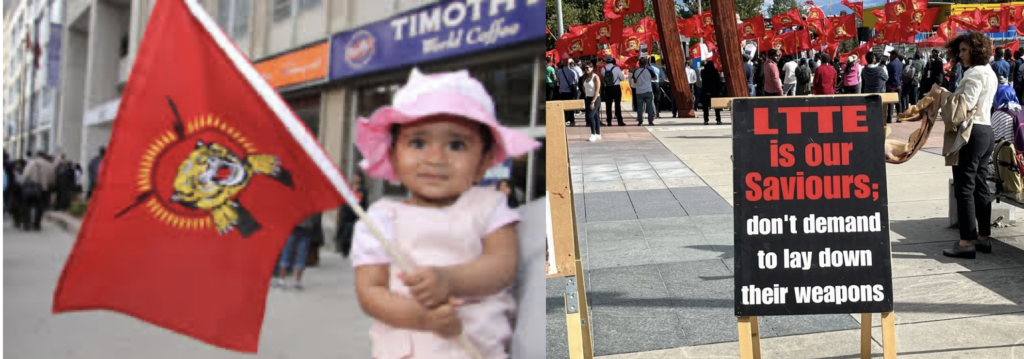
While ordinary Sri Lankans buried their dead and tried to rebuild their lives, others thousands of miles away kept the conflict politically alive and continue to do so for their selfish ends.
Seventeen years after the defeat of the LTTE, one uncomfortable truth continues to receive little attention: the war may have ended militarily in May 2009, but sections of the overseas LTTE network refused to allow the conflict narrative to die.
For nearly three decades, ordinary Tamil families in Sri Lanka carried the real burden of war:
- losing children,
- living under LTTE fear,
- facing forced recruitment,
- enduring displacement,
- surviving extortion,
- and trying simply to stay alive.
Yet many of those who loudly promoted separatist politics from overseas never personally faced these realities themselves.
One of the most glaring hypocrisies of this overseas activism is the complete imbalance of sacrifice.
- How many diaspora leaders sent their own children into LTTE battlefields?
- How many lived in bunkers?
- How many endured forced recruitment raids?
- How many watched their own children disappear into militant camps?
Ordinary Tamil families in Sri Lanka suffered these realities daily.
Meanwhile, many overseas activists raised their children in peace, educated them in elite schools, enjoyed democratic freedoms abroad, and built prosperous lives within the very multicultural systems they simultaneously condemned when discussing Sri Lanka. We have no grouse against this. What we now say is – don’t dump separatist chants from overseas to a homeland the overseas networks will never come to settle in.
Yet seventeen years after the defeat of the LTTE, some continue to glorify militancy from safe foreign capitals while the people who actually lived through the conflict struggle to move forward peacefully.
One of the most damaging consequences of these overseas networks has been the deliberate preservation of emotional hostility across generations.
Children born abroad long after the war ended are being raised on heavily one-sided narratives that present the conflict almost entirely through victimhood and grievance while omitting:
- LTTE child recruitment,
- Tamil political assassinations,
- ethnic cleansing of Muslims,
- suicide bombings,
- killings of dissenting Tamils,
- and the use of civilians as human shields.
This is a factor that has rarely been debated.
The loudest voiced demanding separation of Sri Lanka came from individuals & organizations happily living abroad. They were nowhere near the battlefield, they did not have their children kidnapped. They did not volunteer to sacrifice their children to the battlefield. Yet, they encouraged more and more children to join LTTE to fight & die. These same individuals shamelessly hold placards demanding human rights!
Many of these LTTE supporters built comfortable lives in Canada, UK, Europe, Australia while continuing to emotionally radicalize younger generations using carefully curated narratives of grievances, victimhood, genocide, mostly to buy time to process asylum and refugee status for their loved ones. We have no issue in people enjoying a better life or going to greener pastures but to do so creating a web of lies and continuing this deceit even 17 years after the LTTE is no more is unacceptable.
They must now move on. If all their relations are to be brought to live overseas while demanding a separate state in Sri Lanka – who is going to govern this new territory?
The LTTE attacked non-LTTE Tamils in Sri Lanka. The LTTE overseas networks are doing the same as per foreign police reports on knife attacks and gang wars. Many left Sri Lanka seeking safety, education, economic opportunity or even to escape violence but how many Tamils ended up victims abroad?
At the same time, there are many more Tamils who have contributed positively towards helping their own rebuild lives. They have supported water purification campaigns, livelihood training, scholarships for children and dry rations for the poor. We must appreciate the good work they do silently and without fanfare.
Those who lived in the North prior to 2009 and those who live in the North now would have seen the massive development that took place between 2009 and 2015. No successive government has been able to match the amount of development that took place and the visible changes to the lives of the Tamil people who suffered silently at the hands of the LTTE.
Instead of allowing the people to pick up the pieces and recommence their lives, organized LTTE overseas networks continue to engage in political propaganda, lobbying and fundraising to continue the LTTE narrative long after the guns fell silent. How much of the money they collect comes to any of the former combatants or child soldiers is anyone’s guess?
What these overseas networks are doing is to continue the ideology through narrative control inspite of LTTE’s military defeat. Successive governments & military strategists failed to realize the need to nip the ideology alongside the military capacity of the LTTE.
As a result of this political negligence, we are seeing a transformation from armed militancy to international political activism.
The battlefield shifted:
from jungles to parliaments,
from bunkers to media campaigns,
from suicide bombings to lobbying,
from child soldiers to social media activists.
The objective, however, remained largely unchanged:
to preserve the legitimacy of the LTTE cause while rewriting the history of the conflict itself.
But we must now wonder – Prabakaran wanted to reign supreme over his own. By continuing the same LTTE narrative, who is to reign supreme if Sri Lanka is separated when all of the LTTE lobbyists are living abroad and unlikely to ever want to live in Sri Lanka – separated or not.
For some organizations, the continuation of grievance has become an industry:
- fundraising campaigns,
- anniversary events,
- lobbying networks,
- merchandising, souvenirs, films
- political influence,
- refugee narratives,
- and international activism all depend upon maintaining a permanent sense of unresolved conflict.
As a result, every May & November, large commemorative events continue across Western capitals under LTTE flags, LTTE imagery, and separatist symbolism.
- Where are the memorials for Tamil victims killed by the LTTE?
- Where are the tributes for Tamil policemen murdered by militants?
- Where are the campaigns for forcibly recruited child soldiers?
- Where are the commemorations for rival Tamil movements and their leaders annihilated by the LTTE?
- Where are the flowers for Tamil civilians shot while trying to escape LTTE control during the last phase?
- Why are mothers of these rival militants not allowed to openly mourn their dead
- Why are Tamil politicians, Church fathers and even foreign dignitaries attending these clearly LTTE insignia memorial events?
Why are only certain deaths politically useful?
The answer reveals the deeper purpose behind many of these commemorations.
For some actors, the goal is no longer mourning.
It is narrative preservation.
The tragedy is that many ordinary Sri Lankans — Sinhalese, Tamils, Muslims, and others — have largely learned to coexist again in daily life far better than the politics portrayed abroad suggests.
- People work together.
- Study together.
- Trade together.
- Live together.
- Eat & have fun together.
But sections of the overseas political machinery portray a completely opposite version and continue to reopen wounds because reconciliation weakens their relevance.
The conflict creators – conflict resolutionists have no employment when there is no conflict.
Even regional political forces outside Sri Lanka periodically revive emotional rhetoric surrounding Sri Lankan Tamils for electoral, ideological, or geopolitical purposes. External actors who never suffered the direct consequences of war often find it easier to inflame tensions than to encourage reconciliation.
Ordinary Tamil families carried the suffering.
Overseas LTTE Tamils carried the slogans.
Seventeen years after the defeat of the LTTE, Sri Lanka’s challenge is no longer about preventing the return of terrorism militarily.
It is about preventing the repackaging of extremism politically, emotionally, and internationally.
If violence continues to be romanticized, terrorism is selectively sanitized, and younger generations are taught mythology instead of complexity – Sri Lanka can never move forward.
Sri Lanka’s future should be shaped by those who live on this island — not by those who continue exporting division from safe distances abroad.
We hold no grievance against those who left Sri Lanka during or after the conflict in search of asylum, education, or better economic opportunities and rebuilt their lives abroad. We wish them well in their lives wherever they are settled today.
However, when sections of overseas LTTE-linked political networks continue to promote fake conflict narratives while simultaneously seeking asylum pathways for remaining family members, this creates an imbalance.
If the long-term political aspiration is the creation of a separate homeland, yet when the majority of those most vocal in promoting such narratives continue to reside permanently outside Sri Lanka, then who is to govern this newly created Tamil Homeland?
Sustainable political solutions must ultimately be rooted in those who live within the country and share its daily realities – no illusionary homeland should fall into geopolitical hawks waiting to fill the vacuum. So, our next question is – are the LTTE overseas networks continuing their narrative on behalf of regional geopolitical agendas and external actors?
The conflict ended in 2009.
The question seventeen years later is: who still benefits from keeping separatist sentiment alive and why do they want to keep it alive?
Shenali D Waduge