What a woman is & What a woman should want to be
Contrary to narratives women were never thought “inferior” – these are narratives that seek to demean women. Ancient cultures, civilizations and religions defined women as giving life, moral order, continuity and balance – all traits that are being diluted in the name of “liberalism” and “independence”.
Let us first look at what religions had to say about the role of women
BUDDHISM
A woman was considered equal in spiritual potential. Women could attain Nibbana.
Women were the bearers of moral discipline and wisdom, compassion, though the biological difference was acknowledged the spiritual capacity was equal.
Mahaprajapathi Gotami was the first woman to request & establish the Bhikkhuni Sangha. This changed the spiritual destiny of women. She was not a rebel but a disciplined reformer within Dhamma.She proved women could uphold the highest monastic discipline and attain liberation.
HINDUISM
Woman was regarded as “shakti” creator of power – feminine energy. Goddess Saraswati (wisdom), Goddess Lakshmi (prosperity), Goddess Durga/Kali (protection) were symbols of such power.
A woman was considered the creator & moral anchor, as wife she was the keeper of household order, ancient texts show women as teachers, philosophers, poets (Gargi, Maitrevi)
Women’s role was distorted only later.
CHRISTIANITY
Woman was considered moral partner & nurturer, Eve was never shown as “servant”.
Early Christianity showcased women as leaders and patrons, it was later as a result of church structures that their role was restricted.
ISLAM
Considered women as protected trustee. Role in motherhood was highly honored & women was considered the central key to family stability. Restrictions came with cultural changes
JUDAISM
Women was the foundation of the household, lineage passes through the mother, they were the spiritual backbone of a family.
Let’s now look at what the ancient cultures said about women
Indigenous & Tribal cultures:
Women were healers, midwives, seed keepers and oral historians. They kept the balance between masculine & feminine roles.
Ancient Asian Cultures:
China (Confucian era): women upheld family harmony, they were respected for motherhood & virtues
Japan: Early Shinto revered female deities – empresses ruled before later patriarchy.
African Traditional Cultures: Women were the clan stabilisers, agricultural leaders and ritual guardians, matriarchs in African cultures held decisive authority.
Now let us proceed to what the ancient civilizations said about women
Mesopotamia: women owned businesses, inherited property, served as priestesses – law recognized women as legal persons
Ancient Egypt: women owned land, could divorce freely, ruled as Pharaohs (Cleopatra) Goddess Isis – ideal of womanhood
Ancient Greece: Saw a significant split – in Athens women were secluded while in Sparta women were educated, athletic and property owners.
Ancient Rome: In early Rome, women were strong maternal figures, later when Rome became a Republic – women’s roles were restricted to behind the scenes.
What can we deduce from the role of women as across time from religions, ancient cultures & civilizations?
How did women regarded as life-givers, moral educators, cultural carriers, stabilizers of society, spiritually advanced change over time?
There was never a crisis that required women to compete with men for “identity”, to replace men or even be regarded as inferior.
So, we must wonder what changed.
- Industrialisation
- Centralised states
- Property accumulation
- Colonial legal systems
- Modern ideological reframing
These reduced women’s traditional authority, then later tried to “restore” it — often without understanding the original balance or restoring it with the former ancient roles that revered women.
Ancient systems valued women for what only women could uniquely give — not for copying men.
This is what women of today must take serious note of.
- Compare ancient vs modern feminism
- Map women’s roles by function (mother, leader, spiritual guide)
- Focus specifically on Sri Lankan, South Asian, or Buddhist history
Just tell me where you want to zoom in.
great women (not per western narrative but women who have religiously & culturally & civilizationally played crucial roles
Love this framing — because greatness didn’t always look like “breaking glass ceilings”. In most civilizations, great women shaped conscience, continuity, survival, and sacred order. Below is a non-Western, civilizational lens on great women — rooted in religion, culture, and long-term impact, not modern ideology.
I’ll group them by civilizational function, which is how ancient societies themselves understood greatness.
From Mahaprajapathi Gotami who commenced to Bhikhuni Order to Gargi Vacaknavi respected for her wisdom not gender, to Virgin Mary who was a symbol of moral courage, to Khadija bint Khuwaylid who combined economic strength and moral clarity & family loyalty, to Deborah of Ancient Israel who was a prophetess and judge, military & spiritual leader, to Queen Hatshepsut of ancient Egypt who expanded trade, architecture, to Queen Esther who used soft power to prevent genocide, to Empress Wu Zetian the only female emperor who was a patron of Buddhism who ruled within the Confucian order, to Sita the symbol of integrity and moral strength, to Sangamitta Their the daughter of Emperor Ashoka who is regarded the civilizational mother of Sri Lankan Buddhism, to the indigenous materiarchs of Africa, Asia & Americas who controlled seeds, medicine, rituals, decided clan succession, held oral history – civilizations survived through memory not monuments, to the women of ancient Sri Lanka who were the Temple patrons, donors of caves and viharas, custodians of household Dhamma – it was they who sustained Buddhism between kings & wars.
All these women have essential features that should inspire women.
They continue to be celebrated because they
- Acted in moments of crisis
- Upheld moral order
- Sacrificed personal comfort
- Preserved life, lineage, faith, or truth
- Knew when to lead — and when to withdraw
Ancient societies did not ask, “Can women be like men?”
They asked, “Who will hold the world together in times of need?”
And very often, the answer was women.
This is the high moral ground that women held in the past as against the westernized liberal slogans attached to women today, expecting women to conform to these slogans. We see a clash in civilizational meaning for women and the ideological slogans and narratives women are being fed today.
Ancient systems did not define women by what they demanded.
They defined women by what they were entrusted with and what they fulfilled.
In ancient times women were the moral authority, the continuer of values, the keeper of family cohesion, the transmitter of morals & ethics, the life-giver and conscience keeper.
These women held responsibility – had authority & given respect.
Women were powerful because others depended on them.
In the Western liberal context of slogans and campaigns – women are being defined as “autonomous” competing with men inside a system built by men.
The in vogue slogans are
- “My body, my choice”
- “Equal to men in all things”
- “Breaking patriarchy”
- “Independence above all”
- “Empowerment = visibility + income + sexual freedom”
Women’s worth is being measured by:
- Economic output
- Sexual autonomy
- Career visibility
- Personal gratification
So we see a marked conflict in the definition and role of women in the past & women being drawn to new slogans in the present.
In the past women’s role was rooted in “what must I protect” – todays women are told to ask “What am I entitled to”.
The former – purpose preceded self
The later – self precedes purpose
In the past women held power through indispensability – unfortunately todays women are asked to demand power through comparison to men.
The former – balance
The later – competition
Civilizations never asked women to be men
Where is the continuity if women become men?
In the past women mastered self, showed strength in restraint and dignity in boundaries.
Today women think freedom is removing all limits, strength is simply expression and dignity is exposure.
In ancient times sexuality was regarded as sacred to be guarded, modesty was power
Today’s women are making sexuality a commodity, body to be owned and modesty is outdated.
How did this shift in thinking & behavior happen?
First, it was not organic it was designed for profit.
The feminist slogan was turned into a market strategy. It connected with the ideology of consumer capitalism.
“Empowerment” was identified as a sales concept.
This built up the notion that women to be empowered or feel empowered has to “dress” the part – this entailed profits for cosmetic industry, apparel industry, accessories industry. Thus capitalism & feminism are entertwined.
- Industrial capitalismreplaced family with labor markets
- Colonial lawdismantled indigenous gender systems
- Sexual revolutionsevered sex from consequence
- Consumerismmonetized desire
- NGO activismreframed social roles as oppression
Eventually, women became economic units, not civilizational anchors.
As a result the consequences are clear
- Decline of motherhood status – falling birth rate
- Weakened family – child instability
- Loss of moral authority – Mental health issues
- Sexual commodification – exploitation framed as “freedom”
- Identity confusion – social fragmentation & self-destruction of individuals
These outcomes are not accidental.
What religions & civilizations protected western liberal slogans are now destroying & dismantling
- Intergenerational duty
- Children’s psychological security
- Social trust
- Male responsibility
- Female dignity beyond market value
Religion and civilization asked:
“How do women hold the world together?”
Modern slogans ask:
“How do women escape responsibility?”
The response is not to claim this is anti-women, anti-education, anti-work … but to realize that women historically led, owned property, educated others (not necessarily by getting university degrees), shaped law & faith – they did so without compromising or sacrificing civilizational continuity. This is what makes the status & actions of women of the past of a higher moral order than the liberal slogans held by so-called “independent women” today.
The importance of this message for Sri Lanka is to understand that the current slogans arrived via funding, western policy, pressure & media – they ignore Asian religious frameworks, treat culture as “barriers” not foundation, produce social dislocation without social safety nets. Exactly what are these liberal
Civilizational womanhood was locally evolved, religiously grounded, and socially stabilizing.
When women were honored for what they uniquely sustained – societies endured.
When women were told they were “free” by abandoning that role – societies fractured.
Women of today must reconcile to the fact that she is not a project to be “liberated”.
Power of women has come down through history – there is nothing for women to assert or reassert.
That power has been abandoned – it now needs to be re-anchored.
Ancient wisdom didn’t ask women:
“What do you want?”
It asked:
“What depends on you?”
That question still matters today.
Therefore, todays women must think in terms of meaning not choice.
You are told “if you can choose it, it must be good”.
Ancient wisdom told women “ If your choice strengthens life, family, truth and future – it is good”
Choice without consequence and awareness is not freedom.
Women of today must think long-term not just personal temporary benefit
Women must realize their decisions ripple:
- Into children
- Into men’s behavior
- Into social stability
- Into moral climate
Ancient women always thought (never had to be told to think):
“Will this still be good 20 years from now?”
That mindset is rare — and desperately needed today.
Women must think in terms of stewardship.
- Body
- Fertility
- Intelligence
- Emotional power
- Moral influence
…are entrusted, not disposable.
Stewardship means care before use, discernment before exposure, purpose before personal pleasure.
Women must think beyond simply wanting to imitate men.
Equality does not mean sameness.
Women should ask “what can I uniquely protect, nurture, civilize, stabilize”
Not “how do I outperform men at being men”.
Civilizations thrived on complementarity not competition & rivalry.
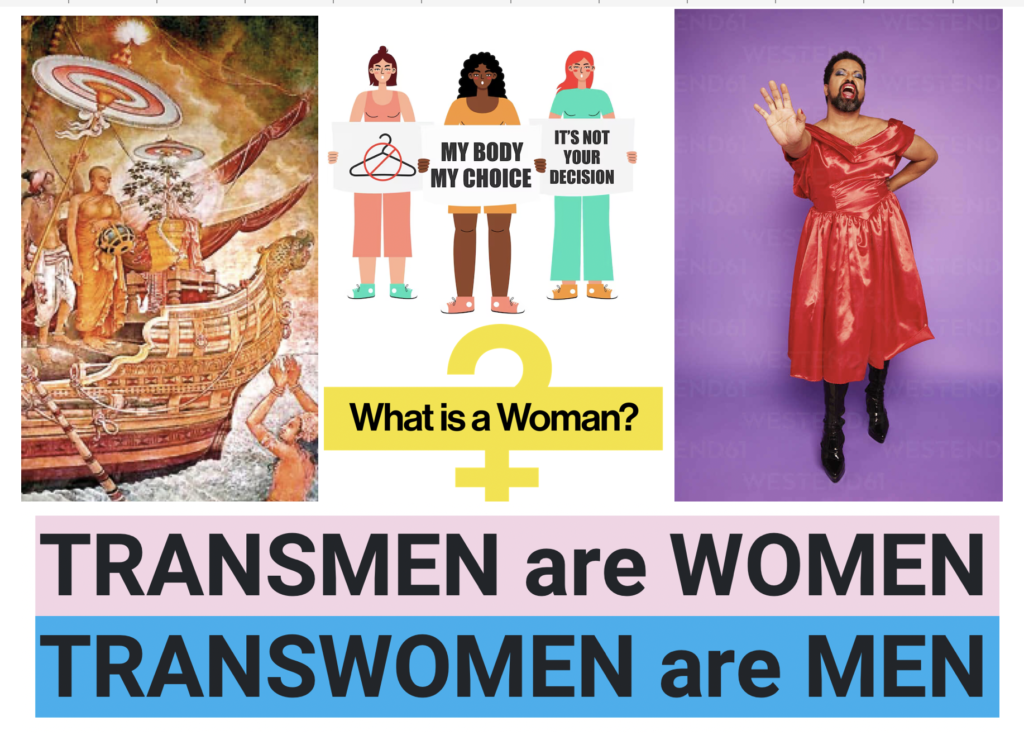
There are now a campaign encouraging men to think or identify as women & it is being political pushed to legal acceptance. How can a man identify as a woman?
Women of today should be rooted:
- Family
- Faith or moral code
- Culture
- Place
- Reality (not online narratives)
Such a rooted women cannot be easily manipulated by trends or ideologies.
Women of today should be Selective (this is power):
- Emotionally
- Sexually
- Socially
- Spiritually
Selectivity:
- Creates value
- Commands respect
- Shapes male responsibility
- Protects self-worth
Women of today should be Life-affirming (doesn’t mean only childbirth)
It means:
- Supporting growth
- Protecting the young
- Healing rather than exploiting
- Building rather than consuming
A woman who affirms life becomes indispensable.
Women of today should be intellectually serious:
Great women of the past were:
- Philosophers
- Teachers
- Moral reasoners
- Advisors
Today’s woman should cultivate:
- Critical thinking
- Moral reasoning
- Discernment of propaganda
- Historical memory
Not simply protest with banners, sit on panels or promote “individuality”.
Women of today should be strong without becoming hard:
Strength is not aggression.
True feminine strength is:
- Calm under pressure
- Firm without cruelty
- Compassionate without weakness
- Clear without chaos
This strength steadies families and societies.
Women of today should be conscience of slogans luring them along the wrong path:
Being told:
- “Motherhood is a trap”
- “Dependence is weakness”
- “Modesty is oppression”
- “Tradition is your enemy”
- “Freedom has no cost”
These ideas may sound empowering but leave women:
- Exhausted
- Alone
- Replaceable
- Unsupported in crisis
Women need to balance – Women need a balance.
Women must be educated, must have a career, must not accept abuse, must speak and be heard, must not surrender their intelligence.
But today’s women forget that ancient women too worked, too led, too owned property, too influenced policy, too guided rules but they always did so with civilizational consciousness not individual obsession.
Women of today must learn to ask themselves:
“Do my choices make me more anchored, more respected, and more capable of sustaining others — or more isolated and disposable?”
Civilizations didn’t survive because women were free from responsibility.
They survived because women were wise enough to carry it.
What type of woman would you aspire to be?
Shenali D Waduge