Singapore, Sri Lanka, and the Strategic Chessboard of Global Shipping
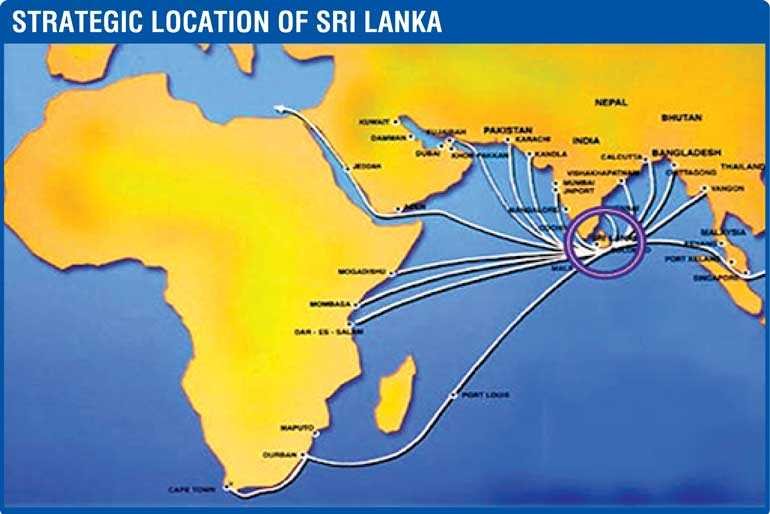
Global trade is the lifeblood of modern economies, and maritime shipping remains its most vital artery. Strategic ports function as critical nerve centres, shaping commerce, energy flows, and geopolitical influence. Singapore’s rise as one of the world’s foremost maritime hubs — and Sri Lanka’s growing port infrastructure — illustrate how geography, technology, and diplomacy intersect.
This paper traces the evolution of global shipping lanes, examines Singapore’s emergence as a dominant maritime hub, and explores the strategic implications of Sri Lanka’s expanding port infrastructure and prospective Sinopec involvement. Together, these developments raise important questions about the future balance of logistics, energy supply, and geopolitical influence across the Indian Ocean — particularly for established maritime powers such as Singapore and regional actors such as India.
The Rise of Modern Shipping Lanes
Singapore’s rise as a global maritime hub is fundamentally rooted in geography. Located along the Strait of Malacca — one of the world’s most important maritime chokepoints — Singapore sits at the intersection of shipping routes connecting the Indian Ocean and the Pacific. This position allows vessels travelling between East Asia, Europe, the Middle East, and Africa to pass through one of the most efficient maritime corridors in the world.
The Malacca–Singapore corridor is widely regarded as the busiest maritime passage globally:
- In 2024, approximately94,300 ships transited the Strait of Malacca — a record high — carrying an estimated 25–30% of global seaborne trade, including oil, containers, and bulk cargo.
- This equals roughly210 vessels per day, or one ship every seven minutes moving through the corridor.
These flows are critical not only for container trade but also for global energy supply chains, particularly oil and liquefied natural gas shipments bound for East Asia, including China, Japan, and South Korea.
The Disruption of Traditional Shipping Routes (2024–2026)
The stability of global shipping lanes —anchored around the Suez Canal — has come under significant strain since late 2023. Security threats in the Red Sea have forced major shipping lines to reassess route planning, risk exposure, and operational costs.
As a result, a growing number of vessels have been rerouted around the Cape of Good Hope, adding between 10 to 14 days to Asia–Europe voyages and increasing fuel consumption substantially. War-risk insurance premiums have also surged, further driving up the cost of global trade.
These developments mark a critical shift: global shipping is no longer operating solely on efficiency — but increasingly on risk mitigation and route resilience.
Pre-Colonial Indian Ocean Trade Networks
Long before Singapore existed, the Indian Ocean hosted one of the world’s most active trading systems.
Arab, Persian, Southeast Asian, and Chinese merchants navigated seasonal monsoon winds linking East Africa, the Arabian Peninsula, South Asia, and China.
Unlike modern container shipping powered by engines and centralized port systems, pre-modern trade relied on monsoon winds. Voyages often took weeks or months, and goods typically moved through multiple intermediary ports rather than direct, high-speed corridors.
These networks illustrate that modern shipping lanes did not create global trade — they accelerated and systematized centuries-old commercial routes connecting Asia, Africa, and the Middle East.
Historical Foundations
Singapore: Maritime Transformation
- Founded in 1819 bySir Stamford Raffles as a free port under British rule, Singapore removed tariffs and trade restrictions common elsewhere, attracting traders from Asia and Europe.
- Steamships in the 19th century strengthened its role as a coaling station and regional hub.
- Post-independence investments incontainerization and modern port infrastructure (late 1960s–1970s) allowed Singapore to leapfrog regional competitors.
Sri Lanka: Strategic Potential
- Ports such as Colombo historically facilitated trade between the Middle East, South Asia, and East Asia.
- Recent investments inColombo and Hambantota aim to elevate Sri Lanka’s role, offering alternative transshipment routes.
The Containerization Revolution
The introduction of standardized shipping containers dramatically reduced costs and cargo handling times. Singapore embraced container shipping early:
- Links over600 global destinations
- Hosts around200 international shipping lines
- Focused onautomation, digitalization, and port efficiency, solidifying top-tier transshipment status.
However, the current shipping crisis has begun to challenge the entire logistics and supply chain. Longer voyage times, fuel uncertainty, and security risks are prompting shipping lines to adopt more flexible routing strategies, reducing dependence on single transshipment hubs and increasing the importance of strategically located mid-route ports.
Singapore: The Global Maritime Powerhouse
Current Scale & Connectivity:
- Container Throughput:6 million TEUs (2025)
- Vessel Traffic:130,000–140,000 annual vessel calls
- Bunkering & Services:World’s largest supplier of ship fuel, tens of millions of tonnes annually
Competitive Edge:
- Geography: Strategic control of the Malacca chokepoint
- Connectivity: Links to 600+ ports globally
- Efficiency: Minimal congestion, fast turnaround, advanced technology
- Political Stability: Reliable governance attracts shipping lines
Emerging Pressures on Hub Dominance
Singapore will no doubt retain its position as a leading global maritime hub, however, ongoing disruptions in traditional shipping corridors are gradually reshaping operational dynamics.
Extended voyage routes and higher fuel requirements have increased demand for alternative bunkering and service points beyond a single dominant hub. This does not diminish Singapore’s importance, but signals a transition toward a more distributed network of maritime nodes, where flexibility and redundancy are becoming as valuable as efficiency.
Key Competitors:
China (Shanghai, Shenzhen, Hong Kong), South Korea (Busan), Malaysia (Tanjung Pelepas, Port Klang), Europe & Middle East (Rotterdam, Jebel Ali), USA (Los Angeles/Long Beach)
Despite competition, Singapore retains its advantage through connectivity, efficiency, and global integration.
Sri Lanka: Emerging Regional Hub
Advantages:
- Strategic Location:Colombo and Hambantota lie directly on major Asia–Europe and Asia–Africa routes
- Cost Efficiency:Lower port fees, incentives, and capacity for megaships
- Strategic Diversification:Reduces dependence on a single hub
Potential Gains:
- Revenue from transshipment, docking, and ancillary services
- Growth in logistics, trucking, and service industries
- Enhanced geopolitical leverage
Crisis-Driven Strategic Relevance
The ongoing disruption of Red Sea shipping routes has significantly enhanced Sri Lanka’s strategic value within global maritime networks.
Ports such as:
- Port of Colombo
- Hambantota Port
can be increasingly positioned as critical mid-route nodes for vessels undertaking longer and more complex voyages between Asia and Europe.
This shift creates new demand for:
• Refuelling and bunkering
• Maintenance and technical services
• Crew changes and logistical support
Sri Lanka is evolving from a transshipment option into a strategic stabilisation point within disrupted global supply chains.
The global crisis has elevated its potential.
Challenges:
- Colombo Infrastructure must match Singapore’s efficiency
- Hambantota lease to China and regional competition introduce geopolitical complexities
China’s Maritime Rise and Strategic Challenges: Emergence of Maritime Power
China transitioned from continental economic dominance to asserting maritime influence, linking economic corridors with strategic access to key sea lanes.
- 21st Century Maritime Silk Road (MSR):Sea-based component of Belt and Road Initiative, connecting Chinese ports through Malacca, Indian Ocean, Red Sea, Suez Canal, Mediterranean, Europe
- Indian Ocean Investments:Gwadar (Pakistan), Colombo and Hambantota (Sri Lanka), Chittagong (Bangladesh)
Objective: Facilitate trade and provide strategic nodes across key sea routes.
Strategic Competition in the Indian Ocean
Singapore remains a leading transshipment and bunker hub, but China’s Indian Ocean investments — particularly in Sri Lanka — offer alternative hubs.
- Hambantota Port:Leased to a Chinese firm for 99 years; increasing transshipment and bunkering
- Colombo Port:Expanded with Chinese operational support; alternative to Singapore
These hubs sit closer to East–West transit lines, offering shipping companies choices beyond Singapore.
Analysts call this the “String of Pearls” strategy.
Sinopec and Sri Lanka’s Energy-Port Nexus
Sinopec’s Role:
- Supports bunkering, petrochemicals, and refinery near Hambantota
- Integrates energy supply with maritime logistics
- Commercial developments reinforce China’s regional presence
With fuel consumption and supply chain uncertainty rising, the integration of energy infrastructure with port operations becomes increasingly significant. This enhances the strategic relevance of actors such as Sinopec, whose involvement extends beyond commercial activity into the broader alignment of maritime logistics and energy security.
Strategic Implications:
- Singapore and India perceive these ascommercially rational but strategically significant, potentially shifting regional influence.
Commercial Incentives for Shipping Lines
Advantages of Sri Lanka + Sinopec:
| Factor | Singapore | Indian Ports | Sri Lanka + Sinopec | Advantage |
| Port Fees (USD/TEU) | $50–100 | $45–90 | $35–70 | 20–30% savings |
| Average Port Wait Time (hrs) | 24–36 | 18–30 | 8–12 | 50–66% faster |
| Bunkering Fuel Price (USD/ton) | $650–700 | $620–680 | $580–630 | $40–70 cheaper |
| Fuel Saved per Transit (tons) | N/A | N/A | 500–800 | 10–15% reduction |
| Megaship Accommodation | Full, some congestion | Limited | Full, no congestion | Allows 20,000+ TEU |
| Distance Saved (nm) | N/A | N/A | ~200–500 | Saves 1–2 days |
| Operational Cost Saved per Voyage | N/A | N/A | $300k–500k | Significant |
Illustrative 20,000 TEU Ship (Shanghai → Europe):
- Fuel saved: 600 tonnes → ~$360,000
- Time saved: 36–48 hours → ~$120,000
- Port fees saved: ~$200,000
- Total per voyage:~$680,000
- Annual (10 voyages):~$6.8 million
Shift from Efficiency to Resilience
The current crisis signals a broader structural transition in global shipping.
Where traditional models emphasized speed, cost efficiency, and centralized hubs, emerging patterns indicate a shift toward resilience-based logistics — prioritizing route diversification, redundancy, and supply security.
This transformation favours geographically well-positioned ports capable of supporting extended maritime operations. Sri Lanka’s location along major East–West corridors places it in a strong position to benefit from this transition.
Strategic and Geopolitical Implications
- Singapore remains dominant but facessecondary hub competition
- China’s Maritime Silk Road reshapes options for global shipping lines
- India reacts withport investment, incentives, security engagement, and diplomacy
- Increased rerouting of vessels enhances the importance of Indian Ocean midpoints
- Energy-linked port infrastructure becomes a decisive competitive factor
- Competition shifts from single hub dominance to network-based influence
Singapore & India Loss Estimates:
- Singapore:$1.5–10 billion potential revenue loss depending on diversion (5–30% of vessels)
- India:$2–5 billion potential loss in fees and influence from diverted regional cargo
Sri Lanka: Strategic Approach
Recommendations for Maximum Benefit:
- Legal & Regulatory Safeguards
- Economic Levers: Joint ventures, incentives, infrastructure integration
- Diplomatic Engagement with India, Singapore, and other partners
- Financial Autonomy: Secure financing, diversify insurers
- Technology & Skills Transfer
- Communication & PR: Highlight economic benefits and mutual advantage
Balancing Commercial & Strategic Goals:
- Ports attract investment without compromising sovereignty
- Sinopec partnership becomes economic opportunity rather than political dependence
- Operations ensureefficiency, safety, and environmental compliance
Addressing Potential Concerns
| Concern | Response |
| Sovereignty at Hambantota | Lease agreements legally binding; Sri Lanka retains ownership & regulatory authority |
| Risk of being pawn in India-China rivalry | Multi-lateral engagement, diversified investors, transparent management |
| Efficiency & megaship accommodation | Deepwater expansion, automation, digitalization; 8–12 hr turnaround |
| Retaliation from regional powers | Transparent operations, competitive pricing, diplomatic engagement |
| Fuel/logistics continuity | On-site bunkering, maintenance, skilled workforce |
| Environmental & safety risks | Modern protocols, audits, compliance with maritime standards |
| Diversion threat to Singapore/India | Commercially rational; competition encourages innovation and efficiency |
| Realism of projected savings | Verified data; predictable turnaround reduces hidden operational costs |
The ongoing disruption of global shipping routes underscores a fundamental reality: control over maritime logistics is no longer defined solely by location, but by the ability to integrate ports, energy supply, and geopolitical alignment into a cohesive strategic framework.
Sri Lanka Must Think Strategically: Friend or Foe in the Maritime Chessboard
Sri Lanka stands at a pivotal moment. Its ports, geographic location, and growing energy-maritime integration offer the country a chance to shape its destiny.
China, through partnerships such as Sinopec, has acted as a reliable collaborator — providing investment, technology, and operational support that aligns with Sri Lanka’s sovereign interests. Chinese engagement demonstrates that foreign involvement can enhance national capacity without undermining sovereignty, when carefully managed.
By contrast, Singapore and India — historically dominant regional actors — increasingly perceive Sri Lanka’s emerging maritime capabilities as a commercial and strategic competitor rather than collaborator. Their influence is often directed toward maintaining their own advantage, slowing Sri Lanka’s rise, and diverting trade flows to favor established hubs – undermining Sri Lanka’s capacity and potential.
To navigate these dynamics successfully, Sri Lanka must:
- Treat China as astrategic partner whose investment and energy integration strengthens national capabilities
- Recognize Singapore and India ascompetitors in the trade and transshipment space, anticipating attempts to limit Sri Lanka’s growth
- Leverage ports, energy logistics, and infrastructure as instruments ofeconomic and geopolitical sovereignty
- Ensure foreign collaborations are structured tomaximize technology transfer, operational control, and national revenue
- Integrate maritime, energy, and industrial planning into acohesive long-term strategy, securing Sri Lanka’s position as a resilient and independent node in global shipping
This strategic posture positions Sri Lanka not as a passive stopover, but as a proactive architect of Indian Ocean trade, with China as a partner in development and Singapore and India as competitors whose influence must be navigated wisely.
Singapore’s rise illustrates how geography, historical policy, and technological investment create a global shipping powerhouse. Sri Lanka, with Colombo and Hambantota, is strategically positioned to attract investment, shape regional trade, and integrate energy services via Sinopec.
With careful legal, financial, and diplomatic planning, Sri Lanka can leverage these opportunities to maximize regional influence, maintain sovereign control, and offer a complementary alternative in the Indian Ocean maritime chessboard.
Shenali D Waduge