Correcting SJB MP Mujabur Rahman: The Mastermind is the Ideology that creates Killers
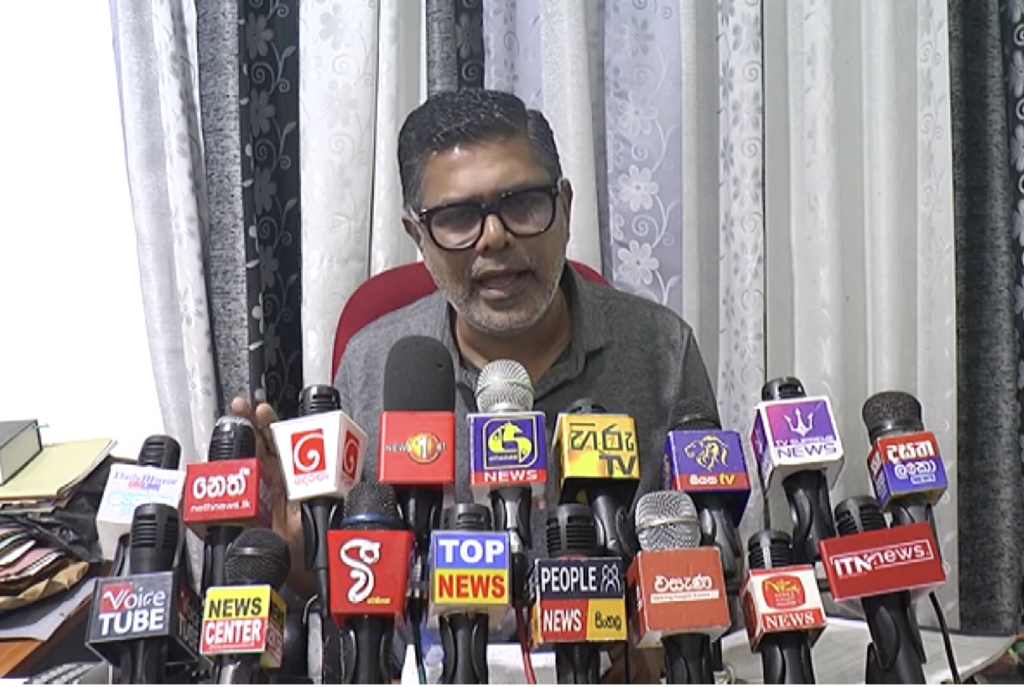
On 21 April 2019, Sri Lanka experienced one of the deadliest terror attacks in its history, targeting churches and hotels and taking hundreds of innocent lives. While the operational responsibility lies with Zaharan Hashim and his suicide cell, the true root of these attacks is the radical ideology that indoctrinated, mobilized, and weaponized young individuals into killers.
SJB MP Mujabur Rahman, in a public statement, has attempted to divert attention from the ideological and facilitation networks behind the attacks, raising claims about political conspiracies, alternate “masterminds,” and alleged bias among investigators. These claims are factually inaccurate and risk distracting the public from the real danger: the extremist doctrine that continues to radicalize youth.
This analysis addresses and corrects MP Mujabur Rahman’s assertions, clarifying:
- The roles of Zaharan Hashim, Naufer Maulavi, and their network.
- The chain of radicalization, financing, and facilitation.
- Why attempts to politicize or frame the attacks in racial or religious terms obscure the truth.
- The overarching lesson: the ideology, not politics or individual figures, is the true mastermind behind mass-casualty attacks.
By returning the focus to the ideology, we can understand the mechanisms of radicalization, expose attempts to mislead public perception, and identify measures to prevent future attacks—protecting all communities, including Muslims, from the destructive cycle of extremism.
RADICALIZATION CHAIN
-
Weaponization of Scriptures
- Selective interpretation of texts promoting violence as a religious duty.
- Extremist doctrine glorifying martyrdom and obedience to the ideology.
-
Ideological Mentors – in Sri Lanka Naufer Maulavi
- Introduces radical ideas to followers like Zaharan.
- Provides training, study circles, and indoctrination sessions.
- Uses family ties(Zaharan marries Naufer’s sister-in-law’s daughter) to strengthen loyalty.
-
Recruitment & Indoctrination
- Young men and women are recruited into closed circles.
- Emphasis on obedience, secrecy, and preparation for self-sacrifice.
-
Financing & Support
- Families and associates provide funds and resources.
- Entities like Save the Pearlshelp spread ideology and recruit youth.
-
Facilitation & Logistics
- Safe houses, transport, and communication networks are arranged.
- Kinship and marriage links maintain secrecy and trust.
-
Operational Leader – in Sri Lanka Zaharan Hashim
- Mobilizes the suicide bombers, mass preacher
- Coordinates attack execution according to ideology-driven plan.
-
Attack Execution – in Sri Lanka Easter Sunday 2019
- Bombings at churches and hotels, resulting in mass casualties.
- Culmination of the ideological chain, not the act of a single “mastermind.”
https://www.youtube.com/watch?v=sEfsLnSir48
Claim 1:
“We all know Zaharan did it – there is no debate. But who gave Zaharan the facilities and necessary support to do this and who led him?”
Rebuttal:
- It is undisputedthat Zaharan Hashim executed the attacks on 21 April 2019. This is confirmed by multiple investigations, including Sri Lanka Police, CID, and the Presidential Commission of Inquiry as well as the foreign intelligence reports. His prior history—preaching radical ideology, engaging in vandalism, and having multiple arrest warrants—establishes he was a fugitive actively plotting violence even at the time of the attacks.
- The question of facilitators is not mysterious. Investigations documented local and foreign networksthat supported the Easter attacks, including IS-inspired cells within Sri Lanka and logistical/ideological backing from radical groups.
- Regarding financing, it is notable that MP Mujabur Rahman does not call for scrutinyof the families of the two suicide-bomber brothers, who contributed substantial funds to their cause and were linked to Save the Pearls, an entity used to indoctrinate youth and children. He also does not call to investigate others holding positions in this entity.
- Claims of a shadow “mastermind” lack credible evidenceand are speculative and politicized. Judicial and intelligence findings remain the authoritative sources, and by attempting to divert attention, Mujabur Rahman is engaging in the very politicization he criticizes.
Claim 2:
“Gammanpila is writing this book as the lawyer of the former intelligence chief… How can he be considered unbiased?”
Rebuttal:
The value of a source is measured by verifiable facts, not presumed bias.
The book can be fact-checked against court documents, intelligence reports, and eyewitness testimonies.
Rejecting evidence solely on the author’s affiliations is an ad hominem fallacy.
While it is true that Gammanpila visited the named individual in custody, it is not confirmed that he serves as his lawyer. Speculating on his role to discredit the book is therefore premature and misleading.
Claim 3:
“Sarath Weerasekera… said that it was Naufer Maulavi who did it. Then Suresh Sallay says someone else… Gammanpila says someone else… All 3 say the mastermind is different. That can’t be.”
Rebuttal:
- This claim misrepresents both the timeline and the roles of the individuals involved.
- Sarath Weerasekera served as Minister of Public Security from 2020–2022. His statement that Naufer Maulavi was the mastermind is consistent with intelligence findings that Naufer acted as the ideological mentor and theoretician who radicalized Zaharan. Multiple reports state Naufer introduced ISIS doctrine to Zaharan and helped shape the operational cell.
- The FBI-linked findings and subsequent local reporting have described Zaharan as the operational mastermind/executor, while Naufer Maulavi is identified as the ideological mastermind and second-in-command/theoretician. These are not contradictory positions—they refer to different layers of responsibility within the same terror network.
- Suresh Sallay was a career military officer and government servant, not a politician. He served under the state apparatus and, by the nature of public service, was required to serve whichever government was in office. Therefore, MP Mujabur’s attempt to place him in a political “camp” is factually inaccurate and rhetorically improper.
- Different investigators or officials emphasizing different actors does not create conspiracy.In complex terror investigations, it is normal for one person to be identified as:
- the executor / face of the attack (Zaharan)
- the ideological radicalizer (Naufer)
- the facilitator / financier / external link (Ibrahim family & others)
- These are complementary roles, not mutually exclusive theories.
- The central fact remains: both Zaharan and Naufer were driven by the same extremist ISIS-aligned ideology, which mirrors the same ideological pattern behind church attacks and anti-Christian terror incidents globally. This is why the Sri Lanka attacks fit an established transnational extremist template rather than a locally invented political theory.
- The root source is the weaponization of scriptures through selective interpretation. This raises concerns about unmonitored madrassas and the teaching of Arabic, which is not aligned with Sri Lanka’s cultural heritage
- Naufer introduced ISIS doctrine to Sri Lanka, influenced Zaharan from 2016 onwards which was passed on to others via teaching, training camps, extremist curriculum, recruitement cells & mentorship. Zaharan was a masterful public speaker, charismatic to recruit and lead, marriage of Zaharan to Naufer’s sister-in-law’s daughter sealed ties. The movement progressed from belief to recruiter – to executor and family loyalty.
- Therefore, claiming that differing descriptions of roles “proves” a political or religious conspiracy is unfounded. The investigation framework remains fact-driven, role-based, and evidence-led, not religion-driven.
Claim 4:
“They are trying to push their own racist and religious ideas… use Easter Bombings to push it somewhere else.”
Rebuttal:
- This is a generalized accusation unsupported by evidence.
- Simply alleging that Gammanpila, investigators, or others are motivated by racism or religion does not substitute for proof. The issue must be judged on facts, evidence, and the logic of the investigation, not on labels.
- A serious question must also be asked: why is the term “racist” repeatedly used as a shield to shut down scrutiny? In many public debates, emotionally loaded terms such as “racism,” “hate,” or “religious targeting” are often used to silence dissenting analysis before the underlying facts are even examined. Labelling a line of inquiry does not invalidate its logic, it exposes those throwing the labels.
- The Easter Sunday bombings targeted churches and hotels, killing worshippers and civilians. The central duty of any investigation is therefore to identify:
- who radicalized the attackers,
- who financed them,
- who facilitated them,
- and what ideological source transformed belief into violence.
- Calling that process “racist” is a diversion away from legitimate national security concerns.
- By forcing the discussion into a racial, religious, or political framing, Mujabur’s argument risks distracting attention from the actual root cause: the ideology of indoctrination and the selective weaponization of religious doctrine that turned recruits into suicide attackers.
- The real danger is not merely the names Zaharan or Naufer as individuals, but the indoctrination mechanism that produced them. Unless the source ideology, recruitment pipeline, and doctrinal manipulation are identified and disrupted, the same process can create future cells, future recruiters, and future attackers under different names.
The focus should therefore remain not on silencing questions through labels, but on dismantling the ideological and facilitation chain that converted radical preaching into mass murder.
Claim 5:
“People who did politics with Gammanpila… used this bomb attack after it happened to get political mileage.”
Rebuttal:
- While politics often intersects with high-profile events, the focus must remain on the evidence of the attacks and the network behind them. Attempting to politicize the tragedy does not alter the facts: Zaharan acted as the operational leader, and his network included those who shared the same cause. What they all had in common was a unified belief and resolve to honor the duty imposed by the ideology that had indoctrinated them and weaponized their bodies for self-sacrifice.
- MP Mujabur and others who follow this line of thinking must recognize that diverting attention away from preventing people from being indoctrinated is a direct harm to their own people, who will otherwise become the innocent victims of future ideological radicalism.
- MP Mujabur must also consider the global pattern of attacks driven by the same ideology. From 2018 to 2025, a significant number of attacks on churches occurred worldwide due to this extremist doctrine. In 2019, when Zaharan and 8 suicide bombers attacked 3 churches and 3 hotels in Sri Lanka, many other churches were also attacked globally. Were these attacks carried out by Gen. Suresh Sallay, or committed to bring Gotabaya Rajapakse to power? Clearly, the ideology is the true perpetrator of these crimes, not local political figures.
- The lesson is unambiguous: the ideology, not politics, drives mass violence. Any attempt to frame the Easter attacks as a political tool obscures the real source of the threat-radicalization through weaponized doctrine. The priority must be to identify, disrupt, and prevent ideological indoctrination before it produces more Zaharans, Naufers, and future attackers.
Key Takeaway Across All Claims
- The ideology of extremism is the root cause, not politics, race, or religion.
- MP Mujabur’s attempts to divert attentionto politics or religion are dangerous because they shield the ideological source from scrutiny.
- Muslims and all communities must recognizethat radicalization targets their own youth, creating future attackers within the same community.
- The chain of responsibility: global weaponized doctrine → local ideological mentor (Naufer) → operational executor (Zaharan) → facilitators, financiers, and kinship networks → attack execution.
What Sri Lanka must now do
- Round up suicide bombers and operativeswho pledged allegiance to Zaharan and remain at large.
- Prioritize dismantling dangerous radicalized cellsand preventing the formation of clandestine extremist networks.
- Identify, highlight, and stop all existing silent radicalization pipelines, particularly in isolated or insular communities (e.g., ethno-religious enclaves).
- Monitor and reform indoctrination mechanismsthat exploit ideological extremism, ensuring they cannot continue unnoticed under any form of patronage.
- Educate communities on the methods of ideological manipulation and recruitment, promoting awareness without stigmatizing legitimate religious practice.
- Investigate networks facilitating extremist activity, including recruitment, financing, and logistical support.
- Ensure all educational and religious instruction aligns with Sri Lanka’s official language policyand national cultural heritage, preventing unmonitored foreign-language doctrinal influence.
- Expose attempts to politicize or misrepresent terror attacks, ensuring that national security priorities remain evidence-based and fact-driven.
Shenali D Waduge