ALERT RED NOTICE – IS ANURADHAPURA INDIA’S STRATEGIC FOOTPRINT TO EXPAND ARKHAND BHARATH IN SRI LANKA
WHY IS INDIA SUDDENLY FUNDING A Rs. 7.7 BILLION DEVELOPMENT PLAN FOR SRI LANKA’S SACRED CITY?
SRI LANKA MUST EXAMINE THE MAPS, THE HISTORY, THE CONNECTIVITY PROJECTS AND THE CONSEQUENCES BEFORE COMMITMENTS ARE MADE.
India is proposing to fund a Rs. 7.7 billion development programme for Anuradhapura’s Sacred City. The proposal comes at a time when India is expanding its connectivity with Sri Lanka through transport, ports, energy, digital systems and trade, while promoting a wider regional connectivity vision.
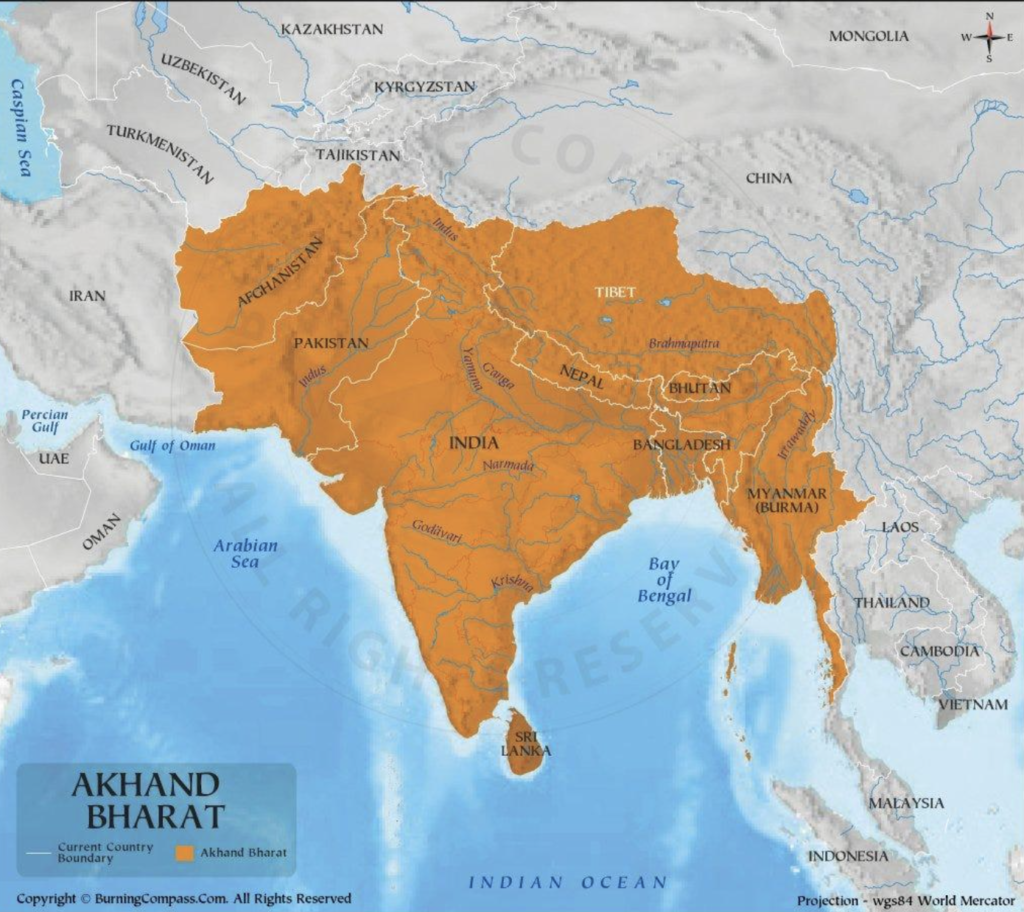
At the same time, maps circulated promoting the concept of Akhand Bharat depict Sri Lanka within a wider civilisational geography. A map titled Punyabhoomi Bharat, published by the RSS-run Suruchi Prakashan, labels Sri Lanka as “Singhaldweep”. The Indian Express has documented the map and the history of the Akhand Bharat idea, including the differing descriptions of it as a cultural or political concept. Source: Indian Express, “History of the Akhand Bharat idea, and in the imagination of the RSS”.
This raises eyebrows about Indian Government’s Anuradhapura project is an implementation phase of Akhand Bharat.
But the questions Sri Lanka must ask are unavoidable:
- Why does Anuradhapura need a new development programme when an existing UDA Development Plan covers 2019–2030?
- What exactly will India’s Rs. 7.7 billion finance – what are the conditions and terms not disclosed to the public?
- What are the proposed changes to land use, infrastructure and access?
- What are the implications of India’s expanding connectivity with Sri Lanka?
- Why should the public not examine the proposal alongside the maps, regional ambitions and historical experiences relevant to Sri Lanka’s sovereignty?
This is a call to demand that Sri Lanka examine the full implications before accepting a major foreign-funded project in one of its most important sacred and historic centres.
-
ANURADHAPURA ALREADY HAS A DEVELOPMENT PLAN. WHY IS A NEW ONE NEEDED?
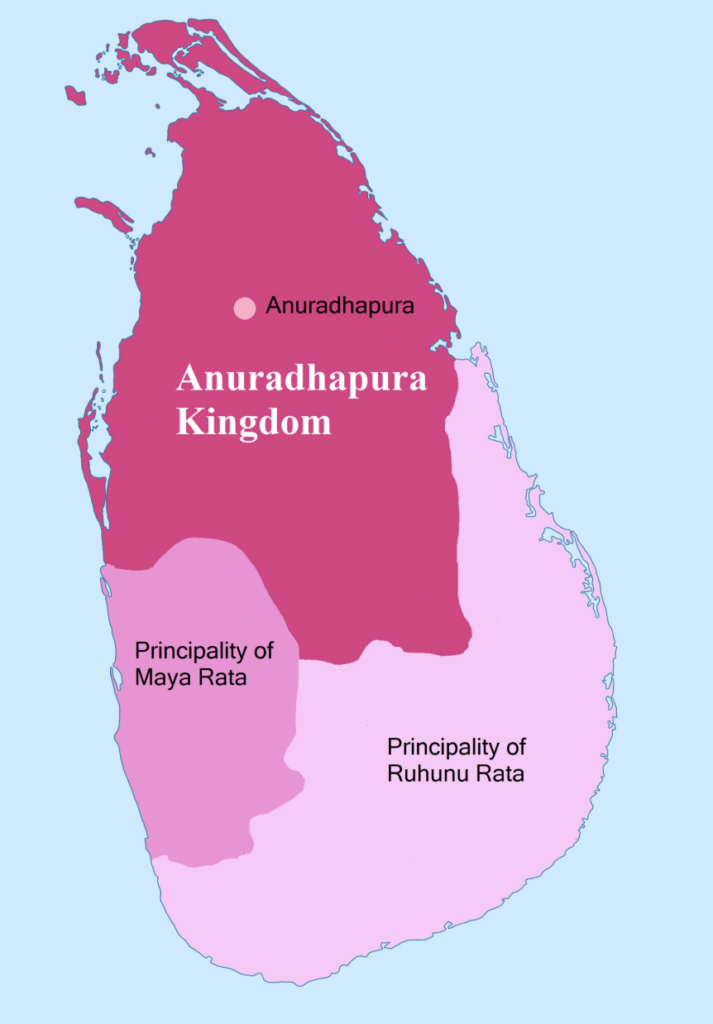
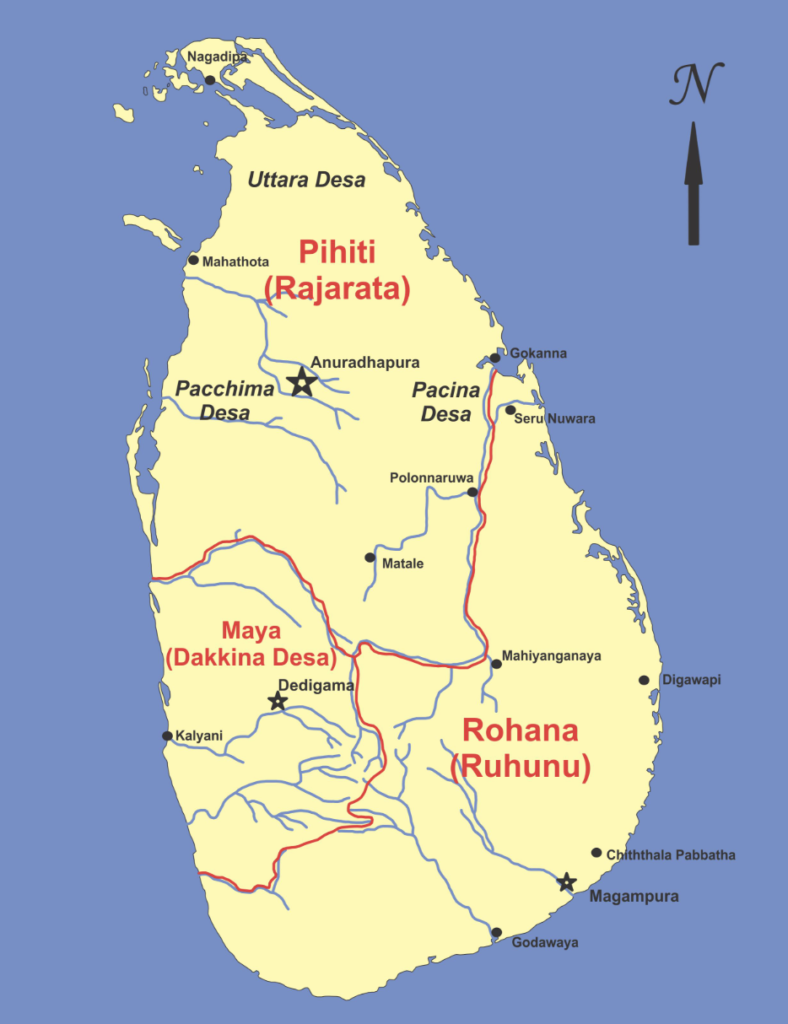
Anuradhapura lies in north-central Sri Lanka, connecting the northern part of the island with its central and southern regions. Its historical importance rested partly on its position within a wider network of royal administration, irrigation, agriculture, religious institutions and routes across the island.
Today, roads, transport corridors, ports, proposed cross-border links and regional economic agreements have renewed the importance of examining Sri Lanka’s geography in strategic terms beyond ports & harbors.
A nation’s strategic footprint is not confined to its coastline. Inland corridors, transport routes and access to historically significant regions can be equally important in determining how a country’s geography is used and who gains influence over it.
India and Sri Lanka have discussed greater physical and economic connectivity, including a proposed land link between the two countries. What is the scope of these proposals – the route plans, legal arrangements, financing, security implications for Sri Lanka & its sovereignty must take priority during negotiations.
Sri Lanka must examine not merely what connectivity promises economically, but how it could alter the island’s strategic landscape, movement of people, control of territory and long-term national interests.
Sources: India–Sri Lanka Joint Statement on the Economic Partnership Vision | High Commission of India, Colombo — India–Sri Lanka bilateral relations
This is why Anuradhapura cannot be considered solely through the lens of beautification, tourist facilities, roads or sanitation. Tourists must experience a culture and history they have not seen & view how ancient majestic kingdoms existed – not to see a replica of the developed states they live in.
When a new plan beyond the existing is suddenly being promoted – the public must be alert & understand the full geographical footprint of the proposed scheme, its possible ulterior motives, the movement of people and vehicles it is designed to facilitate, and whether it changes the use or character of land within or around the sacred area while also erecting non-Buddhist religious structures. We cannot expect non-Buddhists to protect & preserve Buddhist heritage.
When foreign-funded development enters a historically strategic location that is also the heartland of Sinhala Buddhist civilisation, the implications must be examined in their entirety—not treated as separate questions of infrastructure, religion and tourism.
Development cannot hide the strategic and cultural consequences of the decisions being made.
WHY SHOULD BUDDHISTS BE EXPECTED TO ACCEPT CHANGES WITHOUT FULL DISCLOSURE?
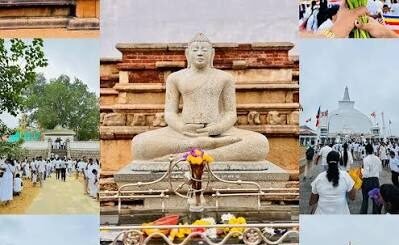
For Sinhala Buddhists, Anuradhapura is a living sacred landscape—not simply a collection of “monuments” to be viewed by visitors.
The Sri Maha Bodhi, Ruwanweliseya, the ancient stupas, monasteries and associated archaeological remains embody a continuity of Buddhist civilisation that the Constitution recognises as a special responsibility of the State under Article 9.
Sri Lanka’s Buddhist heritage also includes distinctive forms of stupas, chaityas, monastic architecture and sacred sites developed through the island’s own historical experience. Their protection is a responsibility that cannot be reduced to tourism revenue or urban planning targets and least of all foreign grants.
The Sinhala people are a small population in global terms, and Sri Lanka is the homeland of the Sinhala Buddhist civilisation. That makes the protection of this heritage a matter of cultural continuity as well as religious devotion.
It is therefore reasonable for Sinhala Buddhists to question any proposal that might alter the sacred area’s character, land use, customary religious practices or surrounding communities.
The essential questions remain:
- Why is another plan needed when an existing development plan already covers the period to 2030?
- What precise changes does the February 2026 gazette introduce?
- What land is affected, and what happens to residents, Buddhist religious institutions and archaeological sites?
- What is the exact scope of India’s proposed Rs. 7.7 billion contribution, and what written/unwritten conditions, accompany the funding?
- Who has final authority over the design, implementation and future management of the project?
- How will the State demonstrate that the scheme protects Anuradhapura’s Buddhist character and does not undermine the rights of pilgrims or the communities living around the sacred area by erecting new religious structues?
Anuradhapura survived invasions, massive destruction of Buddhist heritage sites, political upheaval and the transfer of the capital. Its sacred heritage remains.
The responsibility of today’s Government is not merely to develop the city, but to protect what generations before us preserved.
No development plan should be beyond public scrutiny—especially when it concerns Sri Lanka’s most important centres of Buddhist civilisation.
Civic conscious Buddhists are rising to uphold their duty – the Govt cannot evade theirs.
-
FROM THE AKHAND BHARAT MAP TO INDIA’S GROWING FOOTPRINT IN SRI LANKA
The Akhand Bharat map is not simply an illustration to be dismissed. The RSS-run Suruchi Prakashan publication titled Punyabhoomi Bharat depicts Sri Lanka as “Singhaldweep” within the geographical extent it presents as Bharat.
The Indian Express has also documented RSS statements and publications advocating the Akhand Bharat idea.
Now consider the developments taking place in Sri Lanka.
India is expanding its connectivity with Sri Lanka through ferry services between Nagapattinam and Kankesanthurai, air links with Jaffna, financial assistance for Kankesanthurai Port, and discussions on an Economic Land Corridor, a multi-product pipeline and electricity grid interconnection.
And now, a proposed Indian-funded Rs. 7.7 billion development project for Anuradhapura Sacred City.
The draft proposal prepared by Sri Lanka’s Urban Development Authority and National Physical Planning Department was submitted to the Indian High Commission. The proposal was discussed at the Presidential Secretariat on 30 September 2026. India is expected to provide the financial contribution.
Why is India extending its involvement from maritime and northern connectivity to the development of Anuradhapura—the historic heartland of Sinhala Buddhist civilisation?
Why should Sri Lankans examine these developments separately when they are all part of India’s expanding economic and infrastructure engagement with the island?
The question is not merely who is funding a development project. It is who gains influence through funding, infrastructure, connectivity, access and long-term involvement in strategically important locations.
When a map depicts Sri Lanka within a wider civilisational concept, and the country is simultaneously expanding its practical footprint through connectivity and development projects, Sri Lanka has every reason to examine the relationship between the two.
Is the Anuradhapura project simply a development initiative, or does it form part of a wider strategic expansion of India’s influence across Sri Lanka?
The public must be given the information needed to examine that question.
-
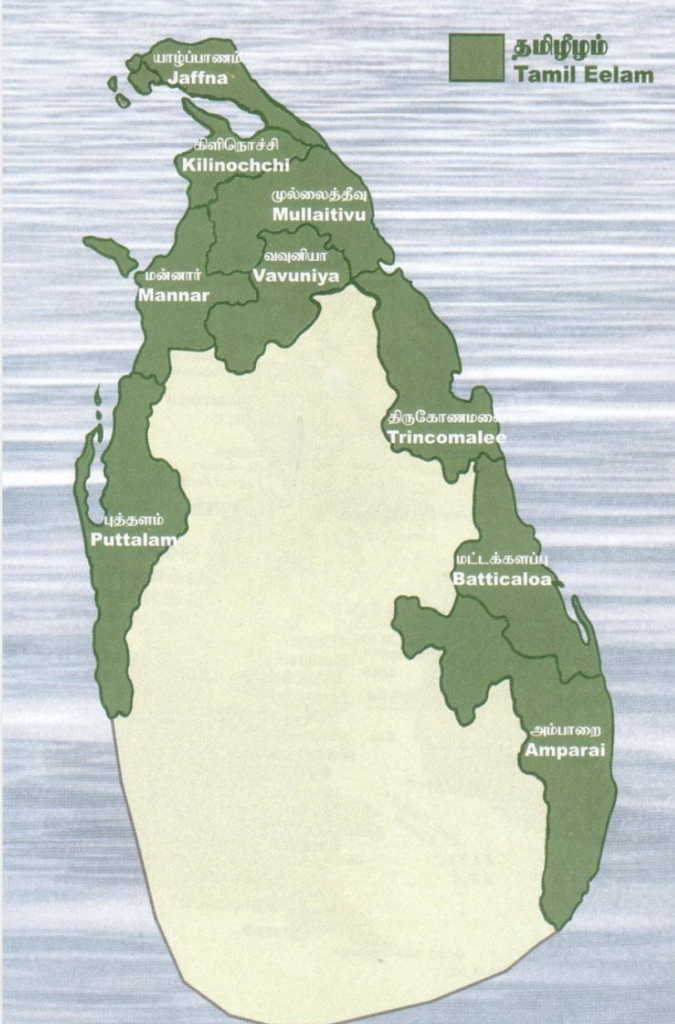
THE EELAM MAP: POST-LTTE: WHO REPRESENTS THE TAMIL PEOPLE — AND WHO CHALLENGES INDIA’S GROWING INFLUENCE?
The defeat of the LTTE in May 2009 changed the political and military landscape of Sri Lanka. But it did not end India’s involvement in the Tamil question. Instead, the nature of that involvement changed.
The LTTE’s military campaign ended. India’s strategic interest in Sri Lanka did not.
During the armed conflict, India had supported and trained Tamil militant organisations, including the LTTE, before its relationship with the LTTE deteriorated and the Indian Peace Keeping Force eventually fought against it. After the war, India continued to position itself as a major external advocate for Tamil political demands, particularly the implementation of the 13th Amendment, devolution, reconciliation and the welfare of Tamil communities.
The 13th Amendment must now be examined beyond the promise of Tamil political representation. Does it presently serve the interests of Sri Lanka’s Tamil people, or does it provide India with a continuing constitutional and political lever through which to influence Sri Lanka’s internal affairs?
This is a question Sri Lankan Tamils themselves must evaluate.
The question Sri Lankans must now ask is: who speaks for the Tamil people, and whose interests are being advanced through that representation?
The LTTE once claimed to represent the Tamil people through an armed struggle. It no longer exists as a military organisation. Tamil political parties and elected representatives now operate within Sri Lanka’s democratic system, but they do not necessarily share one political position or represent every Tamil community in the same way.
Meanwhile, India has developed a direct relationship with Tamil political representatives, community organisations and institutions in the North and East. It has also expanded its presence through housing, education, healthcare, cultural and infrastructure projects.
This creates an important question.
Are Tamil political representatives and community institutions independently scrutinising Indian projects, questioning their conditions and challenging their strategic implications? Or have some become political intermediaries through whom India’s interests are advanced, while ordinary Tamil people themselves are left without an independent voice to question those interests?
When India funds infrastructure, supports community organisations, engages political representatives and presents itself as the principal external partner for Tamil welfare, it gains relationships and influence that extend beyond individual development projects.
The Tamil population must not be reduced to a political instrument in another country’s strategic calculations. Nor should the suffering, grievances and genuine development needs of Tamil civilians become a convenient route for an external power to expand its influence within Sri Lanka.
India’s engagement must therefore be examined beyond the language of assistance and minority protection.
- Who identifies the priorities of Indian-funded projects in the North and East?
- Who negotiates the conditions attached to funding?
- Which Tamil representatives scrutinise the long-term implications of Indian infrastructure and connectivity initiatives?
- Can local communities challenge an Indian-backed project without being portrayed as opposing development or Tamil welfare?
- Who assesses whether these projects strengthen Sri Lanka’s national infrastructure or create long-term dependence on an external power?
- Does the Government of Sri Lanka retain full control over the land, assets, operations and strategic decisions involved?
- Why are demands to remove the Sri Lankan military presence from the North accompanied by demands to reduce or remove the presence of Central Government institutions and public-sector administration there? Who benefits when the State’s security presence and administrative reach are weakened in a strategically important region?
The use of ethnic identity, religious institutions, community organisations and humanitarian development as channels of external influence must also be examined.
Western powers have built relationships in Sri Lanka through faith-based institutions, Catholic networks and NGOs, including organisations whose connections with the LTTE and its international support networks require scrutiny.
India is now operating through its own historical, cultural, religious, political and community relationships.
The methods and institutions may differ, but the strategic objective is similar: an external power turning relationships with local communities into influence within a sovereign country
The post-LTTE period must not become a period in which India’s influence expands without equivalent public scrutiny simply because its involvement is presented as being for the benefit of Tamil people.
“Developmental” objectives must not be used to conceal the wider strategic consequences of India’s expanding presence in Sri Lanka.
And this question does not end in the North. India’s engagement with Tamil communities, Indian-origin communities and other groups across the island must also be examined—including its growing presence in the plantation districts and the central highlands. The Malayali community and its historical links with India must also be included in this wider examination. Why is India’s engagement spreading across different communities and geographical regions of Sri Lanka, and what long-term influence is India attempting to create?
FIRST THE NORTH. THEN ANURADHAPURA. THEN THE CENTRAL PLAINS.
India’s growing presence must be examined as a geographical progression—from the northern region, through the north-central corridor and Anuradhapura, towards the central highlands and the heart of the island.
Is Sri Lanka examining the cumulative strategic consequences—or allowing separate projects, community initiatives and infrastructure agreements to create an expanding Indian footprint across the island without assessing where that leads?
-
INDIA IS EXPANDING CONNECTIVITY WITH SRI LANKA
India’s High Commission describes connectivity as a central focus of bilateral relations. The linkages they are making extend beyond – maritime, air, energy, power, trade, economic, financial, digital and people-to-people connectivity.
- The Nagapattinam–Kankesanthurai passenger ferry.
- Air connections between Chennai and Jaffna, and Tiruchirappalli and Jaffna.
- Assistance for Kankesanthurai Port.
- Railway improvements, including the Maho–Anuradhapura signalling and telecommunications project.
- Renewable-energy projects involving islands off Jaffna.
- UPI QR payments in Sri Lanka.
- The proposed Economic Land Corridor.
- A proposed multi-product pipeline connecting India and Sri Lanka.
- Proposed electricity-grid interconnection.
- ECTA – Indian service sector entry to Sri Lanka (Indian labor & workforce) – for Sri Lankans this means a 600million Indian working population from 1.4billion Indians.
India’s High Commission also lists the Sacred City Complex Project in Anuradhapura among the projects for which grant assistance was announced.
Source: High Commission of India, Colombo — India–Sri Lanka Bilateral Relations.
Ports affect maritime access.
Ferry and air connections increase cross-border movement.
Energy infrastructure creates long-term operating relationships.
Grid interconnection raises questions about supply security, pricing and dependence. Digital systems raise questions about data governance, cybersecurity and technical control.
Trade and financial assistance can also influence the choices available to a smaller economy.
How many of these initiatives can eventually threaten Sri Lanka’s sovereignty, demography, national security, and dependence on India. What will Sri Lanka have control over?
When multiple infrastructure relationships are expanding simultaneously, the Government must explain how each fits within a coherent Sri Lankan national security strategy.
-
THE PROPOSED INDIA–SRI LANKA LAND LINK
The India–Sri Lanka Economic Partnership Vision adopted in July 2023 expressly included a proposal to explore land connectivity between the two countries, with the stated objective of developing land access to the ports of Trincomalee and Colombo. It called for a feasibility study.
Source: India–Sri Lanka Economic Partnership Vision, 21 July 2023.
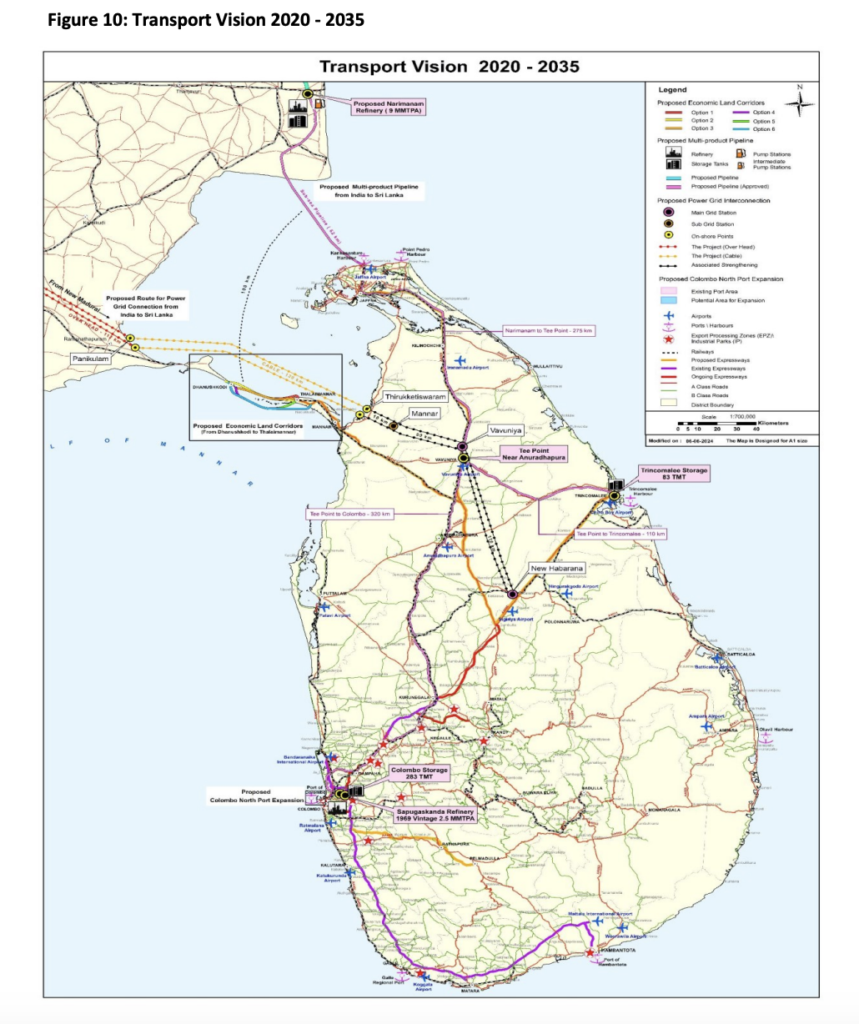
A direct road or rail connection across the Palk Strait would be a major change in the physical relationship between the island and the Indian mainland. It could have consequences for transport, trade, migration, border management, customs, security and the movement of goods and people.
Sri Lanka has 22million populace.
India’s population is 1.4billion.
The Government must publish the feasibility findings, proposed alignment, environmental studies, cost estimates and security arrangements before the public is asked to accept any commitment.
Sri Lanka must also establish whether the proposed connection has any relationship to wider economic corridor proposals, and what authority Sri Lanka would retain over border management, access and future operations.
-
ECONOMIC CORRIDORS, MCC AND LAND PLANNING
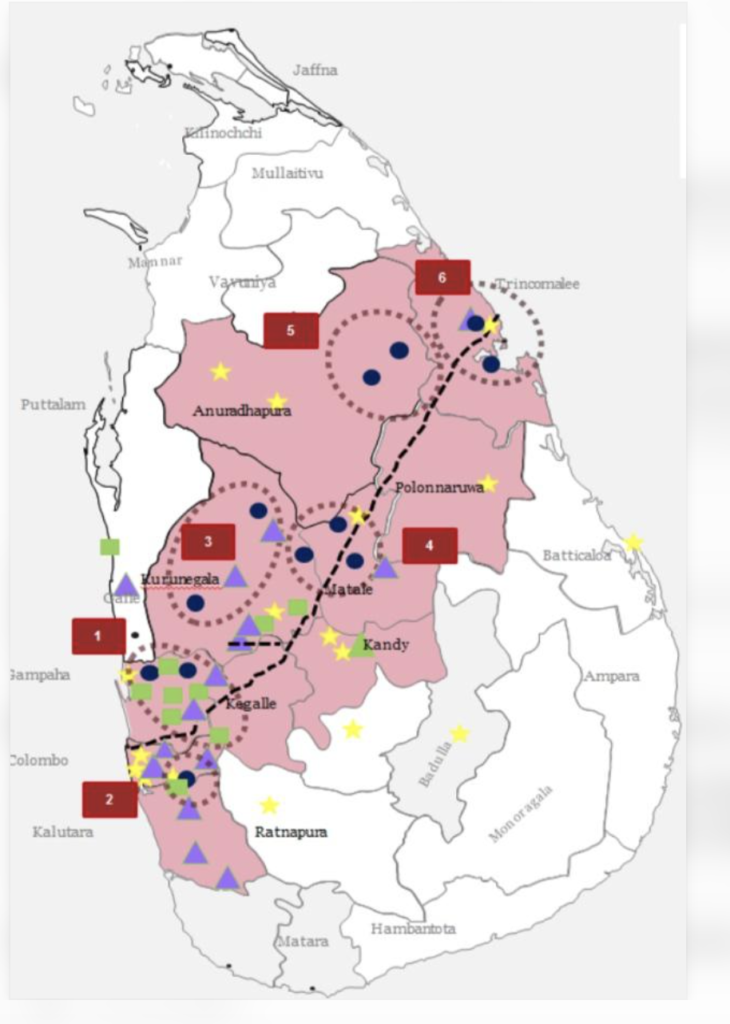
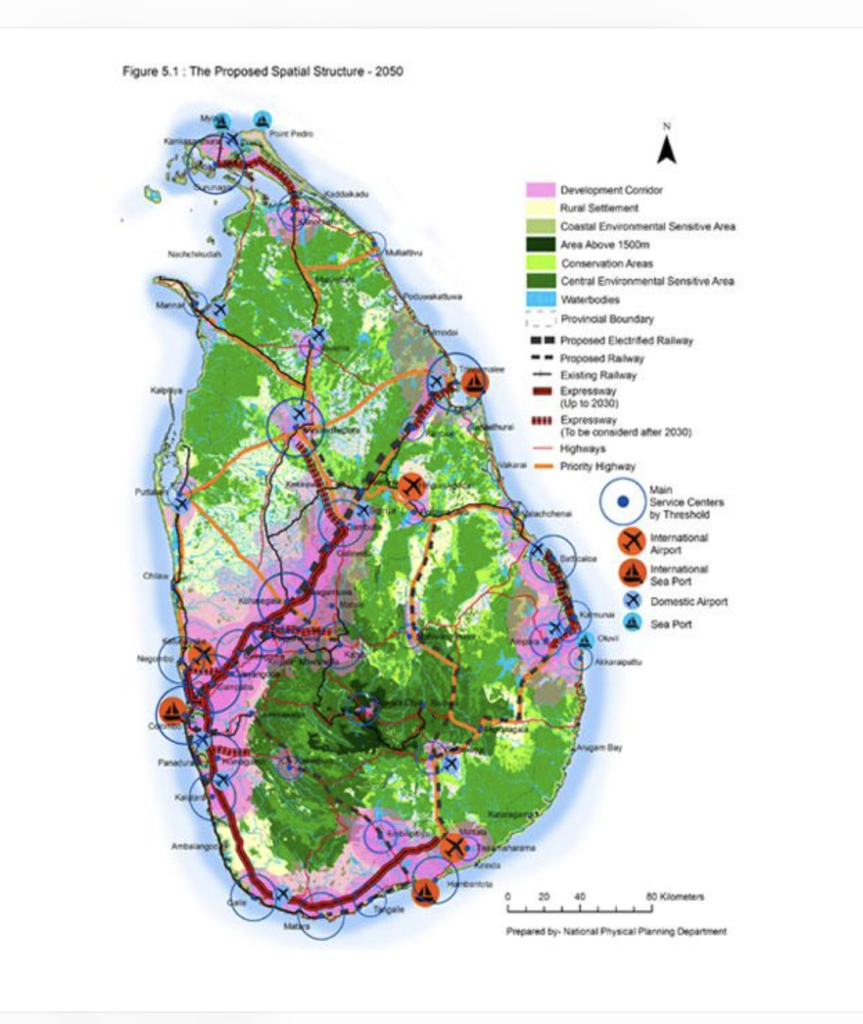
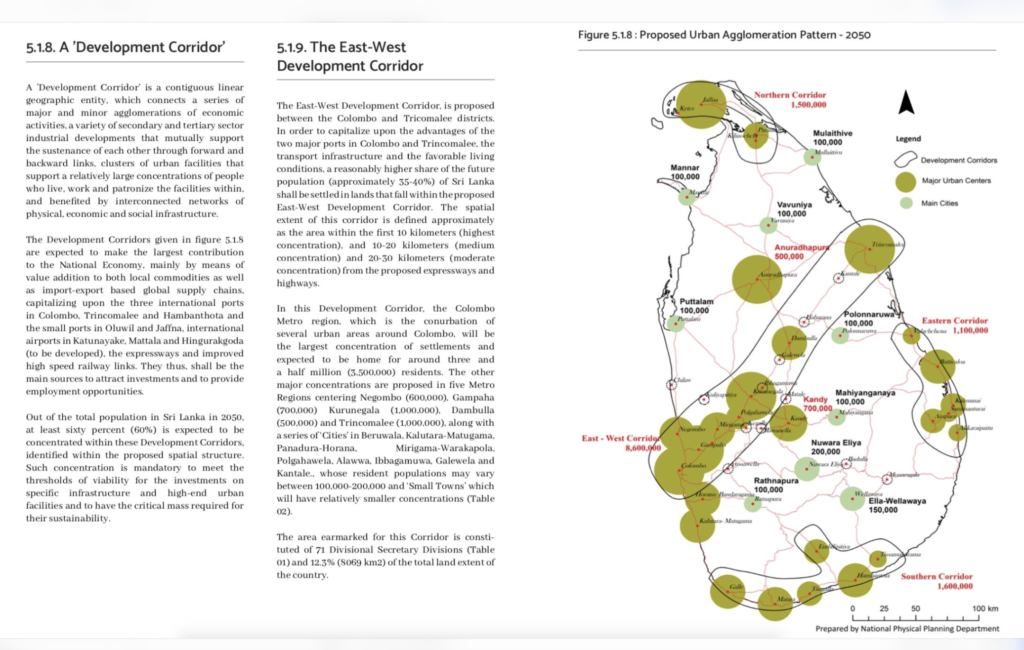
The former Millennium Challenge Corporation compact for Sri Lanka was a proposed US$480 million American programme with transport and land-related components. It was discontinued in December 2020 and was never implemented. The most dangerous aspect was its link to Bim Saviya program that aspired to replace existing deed system with an A4 page Bim Saviya certificate. The critical issue was the erasure of the historical significance of written deeds that passed down a history behind the land.
It is useful to compare that MCC map with the rail track from Colombo to Trincomalee and see how far India’s own rail-road proposals are aligned.
Furthermore, let us not forget Sri Lanka’s natural and untapped resources, particularly the Eppawala phosphate deposits, which became the subject of a landmark Supreme Court judgement that halted a US-Japanese proposal to exploit the phosphate, process it and transport it through a proposed rail link to Trincomalee.
India’s emphasis on security Trinco oil tanks and operating an exclusive zone where even Sri Lankans are not permitted to enter in the Trincomalee district cannot be omitted from debate.
https://cdn.cse.lk/cmt/announcement_portal_prod/LIOC%20-%20JV%20and%20Agreements_405086247770162.pdf
https://www.newsfirst.lk/2022/02/08/gammanpila-tables-trinco-tank-farm-agreement
-
WHY ANURADHAPURA’S GEOGRAPHICAL POSITION MATTERS
Anuradhapura occupies a significant position in Sri Lanka’s North Central Province and within the wider geography connecting the northern approaches, the north-western region and the island’s interior.
Sri Lanka’s historical transport network linked Anuradhapura northwards towards Kankesanthurai.
The Talaimannar railway connection historically linked the island to South India through ferry transport.
The eastern railway network served Trincomalee.
This history establishes Anuradhapura’s place within Sri Lanka’s transport geography.
Its location is relevant when the country assesses future transport, land-use and economic corridor proposals.
Now consider the questions together:
- Certain Akhand Bharat maps depict Sri Lanka within a wider civilisational geography.
- A particular Eelam map has been reported to include Anuradhapura and neighbouring districts within an envisaged territory.
- India and Sri Lanka have formally discussed exploring land connectivity.
- India has identified the proposed Economic Land Corridor, energy links and other connectivity projects as areas of cooperation.
- India has announced grant assistance for the Sacred City Complex Project in Anuradhapura.
- Sri Lanka already has an existing UDA Development Plan for 2019–2030.
Awareness of the above makes it essential to ask whether the Anuradhapura proposal has been assessed against Sri Lanka’s wider national physical planning, heritage protection and sovereignty requirements.
The Government must publish a consolidated national planning map showing the relevant proposed corridors, transport connections, protected heritage areas, land-use designations and project boundaries. It must explain how the proposed Anuradhapura development fits within those plans.
Anuradhapura must not be treated as an isolated project when its future land use and infrastructure could have consequences extending well beyond the city.
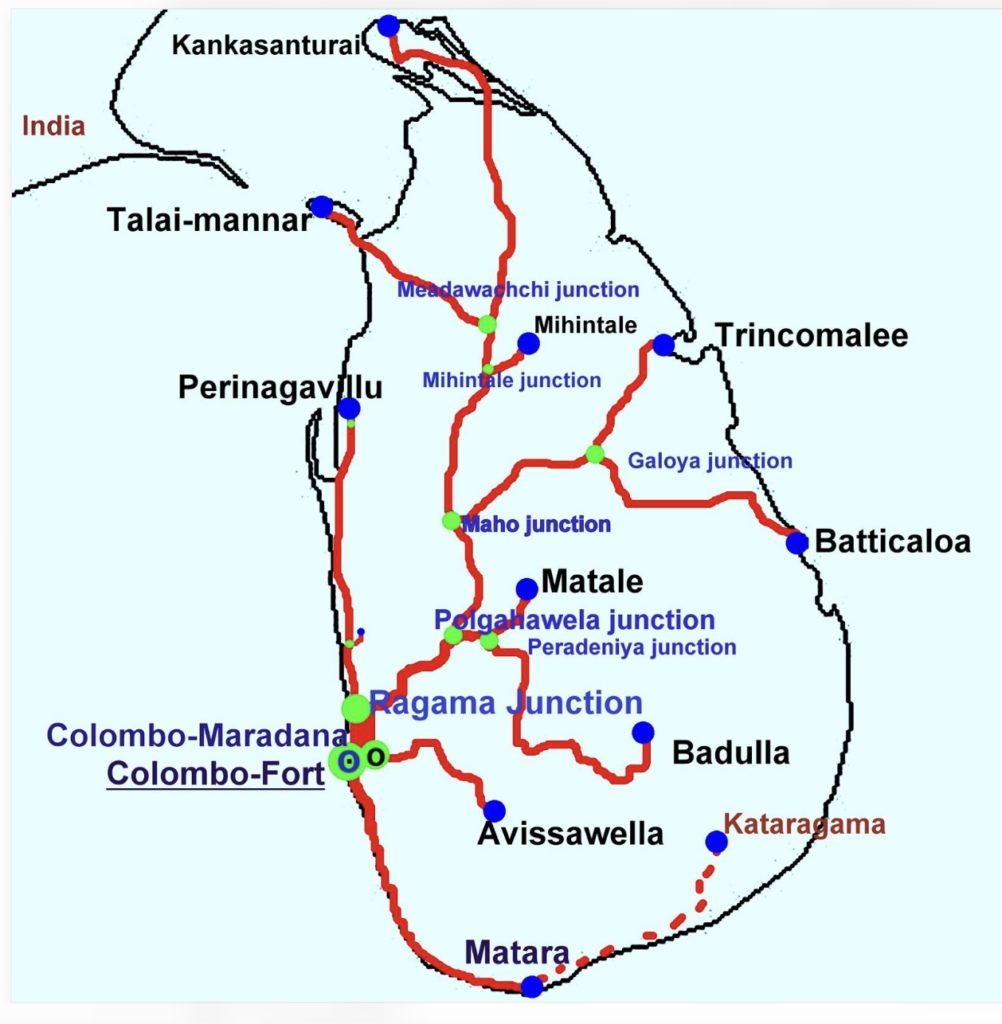 SRI LANKA’S RAIL CONNECTIVITY
-
INDIA’S NEIGHBOURS: THE HISTORICAL EXPERIENCES SRI LANKA MUST STUDY
India is a major regional power. Its relationships with neighbouring states have taken different forms, and Sri Lanka should study those experiences
Sikkim: incorporation into India in 1975
Sikkim was formerly a Himalayan kingdom. It became an associate state of India in 1974. Following a referendum in April 1975, the monarchy was abolished and Sikkim became India’s 22nd state on 16 May 1975.
The history of Sikkim demonstrates how the relationship between a smaller state and a much larger neighbour can culminate in a fundamental change to sovereignty.
Sri Lanka: India’s role in the ethnic conflict
India’s involvement in Sri Lanka’s conflict included the training and support of Tamil militant groups, the Indo-Lanka Accord of 1987 and the deployment of the Indian Peace Keeping Force.
The IPKF subsequently fought the LTTE and remained in Sri Lanka until 1990.
The Indo-Lanka Accord and accompanying Exchange of Letters addressed matters including foreign military and intelligence personnel, the use of Sri Lankan territory in ways affecting India’s interests and strategic issues concerning Trincomalee.
This history demonstrates that relations between the two countries have included direct involvement in matters of Sri Lankan security and sovereignty, not merely cultural and economic cooperation.
Sri Lanka should study those agreements and their consequences when evaluating new strategic commitments.
Nepal: the 2015 border crisis
The India imposed economic embargo of cross-border supplies in 2015 caused severe shortages in Nepal, including fuel medicine & food shortages. It lasted 6 months.
The episode demonstrated the vulnerability of a country whose essential supplies depend heavily on transit through a neighbouring state – India.
Sri Lanka should consider how infrastructure, energy and supply relationships dependency on India can affect national choices at a future date when alternatives are limited.
Bhutan: treaty provisions and external relations
The 1949 India–Bhutan treaty included a provision under which Bhutan agreed to be guided by India’s advice in its external relations. The 2007 treaty replaced that provision and reaffirmed Bhutan’s sovereignty while maintaining close relations between the two countries.
The treaty history shows why the precise language of agreements matters. Sovereignty is not protected by general assurances of friendship alone; it is protected by the terms of the arrangements a country signs.
Maldives: military assistance and later withdrawal demands
In 1988, India conducted Operation Cactus following a request for assistance from the Maldivian Government during an attempted coup.
In 2024, Indian military personnel were replaced by civilian technical personnel following a request by the Maldivian President for the withdrawal of Indian military personnel.
These events differ in context and purpose. They nevertheless show that the presence and role of foreign personnel can become a matter of domestic political and sovereign decision-making.
The lesson for Sri Lanka is that the terms of every strategic relationship matter, and a smaller state must protect its room to make independent decisions.
-
QUAD AND THE INDO-PACIFIC STRATEGIC ENVIRONMENT
The Quadrilateral Security Dialogue brings together India, the United States, Japan and Australia. Its cooperation includes maritime security, infrastructure, technology and regional connectivity.
Sri Lanka occupies an important location in the Indian Ocean, close to major shipping routes and with ports and infrastructure of interest to regional and global powers.
Sri Lanka cannot ignore the wider strategic environment in which its ports, energy systems, transport links and land-use plans are being developed.
The country must maintain its own national strategy and avoid allowing any external power to determine its future choices through accumulated infrastructure dependence.
-
WHY SHOULD INDIA’S Rs. 7.7 BILLION PROPOSAL BE ACCEPTED WITHOUT FULL DISCLOSURE?
The Government must answer why a new development programme is needed when the UDA already has a 2019–2030 Development Plan and a Sacred Area Planning Scheme was gazetted in February 2026.
Before accepting the proposal, the Government should publish:
- The complete Rs. 7.7 billion project proposal and feasibility studies.
- A comparison with the existing UDA 2019–2030 Development Plan.
- The relationship between the proposal and the February 2026 Sacred Area Planning Scheme.
- All project maps, boundaries and proposed land-use changes.
- The proposed funding agreement and every condition attached to it.
- The identity of the institutions and contractors responsible for implementation.
- Arrangements for ownership, management and operational control.
- Environmental, archaeological and heritage impact assessments.
- Any implications for land acquisition, access, security or surrounding communities.
- Confirmation of whether the project is linked to any wider transport or economic corridor.
If the project is solely intended to improve facilities for pilgrims, protect heritage and upgrade public services, the Government should publish the details that demonstrate this.
If the project has wider implications for land use, transport or connectivity, new non-Buddhist religious structures – those implications must also be disclosed.
The public must not be expected to accept a major foreign-funded programme on the basis of assurances alone.
-
SRI LANKA MUST NOT CONFUSE DEVELOPMENT WITH STRATEGIC DEPENDENCE
India is entitled to pursue its national interests. Sri Lanka is equally entitled to protect its own.
Cultural links do not confer territorial rights.
Religious connections do not diminish national sovereignty. Foreign funding does not remove the need for transparency.
Infrastructure development does not require a country to surrender its independent decision-making.
Anuradhapura is one of the great centres of Sri Lanka’s Buddhist civilisation. Its sacred places, archaeological heritage and historical landscape must be protected for future generations.
The proposed Rs. 7.7 billion programme must be examined against the existing national plan, the actual project documents, the funding conditions and the wider national physical planning framework.
The Government must also explain whether and how the programme relates to any wider connectivity proposal. If no such relationship exists, the Government should say so and publish the relevant documents.
Sri Lanka needs development. But it needs development under Sri Lankan authority, with transparent agreements, full public scrutiny and enforceable protection of national interests.
ANURADHAPURA: HISTORY REPEATING ITSELF?
India’s history of invasions and destruction of Buddhist sites in Sri Lanka cannot be separated from today’s concerns over alleged vandalism at Buddhist sites in the North, the placement of Siva Lingams at Buddhist locations, or Cyril Mathew’s July 1983 dossier to UNESCO documenting destruction in the North and East.
Akhand Bharat maps depicting Sri Lanka within a wider civilizational geography, territorial maps of a proposed Tamil Eelam extending into Anuradhapura, India’s expanding connectivity, economic corridor discussions, the proposed India–Sri Lanka land link and the growing presence of Indian workers and businesses must all be examined together. Sri Lanka must also understand India’s historical relationships with neighbouring states and the strategic implications of these developments.
India’s use of grants to promote a shared Chola heritage is another cause for concern, as it raises questions about whether Sri Lanka’s history is being reframed through a South Indian invader narrative at the expense of its distinct Sinhala Buddhist civilization.
Then there is the annual Dussehra celebrations. During this national event, Ravana’s effigy is burned across India to celebrate Rama’s victory. Such recurring cultural symbolism has significance for how Lanka is remembered and perceived historically & in the present. Many of these celebrations are hosted by the Govt.
And now, a proposed Indian-funded Rs. 7.7 billion development plan for Anuradhapura raises further questions. Will boundaries be imposed around Buddhist sacred sites? Will non-Buddhist religious structures be introduced? What happens to the identity of this sacred Buddhist landscape as Sinhala Buddhist population, economic and political influence declines?
These concerns demand answers before the plan proceeds. Anuradhapura is not merely a development project. It is the heartland of Sinhala Buddhist civilisation. Who will determine its future—and who will protect it?
THE QUESTION IS WHAT SRI LANKA IS ACCEPTING, WHAT CONDITIONS APPLY, AND WHETHER THE COUNTRY WILL RETAIN FULL AUTHORITY OVER ITS SACRED CITY AND ITS FUTURE ESPECIALLY NEW STRUCTURES THAT CONFLICT WITH THE SACRED HERITAGE.
ANURADHAPURA IS SRI LANKA’S HERITAGE.
ITS FUTURE MUST REMAIN A SOVEREIGN SRI LANKAN DECISION.
While this examination focuses on India’s expanding footprint in the North and Anuradhapura, India’s growing presence, projects, grants, infrastructure and relationships across all nine provinces of Sri Lanka must equally be examined to understand the full extent of its reach and the long-term implications for Sri Lanka’s sovereignty.
Shenali D Waduge