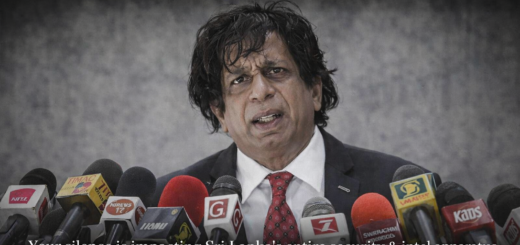
Returning to Easter Sunday attacks: Institutional Failure, Not Intelligence Failure

On 21 April 2019, Sri Lanka was struck by coordinated suicide bombings targeting three churches and three luxury hotels, killing at least 270 people and injuring around 500. The attackers were linked to National Thowheed Jama’ath (NTJ), an extremist group previously under the radar of Sri Lankan security services. Intelligence warnings of an imminent attack — including specific threats to churches and the Indian High Commission — were reportedly issued in the weeks before the incident but were not acted upon effectively.
This systemic failure would become central to every major inquiry that followed — including the Parliamentary Select Committee Report (PSC, 2019) and the Presidential Commission of Inquiry (PCoI, 2021) — and eventually the De Alwis Committee Report (2024).
The De Alwis Committee & Its Mandate
https://srilankabrief.org/wp-content/uploads/2024/11/A-N-J-DE-ALWIS-report-.pdf
https://www.shenaliwaduge.com/easter-sunday-attacks-justice-de-alwis-report-sept-2024/ (Committee Findings & Recommendations)
In June 2024, then President Ranil Wickremesinghe appointed a three‑member inquiry committee chaired by retired High Court Judge A.N.J. de Alwis. Its brief was narrower than earlier inquiries:
“To explore specific actions and measures taken by the State Intelligence Service (SIS), Chief of National Intelligence (CNI), Criminal Investigation Department (CID) and other relevant authorities on prior information or intelligence relating to the impending attack on 21 April 2019; and to assess the adequacy of those actions”
(Direct from report text under Chapter 2: Mandates of Inquiry.)
The committee received documents including the Final Report of the Presidential Commission of Inquiry (31 January 2021) for reference and began hearing evidence on 3 July 2024, concluding on 2 September 2024.
However, the government did not officially publish the De Alwis Report.
It was leaked publicly in October 2024 by former MP Udaya Gammanpila, who held a press briefing and released it because official channels withheld it.
Reported Quotes & Expanded Findings from the Leak
Because the government never officially published the full text, journalists and researchers have relied on the leaked copy and excerpts cited in media.
Intelligence Dissemination by the Director, SIS (Nilantha Jayawardena)
From report text:
- The Director, SIS “received intelligence on 4 April 2019from his Indian counterpart regarding attacks by members of NTJ, including threats against churches and the Indian High Commission.”
- He “disseminated the WhatsApp message and a written report to the Secretary, Ministry of Defence, SDIG‑CID, CNI and IGP.” (the names of those who held these positions are given below)
| Abbreviation / Role | Person at the Time |
| Secretary, Ministry of Defence | P. B. Jayasundara – Secretary to the Ministry of Defence and former Treasury Secretary |
| SDIG – CID (Senior Deputy Inspector General, Criminal Investigation Department) | Ravi Seneviratne – Senior DIG overseeing CID |
| CNI (Chief of National Intelligence) | Sisira Mendis – Head of National Intelligence (coordinating intelligence from SIS, police, and military) |
| IGP (Inspector General of Police) | Pujith Jayasundara – Head of the Sri Lanka Police Service |
The report notes that he even identified a dry‑run motorbike explosion on 16 April 2019 and shared this with senior police officials.
Committee Finding: (He = Nilantha Jayawardena Head of SIS) (former President = Maithripala Sirisena)
“He had considered his role being fulfilled upon disseminating the information… However, he had not been able to inform the former President regarding the impending attack… He had not shared the information with the Tri‑forces … he failed to exercise caution by sharing the information which would have assisted a more cohesive investigation…”
Committee Recommendation (quoted):
“The Committee recommends that the Director, SIS should be prosecuted under a suitable provision in the Penal Code by the relevant authority.”
The Chief of National Intelligence (CNI)
From the report:
“The CNI was informed of intelligence but did not check his mobile on 20 April 2019, allegedly because it was kept in his car, and he accompanied his wife to church on 21 April — even though credible warnings existed”
Committee Conclusion:
“The CNI … failed to take adequate measures and/or steps to disseminate the information as well as take steps to monitor and follow up on the intelligence.”
Committee Recommendation:
“Criminal action should be instituted against him for negligence under suitable provisions in the Penal Code.”
The Secretary, Ministry of Defence
From report text:
“Though he acknowledged seeing intelligence on 20 April 2019 and instructed the IGP to take action, he failed to convene the NSC or alert the President”
Committee Finding:
“The lack of seriousness given to the information is attributable for not taking steps to inform the president regarding the developments… The Secretary had failed to take diligent action regarding the attacks and his conduct had not been adequate.”
Committee Recommendation:
“The Committee recommends that the former Secretary, MoD should be prosecuted under suitable provisions in the Penal Code for negligence.”
The Inspector General of Police (IGP)
From report text:
“The IGP had been aware of prior extremist incidents involving Zahran and associates. Official letters and WhatsApp warnings were received but he waited to assemble a special team rather than issuing a nationwide alert.”
Committee Finding (direct):
“Although the former IGP mentioned there was a rift with the former President, this does not justify complete disregard of the intelligence… The lackadaisical approach ultimately resulted in missing reports until after the incident.”
Committee Recommendation:
“The Committee recommends that the former IGP should be indicted under relevant provisions of the Penal Code.”
Other Police Officials
The report goes on to assess dozens of mid‑level police officers — from SDIGs to DIGs, SSPs, OICs and ASPs — and found that many received intelligence instructions but failed to ensure coordinated security measures or take proactive steps.
Examples of direct findings include:
- Multiple officers received instructions to tighten security, but “no special measures were taken to strengthen security around churches.”
- In several cases, officers failed to follow upon written directives or simply went on leave despite imminent threat notifications.
Committee Recommendations for these ranks repeatedly included:
“He should be prosecuted for negligence under suitable provisions of the Penal Code by the relevant authority.”
Finding on President Maithripala Sirisena
The report states explicitly:
“The Committee observed that the aforesaid intelligence had not reached President Maithripala Sirisena. As such the Committee decided that it was beyond their mandate to consider culpability regarding his conduct… However, the Committee is mindful that his actions overall had contributed to the deterioration of security in the country…”
So although the report declined to assign direct legal responsibility due to its limited mandate, it recognized a structural failure in how the intelligence apparatus was positioned under executive command.
The Importance of the Leak
The Parliamentary Select Committee (PSC) Report (2019) identified systemic intelligence failures, including that SIS did not effectively share external warnings. It noted:
“Intelligence information received indicated that the Indian High Commission was targeted, yet proper dissemination was not made by the SIS.”
By contrast, the De Alwis leaked findings go further by assigning specific actions (or inaction), timelines, and responsible officials — something the PSC report did not do in named terms.
From Systemic Failure to Personal Accountability
The De Alwis report — through its own words — found repeatedly that:
- “Actions and measures taken by senior officials were inadequate…”
“…failure to take diligent action…”
“…conduct had not been adequate…”
“…crimes of negligence should be prosecuted…”
These repeated findings represent a shift away from institutional critique to personal accountability.
Udaya Gammanpila’s Role and Concerns
Udaya Gammanpila publicly released the report and consistently argued:
- The public has the right to see official inquiries conducted in their name.
- If the government refuses to release these reports, he will.
- He promoted the finding that criminal cases should be filed against at least 17 officialsfor negligence — a claim derived from the report’s own recommendations.
Gammanpila’s actions turned the document from a confidential government briefing into a public discourse on accountability.
Why the Leak Matters Today
- Complements the PSC Findings
Where the PSC spoke in general systemic terms, the De Alwis leak names who— and how — they allegedly failed.
- Highlights Withheld Accountability
Despite these clear recommendations for prosecution, major prosecutions have not been launched— feeding ongoing public frustration.
- Pushes Debate to Legal Accountability
The report itself recommended criminal prosecution under the Penal Code — not just policy reform — bridging inquiry outcomes with real legal consequences. - Connects with Ongoing Terror Probes
Recent high‑profile arrest (2026) of a former intelligence chief not holding position during the attacks signify that unresolved inquiry findings continue to shape law enforcement action.
What the De Alwis Leak Reported
| Aspect | What the Report Says (Leaked Text) |
| Intelligence Warning | “SIS informed SDIG Ravi Seneviratne on 9 April 2019… warning letter remained unopened.” |
| Repeated Alerts Ignored | Multiple alerts on extremist activity, including NTJ dry‑run evidence and church threats. |
| Inadequate Measures by SIS | “He had not shared information with the Tri‑forces… actions were inadequate.” |
| Inadequate Action by CNI | “Failed to disseminate and follow up on intelligence.” |
| Inadequate Actions by IGP | “Lackadaisical approach… failed to prevent or mitigate the attacks.” |
| Recommendations | “Criminal prosecution should be instituted under Penal Code provisions.” |
| No Official Publication | Government withheld report — leaked by Udaya Gammanpila. |
The leaked De Alwis Committee Report is significant because it:
- Names specific individuals and datestied to intelligence failures;
- Quotes authoritative findingsof inadequate intelligence action;
- Directly recommends criminal prosecutionfor negligence;
- Casts new light on previously known inquiry gaps;
- Continues to shape legal, political, and public debates about accountability for one of Sri Lanka’s worst terror tragedies.
1️. State Intelligence Service (SIS)
- Mandate:Collect, analyze, and report intelligence on internal and external threats to national security.
- Authority:Advisory only — cannot arrest, detain, or execute operations.
- Output:Reports, alerts, and recommendations to enforcement authorities (e.g., IGP, CNI, Defence Secretary).
- Chief of National Intelligence (CNI)
- Mandate:Coordinate all national intelligence agencies, consolidate intelligence, advise top government leadership.
- Authority:Coordination and recommendation — cannot implement operations.
3️. Inspector General of Police (IGP)
- Mandate:Head of all police forces; responsible for public safety, law enforcement, and operational decisions.
- Authority:Can order investigations, raids, arrests, and preventive actions.
4️. Senior DIG – CID
- Mandate:Lead Criminal Investigation Department; investigate crimes, coordinate with intelligence, execute preventive and legal measures.
- Authority:Directs CID officers; implements operational actions based on intelligence.
5️. Secretary, Ministry of Defence
- Mandate:Oversee national defence and coordinate security policy; ensure agencies implement government security directives.
- Authority:Administrative and strategic approval — can authorize police/military action but does not execute investigations personally.
6️. Military Units
- Mandate:National defence and emergency support.
- Authority:Only acts when formally deployed by Defence Ministry or requested by law enforcement.
Key Distinction:
- Collection & Reporting:SIS, CNI → cannot act operationally
- Action & Enforcement:IGP, SDIG/CID, Ministry of Defence, Military → responsible for preventive action
This makes it crystal clear: negligence in responding to warnings is on the enforcement chain, not the intelligence collectors.
Accountability must follow Authority
The De Alwis Committee Report, when read alongside the Parliamentary Select Committee (PSC) Report and the Presidential Commission of Inquiry (PCoI), leads to one unavoidable conclusion: the Easter Sunday tragedy was not the result of intelligence failure, but of institutional paralysis and executive breakdown in the enforcement chain.
The evidence clearly establishes that actionable intelligence was received, documented, and disseminated through formal channels. The failure occurred after dissemination, within the agencies vested with legal authority to act — namely the Ministry of Defence, the Chief of National Intelligence, and the Sri Lanka Police hierarchy.
The Committee’s own findings demonstrate that:
- The State Intelligence Service (SIS) fulfilled its statutory role by collecting and transmitting intelligence.
- The Chief of National Intelligence (CNI) failed to coordinate, monitor, and escalate urgent threat warnings.
- The Secretary to the Ministry of Defence failed to activate the National Security Council or issue emergency security directives.
- The Inspector General of Police and senior police command failed to execute preventive security measures despite repeated alerts.
These failures were not abstract administrative lapses.
They constituted criminal negligence, as explicitly identified by the Committee, warranting prosecution under relevant provisions of the Penal Code.
Yet, nearly years after the attacks, systemic accountability remains absent, while selective legal action risks distorting the true chain of responsibility.
The deliberate withholding of the De Alwis Committee Report, followed by its public leak, underscores a deeper institutional reluctance to confront where real authority — and therefore real liability — resided on the eve of the attacks.
Transparency was not denied due to national security concerns, but because the findings directly implicated senior decision-makers within the enforcement and executive command structure.
For justice to be meaningful, accountability must follow authority, not convenience.
Failure to uphold this principle:
- Weakens public trust,
- Undermines national security credibility,
- Distorts future counter-terrorism policy,
- And leaves the country vulnerable to repeat failures.
True justice for the victims of Easter Sunday does not lie in symbolic prosecutions or political scapegoating. It lies in faithfully implementing the findings of Sri Lanka’s own official inquiries, without fear, favour, or selective omission.
Until that occurs, the Easter Sunday tragedy will remain not only a story of terror, but of unresolved state failure.
Shenali D Waduge