Road to “Independent” Sri Lanka: Pre-Colonial Life — A Civilisational Model
The importance of learning history is to connect with one’s roots, to feel grounded in the land referred to as one’s “motherland,”. These factors inspire the feeling and urge to defend and protect one’s Nation. Once people are disconnected from their history, their sense of belonging weakens, and their passion to serve the nation diminishes — leaving the Nation vulnerable. This is why when efforts to remove or distort history are peddled red flags are raised. An ungrounded people are easier to manipulate, and the Nation becomes “up for grabs.” Ignorance of the nation’s history removes the will to defend it.
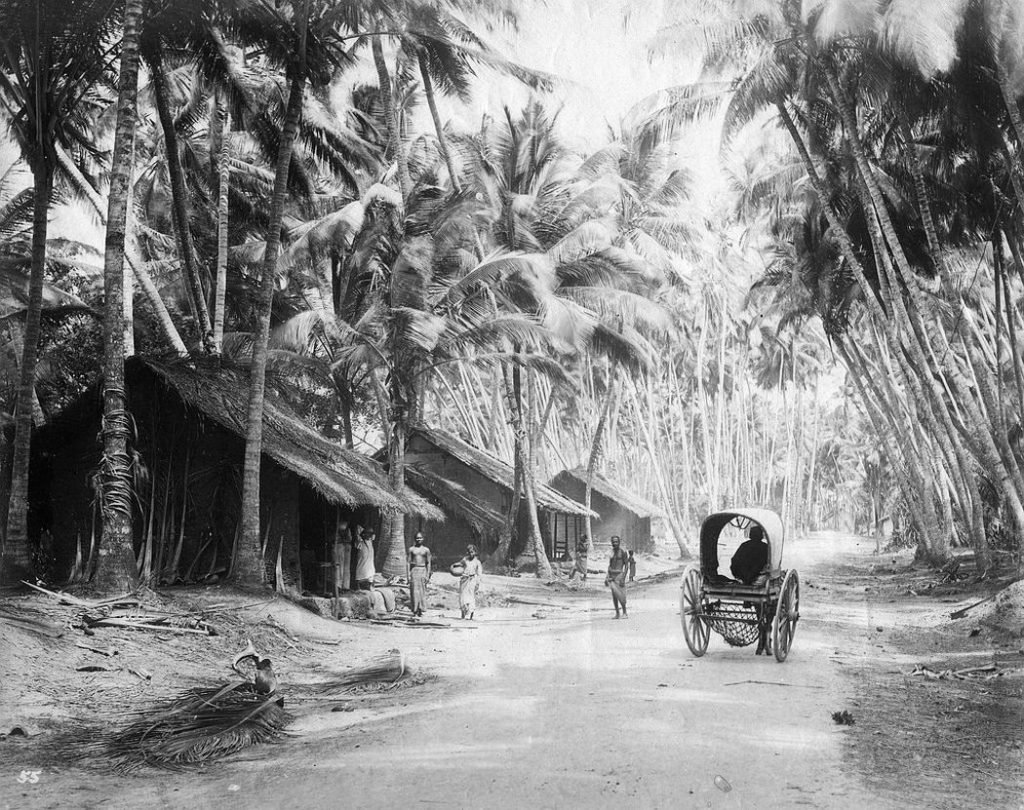
Sri Lanka, long before the first European ships appeared on its shores, was a land of deep civilisational roots, defined not only by its natural beauty but by a society structured around ethical governance, social cohesion, and spiritual clarity. The Sinhala-Buddhist kings and queens, whose reigns stretched across centuries, governed according to the principles of the Dasa Raja Dhamma, the tenfold law of righteous kingship. This was not a mere set of moral ideals for private contemplation; it was the foundation for statecraft, social harmony, and the mental wellbeing of the population. It did not leave out even sentient beings. In essence, governance was inseparable from ethics, and the measure of sovereignty was not only territorial control but the peace of mind of the people.
Dasa Raja Dhamma: Ethics as Governance
The Dasa Raja Dhamma, historically practiced by all Sinhala kings — and even by invader rulers from South India who briefly ruled the land — outlined ten fundamental principles for rulers:
- Generosity (Dana)– sharing resources equitably, especially with the weak.
- Morality (Sila)– ethical conduct in personal and public life.
- Self-Sacrifice (Pariccaga)– prioritizing the welfare of the nation above personal gain.
- Honesty (Ajjava)– integrity in administration and diplomacy.
- Kindness (Maddava)– compassion toward all, including defeated adversaries.
- Non-Violence (Avihimsa)– avoiding unnecessary harm.
- Restraint (Khanti)– patience and tolerance, even under provocation.
- Uprightness (Avirodhana)– fairness and equity in all dealings.
- Patience (Tapa)– enduring difficulties with equanimity.
- Wisdom (Akkodha)– applying prudence and discernment in governance and strategy.
These principles shaped administration, justice, taxation, trade, public works, and warfare. Kings did not exploit subjects; laws protected the weak, and taxes were fair. Disputes were resolved through consultation with Buddhist monks and wise elders, reflecting both legal fairness and moral reasoning.
The motive was not to punish. No one was defeated. What Buddhist jurisprudence did was to enable equitable outcomes, a philosophy preserved in the Poya Geya concept, which emphasizes moral accountability, and societal harmony.
Duties Before Rights
Pre-colonial governance prioritized duties over rights.
Every individual — ruler, administrator, or citizen — had responsibilities toward society. Rights were the natural and automatic outcome of fulfilling duties:
- When rulers acted ethically and protected their people, citizens’ rights to safety, property, and livelihood were automatically secured.
- When citizens performed their societal duties, they contributed to maintaining peace and justice for all.
This created a society of mutual accountability, where ethical conduct, not legalistic enforcement, ensured stability.
Psychological freedom, trust in authority, and moral clarity flourished under this system.
Legitimacy Through Ethics and Peace of Mind
Governance was based on moral authority, not coercion or fear. Citizens obeyed laws because they recognized them as fair, ethical, and rational. This system produced profound psychological security: people knew their leaders would act justly, laws were equitable, and disputes would be resolved ethically. This peace of mind was inseparable from civilisational sovereignty.
Notably, pre-colonial chronicles record no ethnic conflicts between Sinhalese, Tamils, Muslims, or other communities. Differences existed but were integrated into broader ethical and social frameworks. This raises a critical question: if such divisions never existed historically, why are they central to post-colonial politics? The answer lies in the divide-and-rule policies introduced by colonial powers, which intentionally fragmented society along artificial lines of ethnicity, religion, and caste.
Social Cohesion and Coexistence
Pre-colonial Sri Lanka was marked by diverse communities living in harmony. Temples, monasteries, and learning centers were cross-community spaces fostering knowledge, dialogue, and ethical understanding.
Social order emphasized mutual respect, civic duty, and shared responsibility rather than hierarchy based on race or religion.
Trade, marriages, and interactions across communities were guided by ethical norms rooted in Buddhism, which valued compassion, honesty, and non-harm.
Vices were minimal. There were no large-scale alcohol, drugs, smoking consumption or livelihoods that profited from its sale. Toddy was restricted to villages. The modern alcohol-drug related vices are a colonial import introduced to intentionally destroy them.
By promoting cohesion the kings protected the internal system from external threats and internal disputes, if any, did not escalate into destructive conflicts.
Education, Culture, and Moral Formation
Education was closely linked with heritage, ethics, and practical skills. Much emphasis was placed on the mind & its development. Monasteries taught literacy, numeracy, history, religious philosophy, and ethics to children across communities. Cultural practices reinforced these values: art, literature, dance, music, festivals, and religious observances were not mere aesthetics but vehicles for moral instruction and communal cohesion. The magnificent buildings and artefacts that continue to draw tourists today were done by those who had no degrees, did not attend ivy league colleges or rode benz cars. Peace of mind was nurtured from childhood, teaching citizens that ethical living and civic responsibility were practical tools for personal and societal wellbeing. That wellbeing was far more valuable than the “rights” “freedom” placards and slogans used today.
Economy and Governance: Ethical Order
The economy was intertwined with ethical governance. Land, taxation, and trade were regulated to prevent exploitation and maintain social harmony. Right livelihood was essentially a key framework of ethical living. Public resources like the irrigation tanks and canals of Anuradhapura and Polonnaruwa were maintained for sustainable agriculture and equitable prosperity. Kings personally oversaw public works and were accountable for their subjects’ welfare. Civic duty was internalized at all levels of governance, creating a society where citizens felt secure in their livelihoods and loyal to the state.
True, people did not travel in planes, jets, or cruise ships. Material excess was limited. Yet contentment, social belonging, and peace of mind were widespread. This invites a necessary question for the modern age: those who possess unprecedented wealth, and comfort today—are they truly happier, or merely more distracted?
Peace of Mind as Sovereignty
True independence is not measured by flags or treaties, but by the mental, moral, and social freedom of a people. Kings ensured citizens were free from fear, deception, and social manipulation. Peace of mind allowed citizens to:
- Trust ethical leadership
- Pursue livelihoods without fear
- Resolve conflicts through justice and moral reasoning
- Experience a sense of belonging rooted in civilisational continuity
- Live peacefully in coexistence with nature
Sovereignty and peace of mind were inseparable; a nation’s strength lay in the confidence, moral clarity, and cohesion of its people.
In the pre-colonial civilisational order, security was not merely physical but psychological and ethical. People lived without the constant anxiety of arbitrary violence, social decay, or moral disorientation.
Today, people are repeatedly told they possess rights, freedoms, and justice. Yet in practice, these assurances are meaningless when daily life is surrounded by vices rather than virtue. The modern era has normalised conditions that would have been unthinkable in a civilisation rooted in ethical governance: organised crime, contract killings, assassinations, suicide terrorism, underworld violence and now gender transition have become recurring features of public life. These are not signs of progress; they are symptoms of moral collapse.
Pre-colonial society functioned without advanced technology, surveillance systems, or expansive legal codes, yet it maintained order through ethical restraint and shared responsibility.
The individual governed the self; discipline arose from conscience, not coercion. Social order did not depend on cameras, algorithms, or constant monitoring, because moral accountability was internalised.
People were guided by values, not controlled by machines.
Today, this self-regulation has collapsed. Self-ethics prevail only amongst a few.
Technology monitors behaviour where ethics once guided it.
Surveillance replaces trust, regulation replaces restraint, and external control is attempting to compensate for internal moral collapse.
This is where we have gone wrong. No amount of machinery, legislation, or paperwork can correct a society that has lost mastery over its own impulses. Systems can restrain behaviour, but they cannot cultivate virtue. Without inner discipline, regulation multiplies endlessly—yet disorder persists.
A society that once relied on self-discipline now depends on artificial systems to restrain impulses that were once governed by conscience. Until the individual learns again to govern the self, neither technological sophistication nor legal expansion will restore peace of mind or true social order.
Technology today is presented as a liberating force, but its impact must be questioned honestly. Instead of strengthening families and communities, it often fragments them. Children are increasingly detached from parents, exposed prematurely to harmful content, and shaped more by algorithms than by values. The internet, with its vast potential for learning and connection, is frequently reduced to a vehicle for pornography, addiction, and moral erosion.
This contrast raises a fundamental civilisational question: has technological advancement enhanced human wellbeing, or has it merely accelerated disconnection, anxiety, and ethical decline?
Peace of mind—once central to governance and daily life—has been replaced by constant stimulation, insecurity, and psychological unrest. Without restoring moral grounding and ethical discipline, neither rights nor freedoms can deliver genuine human flourishing.
Lessons for Today
Colonial disruption deliberately weakened the ethical and civilisational foundations that produced sustainable peace of mind and societal cohesion.
To reclaim true independence, Sri Lanka must restore moral and civilisational consciousness, not merely political institutions. Heritage-based education, ethical governance, and social frameworks are practical, strategic tools for national survival and psychological restoration.
By reconnecting with the pre-colonial model, we understand what was lost, what was betrayed, and why restoring civilisational consciousness is essential for reclaiming true independence today.
Education Without Roots Is Displacement, Not Progress
People are being told that today’s education reforms are designed to “match the world.” But matching the world without first knowing who we are does not produce progress—it produces displacement.
An education system that disconnects a child from their land, history, civilisational values, and moral inheritance does not prepare them for the world; it prepares them to belong nowhere.
True education should anchor before it expands. A person who does not know where they come from cannot meaningfully decide where they are going. When education is stripped of national memory, cultural continuity, and ethical grounding, individuals grow up seeing themselves as strangers in their own country—imitators of external models rather than custodians of an ancient civilisation.
If one chooses to live in Sri Lanka, build a future here, and shape its destiny, grounding is not optional – it is mandatory. That grounding begins with valuing oneself as part of a rich, continuous heritage—not as an accident of geography or a relic of the past, but as a living civilisational identity. Only when people appreciate who they are can they selectively and intelligently engage with the outside world.
If those who seek citizenship in foreign countries are required to study, memorise, and respect the history, values, and institutions of that land in order to be accepted, why is there such reluctance to learn—and take pride in—the history of the country one is born into?
No nation grants belonging without knowledge. Identity is not assumed; it is earned through understanding and respect. Yet in our own land, knowing our history is increasingly portrayed as optional, outdated, or even regressive. This contradiction reveals a deeper problem: we have been conditioned to value external validation more than self-recognition.
A people who willingly learn another nation’s story in order to belong, but hesitate to embrace their own, are not rejecting history—they are suffering from a loss of confidence in themselves.
True global engagement begins with self-respect. One cannot meaningfully integrate into the world while remaining alienated from one’s own civilisational inheritance.
Pride in one’s heritage is not hostility to others; it is the foundation of self-worth. No nation remains sovereign when its people are taught to forget who they are, even as they are expected to remember who others are.
What we are witnessing today is the reverse process: foreign frameworks are imported first, declared “global” or “modern,” and then imposed as standards to be followed—while local history, ethics, and wisdom are treated as outdated or irrelevant. This does not create global citizens; it creates rootless individuals who consume ideas without discernment and adopt values without ownership.
A nation does not become modern by abandoning itself. It becomes modern by standing firmly on its civilisational foundations and engaging the world from a position of self-knowledge and confidence. The task of education, therefore, is not to erase identity in the name of global compatibility, but to strengthen identity so that engagement with the world is conscious, selective, and sovereign.
Without this grounding, reforms—however well-branded—will continue to weaken social cohesion, dilute responsibility, and erode peace of mind.
Education must first teach people to belong, before teaching them to compete.
Only a grounded people can modernise without losing themselves.
Current educational reforms fail to address these foundational needs. Instead of cultivating rooted individuals, they risk producing a dislodged generation—technically skilled yet internally unsettled, globally exposed yet locally disconnected, uncertain not only of their place in the world but of where they truly belong.
We return, inevitably, to the concept of peace of mind. Without this inner anchoring, individuals remain in a constant search for fulfilment, mistaking consumption, achievement, or validation for contentment.
Yet peace of mind cannot be assembled from external achievements alone; it emerges from clarity of identity, moral grounding, and a sense of belonging within a living civilisational.
Unless education consciously nurtures this foundation, individuals will continue to chase peace without understanding what truly provides it—leaving society restless, fragmented, and vulnerable despite every outward sign of modernity.
For today’s generation & tomorrows generation to have that peace of mind – the pieces of history, heritage and civilizational pride that ground them must be connected.
Shenali D Waduge