ROOTS OF ISLAMIC RADICALIZATION IN SRI LANKA
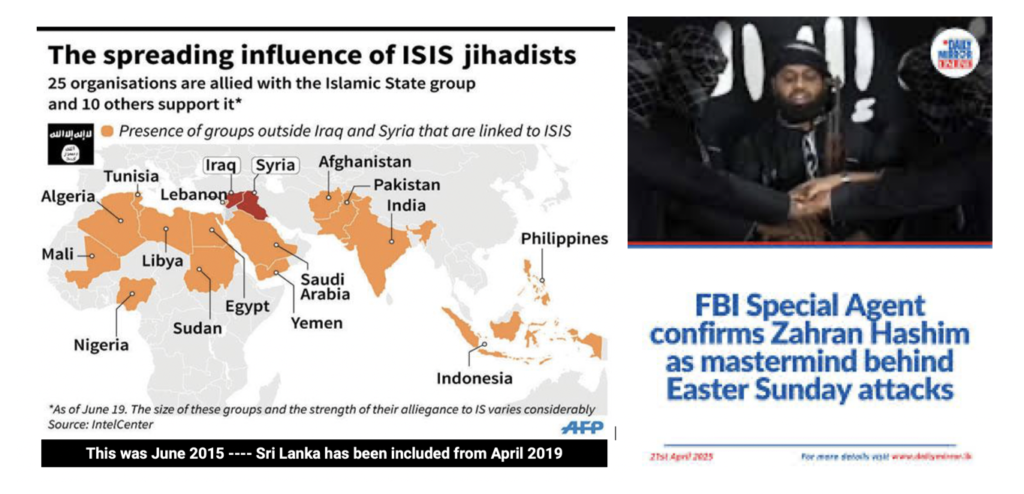
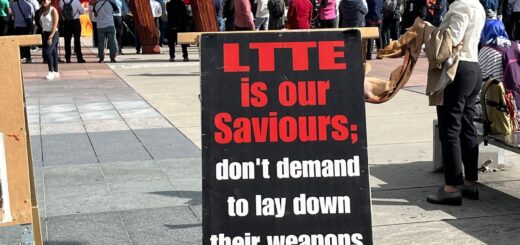
The colonial occupiers have much to answer for. Many present-day problems were planted as part of colonial divide-and-rule policies However, we cannot live in the past and repeatedly blame the bearers. We must move forward and take decisive action against the problems created. A start is making the people aware of the threats and the dangers these threats pose so that remedial actions can be backed by public support. When LTTE extremist groups began, they were called “our boys” — eventually they became one of the world’s most ruthless terrorist movements. The nation suffered 30 years of bloodshed. Then came two more periods of bloodshed under the JVP. Now, a third community has been silently engaged in its own extremism, which culminated in terror on Easter Sunday. The nation cannot suffer any more bloodbaths. The people must demand action irrespective of political or business alliances or allegiances.
-
HOW IT BEGAN
- 1942: Jamaat-e-Islami founded in British India by Abul A’la Maududi→ promoted a political form of Islam seeking governance under Islamic religious law rather than secular systems
- 1954: Sri Lanka Jamaat-e-Islami established Abdul Cader Jailani Shahib:
- Religious education
- Study circles
- Publications and preaching
- Community-based influence
This marked the institutional beginning of organized ideological propagation.
The establishment of SLJI laid the groundwork for an organized ideological structure that, over decades, evolved in complexity and influence.
At this stage:
Activities were legal and social
There was no immediate security threat
But networks, influence channels, and ideological pipelines were being built
- 1990s: Wahhabism introduced via Centre for Islamic Guidance → promoted a rigid, exclusivist interpretation that rejects other Islamic traditions and non-Muslims
Not all religious movements are extremist.
However, radicalization begins when religion is:
- Politicized— used as a framework for governance rather than personal faith
- Exclusivist— rejecting coexistence with other beliefs
- Intolerant internally— targeting other sects within the same religion
- Weaponized— used to justify hostility or violence
Although early activities were legal and social, some local elites and community leaders began to see influence and funding channels through mosques and religious institutions, setting a subtle precedent for later exploitation by extremists.
These conditions can create an environment where extremism can gradually emerge.
-
EARLY VIOLENCE & INTIMIDATION (1950s-1980s)
Phase 1 (1950s-1980s)
Following the establishment of Sri Lanka Jamaat-e-Islami (SLJI), ideological expansion took place through:
- Religious education and study circles
- Distribution of literature and publications
- Expansion of mosque-centered networks
- Establishment of madrassas(primarily focused on basic religious education at the time)
At this stage:
- Activities remained non-violent and legal
- Influence was gradual and community-based
- No immediate national security concerns were raised
Phase 2: Youth & Student Penetration (1980s)
- 1980:Formation of the Sri Lanka Islamic Students Movement (SLISM)
- Marked a shift towardstructured youth engagement and ideological transmission
Significance:
- Ideas began reachingyounger generations systematically
- Createdlong-term ideological continuity
Phase 3: Shift to Rigid Interpretations (1990s)
- Introduction ofWahhabi/Salafi teachings through institutions such as the Centre for Islamic Guidance
- Transition from:
- General religious revival to more rigid, exclusivist interpretations
This resulted in:
- Sectarian divisions, particularly targetingSufi Muslims
- Growingintolerance within the Muslim community itself
Why this shift went largely Unnoticed
- Activities wereframed as religious reform
- Remainedwithin legal and social boundaries
- Did not initially pose avisible national security threat
- Early tensions wereinternal and localized
However, beneath the surface:
- Ideological networks were expanding
- Recruitment pathways were forming
- Authority structures were evolving
Phase 4: Emergence of Violence (Mid-1990s–2009)
The shift from ideology to violence became visible through intra-community attacks:
- 1996 onwards: Violent incidents targeting Sufi Muslims
- Shootings
- Arson
- Intimidation
- 1998: Killing of M.S.M. Farouk Qadhiree (anti-Wahhabi figure)
- 2004: Large-scale mob attacks linked to sectarian tensions
- 2009: Continued clashes and fatalities linked to religious divisions
LTTE’s first victim was a Tamil
The first victims of this wave of radicalization were Muslims themselves
The killing and attacks were a warning to other Muslims who did not comply.
Extremist ideologies first eliminate internal dissent before expanding outward.
-
RADICAL NETWORK FORMATION (2003–2014)
- 2003 – Oluvil Declaration (Asserting Muslim Autonomy):
- The Oluvil Declaration drew partial inspiration from the Vaddukoddai Resolution of 1976 (attended by M. M. Ashraff), which asserted Tamil separatist aims.
- This marked the firstorganized, public assertion of Muslim communal interests in the post-LTTE era, signaling a shift toward structured political and social mobilization.
- H. M. Ashraff’s Leadership & Muslim Political Mobilization:
Minister M. H. M. Ashraff, through the Sri Lanka Muslim Congress (SLMC), reshaped Muslim ethno-political expression post-1980s. While not promoting extremist violence, his leadership fostered networks and institutions emphasizing:
- Community autonomy
- Representation in governance
- Distinct Muslim identity
Exposure to broader ethnic assertion and advocacy for communal rights laid the ideological groundwork for later radical elements after the LTTE threat receded in 2009.
While Ashraff’s political mobilization was not violent, but it created social networks that later beceme exploited by radical ideologues.
- Political Identity ⇒ Context for Later Extremism:
This period of identity assertion reshaped community expectations and political networks in the Eastern Province:
- Initially non-violent, these developments created social and ideological infrastructure.
- Youth networks, religious study circles, and mosque-based gatheringsformed channels that later facilitated radicalization and exposure to global Salafi/Wahhabi currents.
- 2012 – National Thowheed Jamaat (NTJ) Established by Zaharan Hashim:
With the elimination of LTTE terrorism, attention shifted to hardline Islamist groups such as NTJ:
Promoted Salafi-Wahhabi teachings, influenced by global jihadist ideologies
Built localized networks for recruitment, indoctrination, and community influence
This marked the transition from political mobilization to ideological radicalism, setting the stage for eventual operational capability.
- 2013 – Global Jihadist Ideological Recognition:
International bodies, including the European Union, identified Wahhabism and ultra-conservative Islamic currents as a source for foreign fighter recruitment.
Connections formed between Sri Lankan networks and global jihadist movements.
At least 32 individuals from 4 affluent families traveled to Syria, demonstrating the link between local ideological groups and transnational jihadist currents.
- 2014 – Sri Lankans Join Foreign Jihadist Networks:
With LTTE eliminated, Islamist networks became more visible and operationally connected.
Sri Lankans traveled to the Middle East, joining ISIS-affiliated groups in Syria and Iraq.
Locally, extremist recruitment, fundraising, and study circles expanded, forming the early infrastructure of organized radical networks.
Societal Signals & Economic Influence
Adoption of black hijabs and stricter Arabic attire by some Eastern Province women signaled alignment with hardline Salafi practices.
Halal certification initiatives and similar economic activities with other commercial initiatives linked to religious practice.
Certain members of the Muslim political, professional and business community exploited these emerging networks for profit, while underestimating ideological risks.— whether through international fundraising, remittances, or economic enterprises linked to ideological activities.
Beyond profit, creating networks of ideological influence by:
- Influencing law enforcement and intelligencenot to arrest or disrupt suspects, including key NTJ members and local radical preachers
- Facilitating the inflow of funds from abroad, under the guise of charitable or religious activities
- Rallying politicallyacross party lines whenever members of their community were implicated — e.g., mobilizing resignations, public protests, professional protests and legal challenges to protect individuals under investigation
- Permitting foreign individuals and refugees(Rohingya, other Muslim nationals) to operate or stay without scrutiny, creating networks of ideological influence
These actions created a protected space for radical networks to consolidate, enabling ideological and operational development while undermining the ability of intelligence and law enforcement to act effectively.
The combined effect: radicalization was politically and economically shielded, even as intelligence monitored early warning signs. Without this communal-political protection, early intervention could have prevented escalation.
WERE SRI LANKA’S INTEL AWARE – WHAT WAS THEIR RESPONSE
Post-2009, Sri Lanka’s intelligence apparatus (SIS, CID, Defence Intelligence) monitored ideological developments:
- Spread of Salafi/Wahhabi teachings among youth
- Emergence of radical study circles and online propaganda
- Foreign travel for conflict zone recruitment
Response limitations:
- Activity initially non-violent, giving authorities limited legal grounds for direct action
- Efforts focused on monitoring, advisory measures, and community engagement
- Political identity formation, post-war social shifts, and early radical networks →Intel monitoring → Emergence of NTJ in 2012 → Global jihadist connections
Note:
- Radical networks did not emerge in a vacuum— they built on decades of ideological, social, and political development.
- The post-LTTE vacuumallowed previously silent networks to consolidate and align with transnational extremist ideologies.
- Societal and economic factors, including visible adoption of Salafi practices and emerging commercial opportunities, provided enabling conditions.
- Early intelligence awareness existed, but non-violent activity and systemic constraintslimited decisive action, creating the space for NTJ and allied networks to grow.
-
ISIS PENETRATION & RECRUITMENT – 2014 ONWARDS
2014 – ISIS Declares Caliphate & Global Call for Attacks
- In June 2014, ISIS formally established its so-calledcaliphate in Iraq and Syria and called on Muslims worldwide to attack “non-believers” and join its cause.
- This global pushdirectly influenced extremist circles in South Asia, including Sri Lanka.
- ISIS declared its leader ascaliph, aiming to draw recruits from all countries.
- Certain Gulf states were allegedly involved in indirectly funding or facilitating ISIS recruiters and ideologues, creating transnational links for extremist recruitment
Sri Lankans Travel to Join ISIS (2014–2016)
- By 2015–2016,Sri Lankan nationals traveled to Syria and Iraq, joining ISIS; some were later killed in coalition airstrikes.
- Intelligence agencies identified early travel patterns and possible recruitment pipelines, though no confirmed operational cells had yet formed within Sri Lanka.
- Local Networks: Recruitment, Fundraising & Network Building
During this period, localized extremist support activity increased:
- Recruitment platforms on encrypted messaging apps and social media groups began to appear (e.g., Telegram), facilitating ideological indoctrination and outreach.
- Fundraising channels and remittances linked to extremist ideology were monitored by intelligence agencies.
- Foreign preachers arriving on tourist visas were flagged as potential threats for radical teaching and recruitment.
2016 – Organized Propaganda & Group Activity
- Online and messaging platforms grew to dozens or hundreds of members, openly sharing ISIS propaganda and recruitment material
- Weekly sermons and lectures reflectedhardline jihadist ideology, escalating from mere preaching to organized extremist activity.
- Following the 2015 regime change, several intelligence units were disbanded and operatives arrested, reducing monitoring capacity and allowing dispersed ideological groups to consolidate.
Intelligence Awareness & Warnings
- SIS, CID, and Defence Intelligen cemonitored:
- Radical study circles
- Spread of Salafi/Wahhabi ideology among youth
- Online recruitment and foreign travel to conflict zones
- Warnings reached political leadership, including parliamentary briefings noting that some Sri Lankans were joining ISIS abroad.
Limitations in Response:
- Early activity categorized as ideological, not violent, limiting legal grounds for enforcement
- Focus remained on monitoring, community engagement, and travel screening
- Arrests were minimal; NTJ leader Zahran Hashim had a warrant issued only after overt violent incidents.
- Ongoing attention on LTTE resurgencemay have diverted focus from emerging jihadist threats
Transition to Operational Terrorism
- By 2016, isolated ideological activity had shifted toorganized recruitment, network consolidation, and operational readiness.
- Political-business enabling factors, intelligence gaps, and regulatory inaction allowed networks togrow openly until violent incidents emerged, setting the stage for subsequent attacks.
By 2016, this was no longer purely ideological; it had evolved into an organized terrorism infrastructure.
ESCALATION TO VIOLENCE: INCIDENTS LINKED TO ZAHRAN HASHIM (2014–2018)
2014–2015 – Radical Preaching & Local Tensions (Eastern Province)
- Zahran Hashim, known as a preacher from Kattankudy, began delivering hardline sermons promoting exclusivist Salafi ideology.
- His speeches increasingly attacked other Muslim sects (Sufis) and non-Muslims, creating intra-community tensions.
2016 – Public Extremist Activity & Clashes
- Kattankudy & surrounding areas:
- Zahran-led group involved in violent confrontations with Sufi Muslims, including disruption of religious gatherings.
- His activities began drawing police and intelligence attention, marking a shift from preaching to confrontation.
2017 – Vandalism of Sufi Shrines (Thowheed–Sufi Conflict Escalates)
- Kattankudy / Kaththankudy region
- Zahran-linked individuals were accused of:
- Attacking and vandalizing Sufi mosques and shrines
- Promoting Takfiri ideology (declaring other Muslims as unbelievers)
This marked a clear move from ideological extremism to organized violence within Sri Lanka.
March 2017 – Warrant Issued for Zahran Hashim
- Following multiple complaints and incidents, Sri Lankan authorities issued an arrest warrant for Zahran.
- He subsequently went into hiding, continuing activities underground.
2017–2018 – Going Underground & Network Consolidation
- While evading arrest, Zahran:
- Continued online radicalization (YouTube, social media, encrypted platforms)
- Strengthened links with like-minded extremists and NTJ networks
- Transitioned from local preacher → covert extremist organizer
2018 – Discovery of Training & Explosive Materials (Wanathawilluwa-Puttalam)
- Authorities uncovered:
- Explosives, detonators, and training materials
- Evidence of organized preparation and militant capability
- A major escalation from ideological radicalism to operational readiness.
December 2018 – Coordinated Attacks on Buddhist Statues
- Multiple Buddha statues vandalized in Mawanella
- Investigations linked suspects to networks associated with Zahran Hashim
- Demonstrated shift from intra-Muslim tensions to direct targeting of other religious communities
- Indicated intent to provoke wider communal unrest
By 2016–2018, isolated ideological activity had escalated and evolved into a structured terrorism infrastructure, encompassing recruitment, indoctrination, financing, operational cells, and growing violent capability.
Despite the March 2017 warrant, failure to apprehend Zahran, combined with weakened intelligence coordination post-2015 and a politicized security setup, allowed these networks to evolve unchecked, escalating ideological radicalization into operational terrorism – culminating in the Easter Sunday attacks in April 2019.
-
INTELLIGENCE WARNINGS IGNORED (2015–2018)
Repeated warnings:
- Zahran named at National Security Council (2015)
- SIS warns of ISIS radicalization (2016)
- Intelligence: Sri Lankans being sent to Syria
- 2017:
- Warnings of attacks on non-Muslims
- Requests to arrest extremists including Zaharan Hashim
- 2018:
- Arrest warrants issued
- INTERPOL notices
- Foreign intelligence alerts
All of the above clearly establishes that the threat posed by Zahran Hashim and associates was well-known to Sri Lankan authorities.
BUT:
- No arrests of individuals
- No bans on extremist groups
- No disruption of networks or their activities
- Surveillance WITHOUT ACTION
The threat was KNOWN at the highest levels – but no concrete action was taken.
-
TRAINING, WEAPONS & ATTACK PREPARATION (2017–2019)
Operational Preparations Observed:
- Multiple training camps:
- Weapons training
- Bomb-making & handling explosives
- Suicide indoctrination even wives
- Recruitment of:
- Men
- Women (wives)
- Stockpiling explosives (Wanathawilluwa discovery)
- Stockpiling of swords found in number of mosques and homes (discovery was laughed off as protecting family members)
- Financial support:
- Families of suicide bombers
- Target surveillance from safehouses (churches, hotels)
Key Point:
These activities reflect a state of full operational readiness for mass-casualty attacks, demonstrating the transition from ideological radicalization to organized terrorism infrastructure.
-
FOREIGN INTELLIGENCE WARNINGS IGNORED (APRIL 2019)
India identified Zaharan’s network while dismantling several terror cells operating in South India. A Deputy IGP from Indian intelligence had infiltrated Zaharan’s network using the alias “Abu Hind”, gaining access through Zaharan’s brother, Rilwan.
- April 4: India warns of imminent attack (targets + names)
- April 5: Warning confirmed again
- April 9–10:
- Intelligence NOT shared properly
- April 20:
- No raids
- No arrests
- No security deployment
The attacks were preventable days before they occurred. Even on the day of the attacks, simple preventive measures could have averted the loss of 269 lives.
Decades of Radicalization:
- Built gradually over decades
- Highly visible to authorities
- Violent tendencies evident early
- Connected to global jihadist networks
Intelligence:
- Identified individuals
- Identified networks
- Identified targets
- Identified timing
Yet:
NO decisive action
Accountability Questions:
- Who blocked action?
- Why were extremists not arrested despite warrants?
- Who obstructed ground operations?
- Who attacked the Minister who raised concerns in Parliament about affluent Muslims joining ISIS?
- Who resigned when a community member was arrested?
- Who organized protests demanding release of individuals linked to jihadist cells?
- Why were groups not banned earlier?
- NTJ operated openly for years despite known ISIS connections.
- Who campaigns for asylum/refugee policies that may allow extremists to enter?
- Who influences security forces to avoid arrests despite known criminal activity?
- Why was intelligence ignored?
- Multiple NSC briefings were held.
- Foreign intelligence warnings were repeatedly issued.
- Who decided not to act, not to alert the public, not to deploy security forces, or not to inform potential targets (churches and hotels)?
- Who interfered with investigations?
- Why were suspects released prematurely?
- Why were investigations slowed, redirected, or obstructed?
- Why have those claiming “conspiracy” not been forced to provide the evidence
- What is still hidden?
- Those aware but inactive have not been publicly exposed.
- Political accountability continues to be avoided.
This was not an intelligence failure; it was a failure to act.
There can be no scapegoats to conceal this truth.
A MESSAGE TO THE MUSLIM COMMUNITY:
Sri Lankan Muslims should recall that, historically, it was the compassion of Sinhala kings that allowed them to establish themselves in Sri Lanka.
Muslim traders did not come with Muslim women. They first arrived in India then came to trade in then Ceylon. They survived threats from the Portuguese and Dutch who wanted to eliminate them from the island but they flourished under the British. Over generations, they became culturally integrated—mastering Sinhala, Tamil, and English—and had little direct connection to Arab Islamic culture.
However, alongside the ideological chronology of radicalization came demands for:
- Arabic language and madrassas (now often called daham pasal)
- Arabic dress and cultural practices
These are alien to Sri Lankan culture, and each demand carries the risk of disturbing peaceful coexistence.
The example of Zaharan Hashim demonstrates the catastrophic consequences of following such imported ideologies. Just as other nations—including Saudi Arabia, which first promoted the Wahhabi brand of Islam—are now moving away from rigid, exclusivist interpretations, Sri Lankan Muslims must also recognize the dangers of blindly adopting foreign practices that conflict with local culture.
The mistake of the Tamil community that watched the LTTE rise to eventually turn against its own, should not be repeated by Sri Lanka’s Muslims who must actively reject extremist ideologies, even if they originate within their own community, to prevent repetition of such tragedies.
Call for Leadership Aligned with National and Cultural Harmony:
Muslims should support leaders who recognize and embrace their community as an integral part of the Sinhala-Buddhist cultural heritage of the island. Leaders who prioritize coexistence, local traditions, and national unity. Leadership that seeks to impose foreign Arabic language, customs, or cultural practices risks aligning with imported extremist ideologies, as demonstrated by the tragic example of Zaharan Hashim. By fostering leadership that values moderation and integration, the community can protect itself from ideological manipulation, prevent radicalization, and ensure that no faction within the community brings harm to the nation or its own members.
Shenali D Waduge