The Future of Iran’s Regime: Who Wants It to Fall, Who Doesn’t, and What It Means for the World
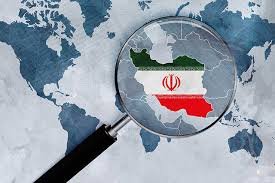
Since the 1979 revolution that created the Islamic Republic of Iran, the Iranian state has played a central role in Middle Eastern geopolitics. The regime is led by a Supreme Leader. Over four decades, Iran has become a major regional power and a controversial actor accused of sponsoring militant groups and proxy warfare. The global debate is who wants the Iranian regime to fall, who wants it to remain and what would the consequences be?
“Seven Countries in Five Years”
After the September 11 attacks, retired U.S. General Wesley Clark said he was shown a Pentagon memo outlining plans to confront or remove governments in seven countries:
- Iraq
- Syria
- Lebanon
- Libya
- Somalia
- Sudan
- Iran
Two decades later –
- Iraq 2003
Leader Saddam Hussein removed & executed.
Outcomes
- Collapse of the Iraqi state
- Rise of insurgent groups including ISIS
- Sectarian conflict between Sunni and Shia groups
- Large-scale civilian casualties and displacement
Long-term impact
Iraq remains politically unstable with strong foreign influence from both United States and Iran.
- Libya 2011
Overthrow and death of Muammar Gaddafi.
Outcomes
- Collapse of central government
- Emergence of rival militias
- Human trafficking and migrant smuggling networks
- Libya a transit hub for African migration to Europe
Long-term impact
Libya remains divided between competing political factions and armed groups.
- Syria 2011
Became one of the most devastating conflicts of the 21st century.
Outcomes
- Hundreds of thousands killed
- Millions displaced internally and internationally
- Rise of extremist groups including ISIS
- Intervention by multiple global powers
Long-term impact
The government of Bashar al‑Assad survived but the country remains heavily damaged.
- Somalia
Somalia has experienced prolonged instability since the early 1990s.
Outcomes
- Weak central government
- Continued insurgency by Al‑Shabaab
- Persistent humanitarian crises
Long-term impact
Somalia remains one of the most fragile states in the world.
- Sudan
Sudan underwent major upheaval including the secession of South Sudan and subsequent civil wars.
Outcomes
- political instability
- military coups
- humanitarian crises
Long-term impact
Sudan remains deeply unstable with competing armed factions.
- Lebanon
Lebanon has not experienced regime overthrow but has suffered severe political and economic collapse.
Outcomes
- collapse of the banking system
- hyperinflation
- political paralysis
- growing influence of Hezbollah
- Iran (Still Unchanged)
Among the seven countries listed by Wesley Clark, Iran remains the only major state where regime change has not occurred.
The Current situation
The Islamic Republic of Iran continues to govern despite:
- international sanctions
- regional conflicts
- internal protests
Strategic role
Iran continues to influence regional politics through alliances and support for armed groups.
Why Iran Is the Key Remaining State
Iran remains geopolitically important because:
- It is a large, centralized state
- It controls access near the Strait of Hormuz
- It has built regional alliances with groups such as Hezbollah and Hamas
For many analysts, Iran represents the final major State on Clark’s list whose political system has not been fundamentally transformed.
Who Wants the Iranian Regime to Fall — and Why
United States/Israel and some Western allies
The United States has long viewed Iran as a strategic adversary due to:
- Iran’s nuclear program
- Support for armed non-state groups
- Hostility toward Western military presence in the Middle East
- Control of trade chokepoints and influence over world oil
Washington has repeatedly imposed sanctions and pressure on Iran since the Iranian Revolution.
Israel
Israel considers Iran its primary security threat because:
- Iranian leaders have called for the elimination of Israel
- Iran funds and arms groups that target Israel
- Iran’s nuclear program is viewed as existentially dangerous
Some Gulf Arab states
- Saudi Arabia
- United Arab Emirates
have historically feared Iran’s regional ambitions and its influence across the Middle East.
Iranian opposition groups
Internal and external opposition movements oppose the regime because of:
- political repression
- limits on civil liberties
- economic mismanagement
Some opposition groups seek democratic reform, while others advocate complete regime change.
Iranian pro-democracy diaspora groups
Iranians who are non-Shariah compliant/Persian-Zoroastrian aligned
Who Does NOT Want the Regime to Fall — and Why
Russia
Russia values Iran as:
- a strategic partner against Western influence
- a military and geopolitical ally in Syria
- an energy and trade partner
A regime collapse could weaken Russia’s regional influence.
China
China views Iran primarily through an economic and strategic lens:
- energy imports
- Belt and Road trade routes
- counterbalancing Western power
China generally prefers stable governments over unpredictable regime change.
Some regional governments
Countries that cooperate with Iran or rely on regional stability may fear:
- civil war in Iran
- refugee crises
- disruption of energy supplies
Supporters of current Iranian Regime claim:
Strategic independence
Iran has resisted external domination since the 1979 revolution, promoting the idea of sovereignty and resistance to foreign interference.
Regional influence
Iran has built a network of alliances across the Middle East, increasing its geopolitical power.
Scientific and technological development
Despite sanctions, Iran has developed capabilities in:
- missile technology
- nuclear research
- drone systems
Criticisms against the Iranian Regime
Political repression
International organizations have criticized Iran for:
- restrictions on protests
- imprisonment of political activists
- censorship of media
- lack of freedom and fundamental rights for both men and women
Economic difficulties
Sanctions and internal governance problems have contributed to:
- high inflation
- unemployment
- currency instability
Regional proxy warfare
Iran is widely accused of supporting armed groups across the region.
Iran and the Funding of Armed Groups
Iran’s foreign policy strategy includes support for non-state actors aligned with its interests.
These groups include:
- Hezbollahin Lebanon
- Hamasin Gaza
- Palestinian Islamic Jihad
- Houthisin Yemen
Critics say Iran provides:
- weapons
- funding
- training
- intelligence support
Supporters argue these groups form part of a “resistance axis” against Western influence and Israeli military power.
This proxy strategy has contributed to conflicts across:
- Lebanon
- Syria
- Iraq
- Yemen
- Gaza
What Happens if the Iranian Regime Continues
If the current system remains in power, several outcomes are possible.
Continued regional rivalry
Iran’s competition with countries like Saudi Arabia and Israel is likely to continue.
Ongoing proxy conflicts
Support for militant groups could sustain instability across the Middle East.
Nuclear tensions
Concerns over Iran’s nuclear program would likely remain a central issue in global diplomacy.
What Happens if the Regime Collapses
Regime collapse could produce several possible scenarios.
Positive possibilities
- political reform
- improved relations with Western countries
- reduced regional proxy warfare
- reduced extremism and terrorists attacks related to Hamas, Hezbollah, Palestinian Islamic Jihad and Houthis.
Negative possibilities
- increased extremism and terrorism
- fragmentation of the Iranian state
- regional power struggles
- civilian casualties
Another potential indicator of regime instability would be defections from Iran’s military, intelligence services, and public administration.
If internal unrest intensifies or the regime weakens, senior military officers, security officials, diplomats, and technocrats may seek asylum abroad, particularly in Europe, North America, or neighboring states.
Such defections could have several consequences:
- Intelligence gains for rival states, including information on Iran’s military capabilities, nuclear program, and proxy networks.
- Diplomatic tensions, as Tehran would likely accuse host countries of harboring traitors.
- Migration pressures, especially if military, professionals and skilled officials begin leaving in large numbers.
- Institutional weakening inside Iran, as experienced personnel abandon the state leaving only the extremists and Iranian civilians.
Historically, waves of elite defections often signal declining confidence within a regime’s own institutions and can precede deeper political instability.
Countries Most Likely to Be Affected
Several regions would feel the impact most strongly.
Middle East
Countries directly affected by Iran’s current policies include:
- Israel
- Saudi Arabia
- Lebanon
- Syria
- Iraq
- Yemen
Energy markets
Iran controls access near the Strait of Hormuz, a vital shipping route through which a large share of global oil passes.
South Asia and the Indian Ocean
Countries such as India, Pakistan, and Sri Lanka could be affected by:
- shipping disruptions
- refugee flows
- geopolitical rivalry
The debate over Iran’s future is not simply about one government. It reflects broader global tensions involving:
- ideology
- security
- energy
- regional power balance
Whether the Islamic Republic of Iran continues or changes, the consequences will extend far beyond Iran itself, shaping geopolitics across the Middle East, Asia, and the wider international system.
Let us now look at the more important demographic, societal, ideological consequences if the Iranian regime strengthens and Western influence is defeated including the impact on terrorism, extremism across the region & globally.
- Regional Terrorism and Extremism Expansion
If the Iranian regime consolidates its power:
- Proxy networks could expand further: Groups like Hezbollah, Hamas, Houthis, and other militias would likely grow in influence and reach.
- Terrorist training and operations could increase in the Middle East, North Africa, and potentially in South and Central Asia.
- Safe havens for extremist organizations may solidify, making counterterrorism efforts by the West and regional powers more difficult.
Conflict spillover:
Neighboring states may face cross-border attacks, insurgencies, or refugee crises.
Implication: Regional instability would likely increase, and extremist ideologies could find fertile ground in failed or fragile states.
- Demographic and Societal Shifts
Long-term demographic trends are relevant for global planning and social cohesion:
- White population in Europe and North America is declining in many countries due to aging, low birth rates and cultural shocks like the promotion of LGBTQIA – discouraging marriage and having children and turning males into females and females into males. The damage this ideological propaganda is doing will be realized too late for reversals.
While
- Muslim populations are growing not only in Muslim majority nations but, particularly in Europe, parts of Africa, and Asia.
If Islamist extremist movements gain influence in regions where Muslims are a minority, there could be increased social tension, cultural friction, or security concerns.
Non-extremist Muslims may feel constrained or coerced in areas where extremist ideology gains influence. This is indicative in the increasing number of youth from well-to-do Muslim families joining jihadi ideology. 32 members of 4 families in Sri Lanka joined the ISIS in Syria in 2017, two years later in 2019 Sri Lanka faced mass murder on Easter Sunday also by 8 well-to-do Muslims.
Implication: Rapid social and demographic changes could produce migration pressures, urban instability, and cultural clashes if unchecked.
- Economic Consequences
Iran’s strategic location and influence over energy routes, especially near the Strait of Hormuz, could amplify risks:
- Global oil and gas supply disruptions if conflicts or extremist operations interfere with shipping.
- Rising energy prices and inflation worldwide.
- Economic instability in countries reliant on Middle Eastern energy, including Europe, India, China, and Japan.
- Potential impact on global trade through the Indian Ocean, affecting South Asia and East Africa.
Implication: A strong Iranian regime can create economic ripple effects far beyond its borders, with non-Muslim populations being indirectly affected.
- Political and Security Consequences
- Weakening of Western influence in the Middle East could embolden other authoritarian or militant regimes setting stage for a historical clash of the civilizatons.
- Strategic allies of the U.S. and Israel, such as Gulf Arab states, would be forced into defensive or militarized postures.
- Heightened risk of regional arms races, including nuclear proliferation and missile deployment.
Implication: Global and regional security could be destabilized, and countries without direct stakes may face secondary threats.
- Societal and Cultural Implications
- Expansion of extremist ideologies can limit civil liberties, especially for women, secular communities, and non-extremist Muslims.
- Education systems, media freedom, and cultural expression may be curtailed in regions influenced by militant groups.
- Potential brain drain: skilled populations may emigrate from unstable regions, weakening local economies.
Implication: Even populations not directly involved in conflicts could experience loss of rights, societal restrictions, and economic stagnation.
- If the Regime Survives the new Iranian leader
- May declare willingness to engage with enemy camp and re-negotiate
- A possible understanding to end military-financial-support to armed groups & agreement to disarm them (flip side would be these groups turning against the
Implication: While risky, regime survival depends on internal moderation versus militant expansion.
- If the Regime Expands Its Influence
- Expansion of proxy and extremist networks globally, possibly reaching new regions.
- Increased terrorist attacks in unstable or minority regions, directly affecting non-Muslims, minorities, and moderate Muslims.
- Long-term geopolitical polarization, especially between Western powers, Russia, China, and Middle Eastern blocs.
- Migration crises and social disruption in Europe, South Asia, and Africa as people flee conflict zones.
Implication: Failure to check extremist expansion would have direct, indirect, and long-term consequences for global populations, economies, and political systems.
Global Stakes and Warnings: A Message to the West and Iran
The above underscores a critical reality: the continuation or expansion of the Iranian regime is not a regional issue alone — it is a global concern affecting security, economies, demographics, and societal stability.
To Western Powers (U.S., Israel, Europe, Allies):
- Military interventions and regime-change attempts have historically destabilized entire regions, as seen in Iraq, Libya, and Syria.
- Military interventions and regime-change in nations that could have been West-friendly have turned anti-West due to propping puppets into power.
- Allowing extremist networks aligned with Iran to expand unchecked risks terrorist attacks, migration crises, energy disruptions, and social upheavalfar beyond the Middle East.
- Diplomatic, economic, and intelligence strategies must be carefully thought through to contain extremist influence without provoking unnecessary state collapse, which could create chaos worse than the current situation.
To the Iranian Regime:
- Continued support for extremist proxies and militant ideologies strengthens Iran’s regional influence but comes at the cost of global isolation, economic sanctions, and perpetual conflict and discontent of its own people.
- Expansionist or aggressive policies risk drawing in powerful external actors, potentially provoking military escalation that could devastate the region and endanger Iranian civilians.
- There is a window to balance internal governance, regional alliances, and moderation, ensuring regime survival without creating an unsustainable global crisis.
Key Takeaways for the World:
- Extremist ideologies flourish when state structures weaken or when unchecked. A strong, militarized Iran may deter direct Western intervention, but it also amplifies risks for non-Muslims, minorities, moderate Muslims, and global populationsexposed to terrorism.
- Global stability requires mutual restraint, strategic containment, and realistic assessment of demographics, energy dependencies, and security architecture.
- History has shown that ignoring the spread of militant ideology leads to widespread human, economic, and geopolitical costs. The lessons of Iraq, Libya, Syria, and beyond are clear: instability breeds extremism.
The Imperative:
- For the West: containment and diplomacy must be strategic, not ideological— avoid provoking state collapse while countering terrorism
- For Iran: survival must prioritize internal moderation and measured regional influenceover global destabilization.
- The reliance on extremist/terrorist groups to strengthen one’s reach needs to be reassessed. It has not borne any dividends except for those who profit from wars.
- For the world: awareness, preparedness, and proactive counterterrorism are essential to mitigate the risks that arise when extremist networks gain strength.
The path forward requires strategic rethinking.
For the West, it is containment and engagement over ideological intervention.
For Iran, it is moderation and responsible influence over expansionist ambition.
For the world, it is preparedness and proactive counterterrorism to prevent extremist networks from reshaping global stability.
The future of Iran’s regime is not a distant regional concern; it has profound implications for the world’s social, economic, and demographic balance. A strong, unmoderated Iran risks expanding extremist networks that exacerbate migration pressures, alter demographic trends, and intensify cultural friction in Europe, South Asia, Africa, and beyond. Conversely, Western interventions that destabilize Iran could trigger refugee crises and further accelerate demographic upheavals especially when terrorists embed as refugees/asylum seekers. UK and Europe are now experiencing such violence and crimes.
Global stability now hinges not only on containment of terrorism and careful diplomacy but also on understanding the societal and demographic consequences of Iran’s actions. For the West: strategic restraint and targeted counterterrorism are vital. For Iran: internal moderation and responsible regional influence are essential to avoid long-term global and domestic crises. Demographics, ideology, and migration are as critical as missiles and politics — and they demand urgent attention from all actors involved.
Whether the Islamic Republic endures, reforms, or collapses, the consequences will not stop at Iran’s borders. The choices made in Tehran, Washington, and regional capitals today may shape the security, demographics, and stability of the international system for decades to come.
Shenali D Waduge