From Terror to Political Warfare: How Global LTTE Networks are recreating the conditions for Sri Lanka’s next National Security catastrophe
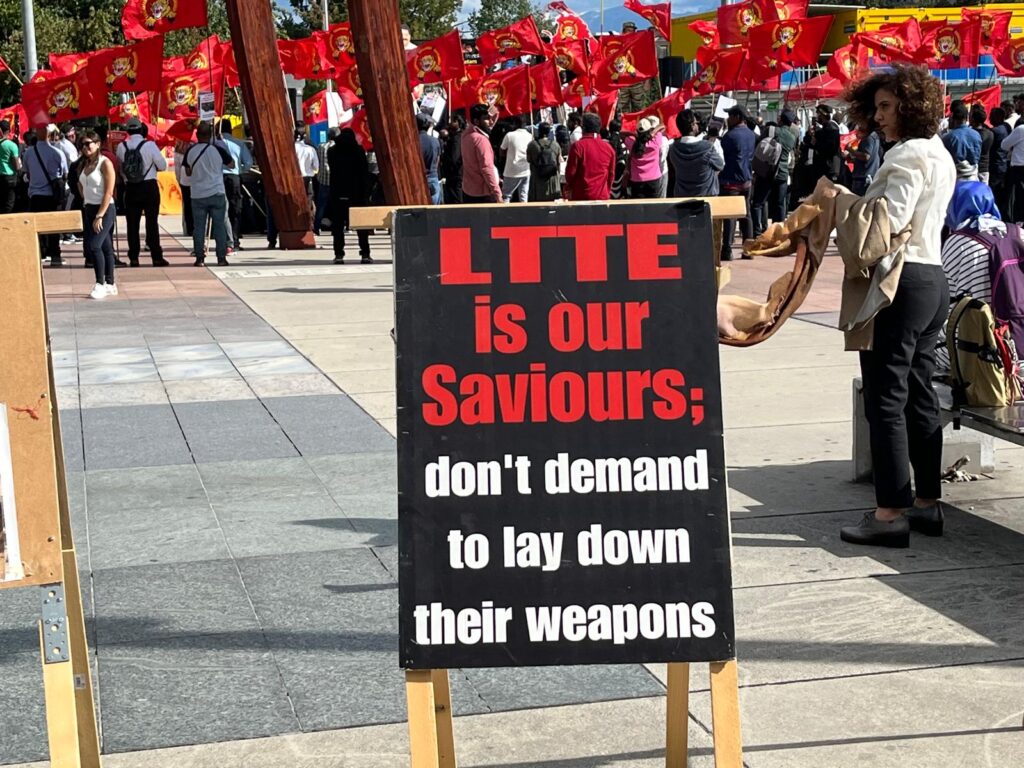
Sri Lanka formally defeated the Liberation Tigers of Tamil Eelam (LTTE) militarily in May 2009. However, where the military succeeded the ideological battle tasked to the politicians failed. Armed movements that fail militarily often transition into political warfare networks, relocating operations from the battlefield into international diplomacy, diaspora mobilization, narrative construction, legal activism, and foreign political lobbying.
Global LTTE-linked networks continue to operate with the same separatist objective — the creation of an independent Tamil Eelam — by non-military means. Through coordinated diaspora events, ideological commemorations, international lobbying, parliamentary engagement, UN advocacy, and media manipulation, these networks have reconstructed the LTTE’s separatist project into a transnational political warfare apparatus. Beneath this façade lies another ugly truth. This “separatist” propaganda hides a lucrative money-making enterprise those steering it wish to continue under pretext of “separatism” while residing on foreign shores.
Simultaneously, Sri Lanka is experiencing systematic demilitarization, strategic troop withdrawals, intelligence downgrading, and the weakening of security presence in historically sensitive regions, alongside increasing pressure on Sinhala Buddhist religious, archaeological, and demographic presence in the North and East. This combination is neither accidental nor isolated. It reflects a strategic convergence between external political pressure and internal policy submissive and appeasement retreat.
- The LTTE’s separatist ideology, symbols, terminology, political objectives, and strategic methods continue uninterrupted under new organizational forms openly even in the countries that continue to ban LTTE.
- Diaspora activism has evolved into a coordinated international political warfare systemthat influences Western governments, international institutions, and multilateral bodies, particularly the UNHRC.
- This external pressure is directly shaping Sri Lanka’s domestic security policy, resulting in dangerous demilitarization and institutional weakening and the safety concerns of Sinhala Buddhists and Buddhist archaeological sites.
- The emerging internal conditions precisely mirror the political, military, and administrative vulnerabilities that enabled the LTTE’s rise in the late 1970s and 1980s.
This is not merely a political issue, ethnic grievance, or human rights debate.
It is fundamentally a national security, constitutional, and sovereignty crisis.
CANADA
Maaveerar Naal – Toronto (LTTE Heroes Day) – 2025
Source: https://www.tamilguardian.com/content/canadian-tamils-commemorate-maaveerar-naal-1
Why This Is an LTTE Event:
- The name itself is LTTE-originated
“Maaveerar Naal” = Great Heroes Day→ Created by LTTE leader Velupillai Prabhakaran to commemorate dead LTTE combatants, not civilians.
- Photographs show LTTE combat martyr iconography
Events feature:
- LTTE Tiger emblem
- Flame pyramids
- Fallen cadres portraits
- Uniform-style ceremonial symbolism
These are exclusive LTTE martyr traditions, not civilian memorial practices.
- Absence of civilian victim inclusion
No memorialization of:
- Sinhalese civilians
- Muslim victims expelled by LTTE
- Tamil civilians killed by LTTE
- Moderate Tamil leaders assassinated by LTTE
Only LTTE cadres are honoured.
- Ideological messaging
Speeches consistently reference:
- “Sacrifice for Tamil Eelam”
- “Freedom fighters”
- “Liberation struggle”
These are explicit LTTE ideological narratives.
This is not a civilian remembrance — it is structured ideological glorification of a terrorist organization.
UNITED KINGDOM
London – Tamil Eelam Flag Projection on Parliament Buildings – 2023
Source: https://www.tamilguardian.com/content/london-landmarks-lit-tamil-eelam-flag-mark-maaveerar-naal
Why This Is an LTTE Event:
- Tamil Eelam flag is LTTE’s political flag
This flag was:
- Created by LTTE
- Used as LTTE’s national symbol
- Never an internationally recognized civil identity symbol
- Purpose of projection
Explicitly stated:
“To mark Maaveerar Naal”
This automatically classifies it as LTTE cadre commemoration, not civilian remembrance.
- Symbolism used
Includes:
- Tiger iconography
- Flame symbolism
- Martyr glorification language
These are exclusive LTTE ideological markers.
This constitutes public glorification of a banned terrorist organization’s political project.
UNITED KINGDOM
Wembley Arena – Mass Maaveerar Naal Event – 2015
Source: https://www.tamilguardian.com/content/thousands-british-tamils-commemorate-maaveerar-naal-london
Why This Is an LTTE Event:
- Event title
“Maaveerar Naal” → Official LTTE martyr day.
- Stage symbolism
Photographs show:
- LTTE flags
- Tiger emblem banners
- Fallen cadres tribute walls
- Absence of civilian names
- No civilian memorial listing
- No inclusive mourning
- Only LTTE cadres honoured.
- Chants and slogans
“Tamil Eelam will rise”
“Martyrs never die”
These are LTTE revolutionary slogans.
This is a mass ideological rally, not a civilian grief event.
FRANCE / GERMANY / BELGIUM / SWITZERLAND
Tamil Eelam Women’s Uprising Day (Europe-wide) – 2024
Source: https://www.tamilguardian.com/content/tamil-eelam-womens-uprising-day-marked-across-europe-0
Why This Is an LTTE Event:
- Historical origin
“Women’s Uprising Day” commemorates:
- LTTE’s female combat wing (Birds of Freedom) – Not civilian women.
- Visual propaganda
Includes:
- Female LTTE cadres in uniform
- Tiger emblem
- Military honour rituals
- Language used
“Female fighters”
“Martyr heroines”
“Liberation warriors”
These are armed militant glorification terms.
This is celebration of LTTE female combatants, not civilian women.
UNITED STATES
Tamil Genocide Day – Congressional Lobbying – 2025
Source: https://tamilguardian.com/content/members-us-congress
Why This Is LTTE-Linked Political Warfare:
- Narrative framing
Uses LTTE-originated casualty figures & terminology.
- Terminology weaponization
“Mullivaikkal Genocide” is:
- Coined by LTTE diaspora networks
- Not recognized by any international judicial body
- Political objective
Goal:
- International intervention + sanctions + legal action
- This aligns directly with LTTE diaspora political strategy documents.
This is strategic diaspora political warfare, not civilian remembrance.
AUSTRALIA
Pongu Thamil – Melbourne
Source: https://www.tamildiasporanews.com/tamils-rise-in-melbourne-pongu-tamil-2025-for-freedom-and-justice/
Why This Is an LTTE Event:
- Pongu Thamil was initiated by LTTE
It began inside LTTE-controlled areas as political mass mobilization for separatism.
- Slogans used
- “We want Tamil Eelam”
- “Self-determination”
- “Our martyrs guide us”
These are LTTE political slogans.
- Use of Tiger emblem
Consistently present.
This is separatist political mobilization, not humanitarian protest.
INDIA
Prabhakaran Birthday & Martyr Memorials – 2015
(Shankar remembered in Madurai)
Source: https://www.tamilguardian.com/content/lt-shankar-remembered-madurai
Why This Is an LTTE Event:
- Honours named LTTE cadres
Specific LTTE fighters honoured — not civilians.
- Visual propaganda
LTTE portraits
Uniform imagery
Tiger emblem
- Messaging
“Martyr sacrifice for Tamil Eelam”
This is direct glorification of an internationally banned terrorist leader & cadres.
Let us first identify and distinguish a civilian remembrance
What defines a civilian remembrance?
- Victims of violence (all ethnicities)
- Non-political grief
- Inclusive mourning
- No armed symbols
- No political slogans
- No militant glorification
What defines LTTE ideological events?
- LTTE-originated terminology
- Tiger emblems
- Martyr glorification
- Separatist slogans
- Armed struggle justification
- Exclusive focus on LTTE cadres
- Political mobilization narratives
These events do not meet the criteria of civilian memorials.
They instead constitute:
Ideological glorification, political legacy preservation of a designated terrorist organization and its separatist demands.
When an organization is banned, but its ideology, symbols, propaganda methods, funding flows, and political objectives continue under new names, it constitutes continuity of purpose — not a new civilian movement and relevant international legal doctrines include:
- Doctrine of Organizational Continuity
- Material Support & Ideological Support Doctrine
- Political Warfare Doctrine
- Proxy Conflict Doctrine
- Evidence of Continuity of Purpose
From the global events and organizations documented we can conclude:
- Same Goal
Tamil Eelam – independent separatist state
Not:
- Federalism
- Power-sharing
- Minority rights
- Cultural autonomy
But explicitly:
Creation of a separate sovereign Tamil state carved from Sri Lanka.
- Same Symbols
- LTTE Tiger emblem
- Tamil Eelam flag
- LTTE martyr iconography
- Prabhakaran glorification
These are not cultural symbols. They are organizational-political symbols.
- Same Terminology
- Maaveerar Naal (LTTE-instituted martyrs day)
- Pongu Thamil (LTTE mass mobilization campaign)
- Mullivaikkal Genocide (LTTE-originated propaganda framing)
- Same Strategy — Shift from Armed Struggle → Political Warfare
Post-2009 operational shift:
| Pre-2009 | Post-2009 |
| Armed insurgency | Political warfare |
| Suicide bombings | International lobbying |
| Territorial control | Narrative control |
| Military recruitment | Diaspora radicalization |
| Battlefield victories | Diplomatic pressure |
| Guerrilla operations | Legal activism |
This is a classic insurgent strategic transformation, not a civilian movement.
The LTTE did not end.
It transformed from a military insurgency into a transnational political warfare network.
This constitutes:
Ongoing separatist conspiracy under international law.
EXTERNAL INFLUENCE MECHANISM AGAINST SRI LANKA
This explains how diaspora activism converts into political pressure on Sri Lanka.
- Operational Chain of Influence
Diaspora Events → Political Lobbying → UNHRC → Western Governments → Sri Lankan Government Pressure
Step 1 — Mass Mobilization
Large-scale commemorations, rallies, protests, and political events across:
- Canada
- UK
- France
- Germany
- Australia
- USA
- EU
These:
- Manufacture perception of grievance
- Mobilize voting blocs
- Create political leverage
Step 2 — Parliamentary Capture
Diaspora groups:
- Engage MPs
- Influence election blocs
- Provide campaign support
- Organize lobbying events
This results in:
- Parliamentary motions
- Resolutions
- Diplomatic statements
- UNHRC voting pressure
Step 3 — UNHRC Narrative Institutionalization
Diaspora lobbying ensures:
- LTTE-originated casualty figures become UN documentation
- One-sided conflict framing
- Sri Lanka continuously isolated
This converts terrorist propaganda → international legal pressure.
Step 4 — Sri Lankan Political Compliance
Under:
- Trade pressure
- Aid conditionality
- IMF leverage
- Diplomatic isolation threats
Sri Lankan governments:
- Reduce military presence
- Demilitarize sensitive zones
- Alter security doctrine
- Restrict military operations
INTERNAL DESTABILIZATION OPERATIONS INSIDE SRI LANKA
Proxy Civil Unrest Operations
Inside Sri Lanka we now observe:
- Organized protests
- Religious site obstruction
- Encroachment challenges
- Mobilized grievance campaigns
- Strategic litigation
These:
- Appear spontaneous
- But followexternal narrative synchronization
Strategic Pattern
Global narrative → local agitation → international amplification → diplomatic pressure
This is a classic destabilization doctrine used in hybrid warfare.
DISCRIMINATION AGAINST SINHALA BUDDHISTS AS A DESTABILIZATION TOOL
This is not communal grievance — this is strategic demographic & cultural weakening.
Observable Pattern
- Obstruction of Buddhist religious sites
- Harassment of monks
- Encroachment disputes selectively weaponized
- Archaeological heritage suppression
- Language and administrative marginalization
- Removal of Sinhala public services
Strategic Objective
Weaken historical civilizational presence → alter territorial narrative → prepare long-term separatist legitimacy.
DEMILITARIZATION & CAMP CLOSURES: HISTORICAL PARALLEL
What Happened in the 1970s–1980s?
Military camps were:
- Reduced
- Withdrawn
- Relocated
- Politically restricted
This led to:
- Smuggling networks
- Arms movement
- Cadre recruitment
- Terror infrastructure
- Formation of LTTE operational bases
Result → 30-year war.
Current Policy (2020s)
We now observe:
- Camp closures
- Troop withdrawals
- Surveillance reduction
- Intelligence downgrading
- Soft security doctrines
This recreates the exact security vacuum that allowed LTTE to rise.
LEGAL LIABILITY OF THE STATE
Constitutional Breach
Under Sri Lanka’s Constitution:
The State is obligated to:
- Protect sovereignty
- Preserve territorial integrity
- Ensure national security
- Protect Buddhism
- Protect citizens’ fundamental rights
Deliberate weakening of national defense under known threat constitutes:
Negligence of sovereign duty.
Doctrine of Preventive National Security
International law allows:
- Preventive military deployment
- Preventive surveillance
- Preventive intelligence operations
Removing armed presence when active ideological networks exist violates security doctrine.
Sri Lanka is facing a continuing separatist campaign executed through political warfare, diplomatic pressure, and internal destabilization, coordinated by transnational networks that evolved from a banned terrorist organization.
NATIONAL SECURITY REALITY:
Weakening the armed forces, dismantling camps, and demilitarizing sensitive zones under such conditions is strategic self-sabotage.
HISTORICAL WARNING:
The LTTE rose because of exactly this kind of political appeasement and security retreat.
KEY QUESTIONS THAT MUST BE LEGALLY RAISED AND ANSWERED BY GOVT
- Why is Sri Lanka demilitarizing while transnational separatist networks remain active?
- Who benefits strategically from weakening Sri Lanka’s territorial security?
- Why are armed forces being withdrawn from zones historically targeted for separatism?
- Why are Sinhala-Buddhist heritage and demographic presence being systematically eroded?
- Is Sri Lanka being externally pressured to create conditions for renewed separatist legitimacy?
The evidence establishes a clear and continuous strategic trajectory:
- The LTTE did not disappear in 2009.
It transformed.
It shifted from armed insurgency to political warfare, from battlefield operations to diplomatic pressure, from territorial occupation to narrative domination, and from suicide bombings to international lobbying.
The goal, however, remains unchanged: the creation of a separate sovereign Tamil state carved from Sri Lanka not necessarily for Tamils.
Living in foreign shores, allowed to operate inspite of bans, with international players more than willing to support the “cause” are all not coincidental. Connect the dots and see the bigger picture.
At the same time, Sri Lanka is witnessing:
- Strategic demilitarization of sensitive regions
- Closure and relocation of military camps
- Surveillance and intelligence downgrading
- Weakening of preventive security doctrine
- Escalating pressure on Buddhist religious and archaeological heritage
- Demographic, administrative, and cultural marginalization of Sinhala communities
This convergence recreates the exact conditions that permitted the LTTE’s original rise — a security vacuum, political appeasement, territorial vulnerability, and weakened state authority.
History provides a stark warning:
The LTTE emerged not because Sri Lanka was too strong, but because it was strategically weakened.
To repeat that mistake in the face of an active global political warfare network is not reconciliation — it is strategic negligence and governance stupidity.
Under Sri Lanka’s Constitution, the State bears a non-derogable obligation to protect sovereignty, territorial integrity, national security, and the civilizational foundations of the nation. Deliberate weakening of military readiness, security presence, and territorial defense while transnational separatist networks remain operational constitutes a breach of sovereign duty.
This is not merely a governance failure.
It is a national security risk of the highest order.
Sri Lanka now stands at a critical crossroads:
- Either learn from history and reinforce sovereign resilience, or
- Repeat past errors and once again expose the nation to destabilization, conflict, and tragedy.
The questions raised in this brief demand urgent, transparent, and accountable answers.
The security of the nation, the stability of the state, and the future of peaceful coexistence depend upon it.
Shenali D Waduge