THILEEPAN — LTTE TERRORIST, CANCER PATIENT, USED BY THE LTTE AGAINST INDIA
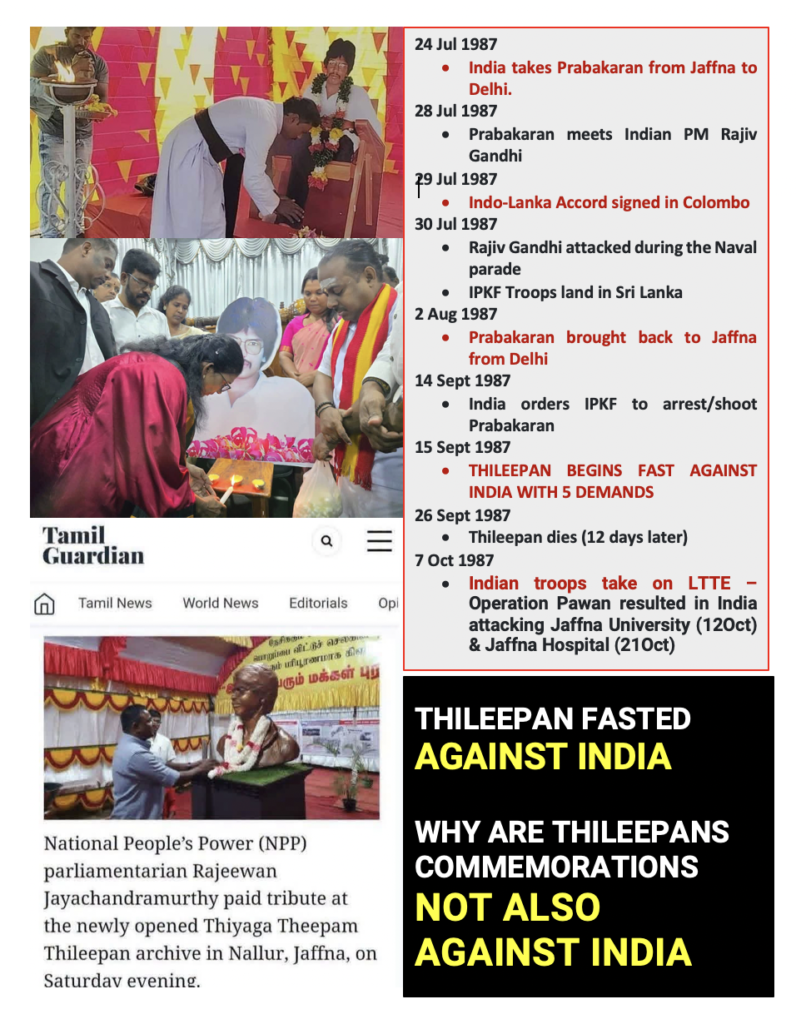
A HUNGER STRIKE DOES NOT ERASE A HISTORY OF VIOLENCE
A bronze statue now stands at Nallur. Flowers are being laid. Commemorations are being held. Schoolchildren in uniform and younger generations are being exposed to a carefully reconstructed memory of Thileepan as a symbol of non-violence and sacrifice. The new narrative attempts to view his hunger strike as an act of ahimsa, even drawing comparisons with Mahatma Gandhi. Several accounts claim him to have been a cancer patient with numbered days. Did the LTTE aware of this, use the hunger strike as a PR stunt? The manner he was wriggling on the stage showed a man in pain not one committed to a death fast for a separatist cause.
No flowers No commemorations can hide another important question.
WAS THILEEPAN REALLY A NON-VIOLENT MAN?
The answer cannot be obtained by looking only at the final 12 days of his life.
One of the most important sources is Tamil own literature.
The Broken Palmyrah, the account produced by the University Teachers for Human Rights (Jaffna) states unequivocally: Thileepan was “certainly not a non-violent man.”
The same account records that:
On 2 July 1987 — just 75 days before his hunger strike
— Thileepan took part in a “lamp-post killing” at Urumpirai junction.
https://gunasekare.github.io/mirrors/uthr.org/BP/volume1/Chapter9.htm?
(incidentally – this killing methodology became a hallmark of the 1980s JVP)
This is not a claim invented in 2026 or a claim by Sinhalese or the Sri Lanka Armed Forces.
https://www.facebook.com/share/v/1E88344PEm/ – where is the action by the Education Minister/Ministry on school children in uniform commemorating terrorists.
The chronology matters.
2 July 1987
Participation in the lamp-post killing recorded by The Broken Palmyrah.
↓
15 September 1987
Thileepan begins his hunger strike.
↓
26 September 1987
Thileepan dies after 12 days without food or water.
Can a man involved in a killing in July suddenly become the embodiment of Gandhian non-violence in September?
The Broken Palmyrah provides the answer.
Thileepan “had not suddenly changed to non-violence.”
There has to be a reason to trigger a death fast.
Not many knew about the cancer though the story was circulating.
1980s did not have social media so naturally nothing went viral.
WHAT EXACTLY WAS THILEEPAN FASTING FOR?
The question becomes even clearer when we examine the demands attached to Thileepan’s fast.
A September 18, 2026 Sinhalanet article reproduces the five demands attributed to Thileepan after the Indo-Lanka Accord.
https://www.sinhalanet.net/why-is-thileepan-who-took-terrorism-made-a-hero-in-nallur
They were not simply personal or spiritual demands.
They were political demands directed at the Indian Government and concerned the implementation of the Indo-Lanka arrangements.
The 5 demands:
- withdrawal of Sri Lankan security forces from Tamil areas;
- a halt to what the LTTE described as Sinhala colonisation until an interim administration was established;
- a halt to the establishment of new police stations and camps in the North-East;
- release of political prisoners held under the Prevention of Terrorism Act; and
- withdrawal of Army and Police battalions from schools in Tamil areas and the return of weapons issued to Home Guards under Indian supervision.
Thileepan was not fasting as a CIVILIAN.
He was the LTTE political leader in Jaffna, and the demands were made during the rapidly deteriorating relationship between the LTTE and India following the Indo-Lanka Accord.
The same Sinhalanet account reproduces a statement attributed to Thileepan on 20 September 1987, five days into his fast:
“In a few more days I will die… But with my death, thousands of freedom fighters who fight for your rights will be born…”
That statement is important because it shows how Thileepan himself presented the meaning of his impending death. This was not simply a private act of personal sacrifice.
It was presented as a political act intended to produce a wider mobilisation.
Sinhalanet also makes a further claim — that Thileepan was suffering from severe cancer and that Prabhakaran used him during his final days.
Did Thileepan’s declining physical condition play a major role in the decision to conduct the fast?
Whether Thileepan chose to fast because of his cancer or whether Prabakaran ordered him to fast because he did not have many days to live is as important as realizing that the fast had a political objective, Thileepan was a LTTE leader and the demands placed at the fast was against India and not the Sri Lankan Govt.
THE FAST WAS A POLITICAL THEATRE
The American Institute for Sri Lankan Studies’ teaching material on the 1987 hunger strike describes the episode as a carefully staged act of political theatre forming part of the Tigers’ propaganda machine.
THE FAST AGAINST INDIA
In his later memoir, published in 2007, Lt. Gen. Harkirat Singh alleged that on the night of 14/15 September 1987, J.N. Dixit instructed him to arrest or shoot Prabhakaran if Prabhakaran came to the planned meeting concerning the Interim Administration.
15th September Thileepan begins fast.
The dates are important.
Present commentators are ignorant of the historical facts & timelines or conveniently omit them from new narratives.
History is more complicated.
Thus, Thileepan was not an independent Gandhian activist standing outside the LTTE.
He was the LTTE political leader in Jaffna – shortly before his death.
He was part of an armed organisation.
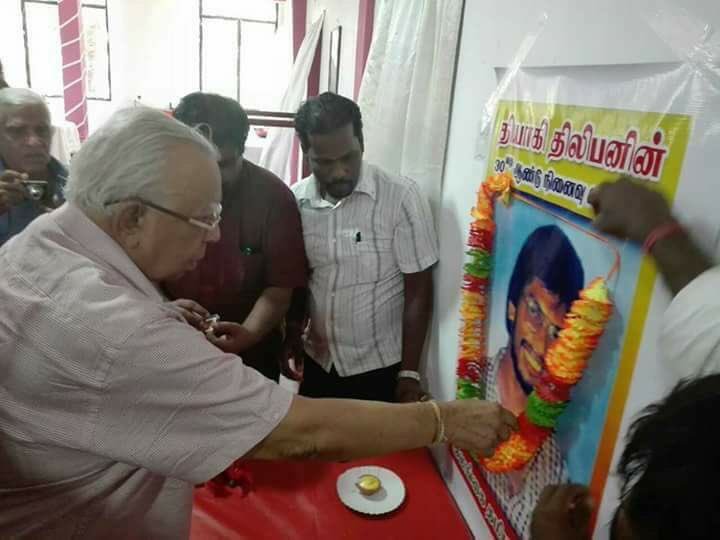
https://www.tamilguardian.com/node/937386
– 2017 TNA leader pays tribute to Lt. Col. Thileepan
“The sacrifices made by LTTE leader Thileepan, other combatants and Tamil people have laid a strong foundation for the present peace talks.”
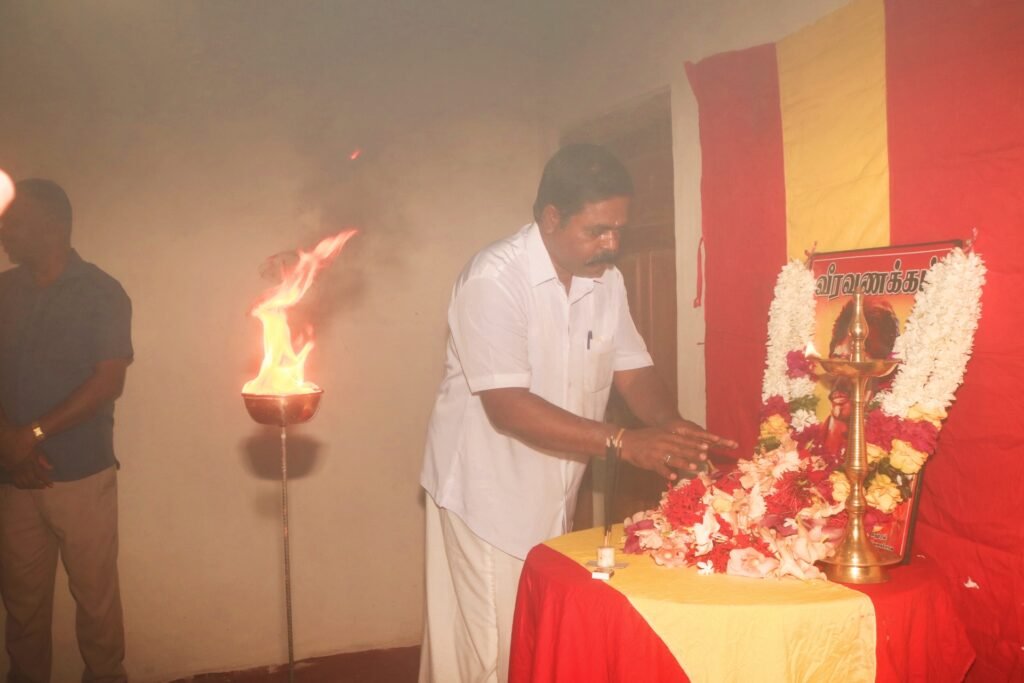
In Kilinochchi, a memorial was held by the TNA MP Sivagnanam Shritharan
Thileepan commemorated in Tamil homeland despite Sri Lankan crackdown – 2021
https://www.tamilguardian.com/node/946503
Tamil Nadu commemorates Lt Col Thileepan
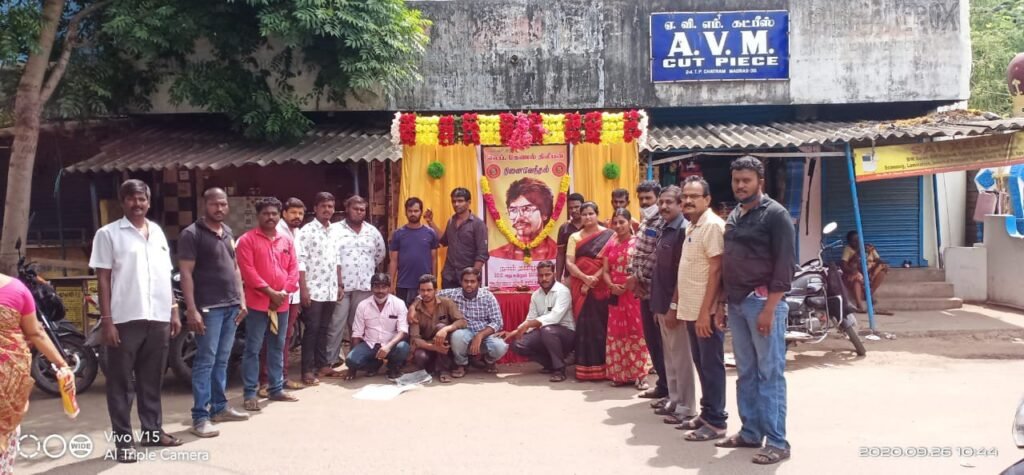
https://www.tamilguardian.com/content/tamil-nadu-commemorates-lt-col-thileepan
THE 2026 THILEEPAN STATUE
In September 2026, a newly installed bronze statue of Thileepan became the centre of commemorations at Nallur.
People were seen laying garlands and scattering flowers before the statue.
The ceremony began at approximately the same time he began his hunger strike in 1987.
The current commemoration explicitly describes his fast as an “act of ahimsa.”
Though LTTE is banned – it took the police 4 days to take action.
Thileepan — Sri Lankan court restrictions
2018 — Jaffna: Police sought ban → Court rejected it; commemoration allowed.
2020 — Jaffna, Batticaloa, Sammanthurai, Point Pedro: Court restrictions/bans.
2021 — Jaffna & Mullaitivu: Court bans.
2023 — Colombo & Trincomalee: Court bans.
2023 — Vavuniya: Court rejects police request for ban.
2026 — Nallur: Commemoration proceeds. Why did the Police not take prior action.
THE QUESTION FOR THE CHILDREN
When children are brought to place flowers before a statue, what are they being told?
Are they being told:
“This man undertook a hunger strike against India and died”?
Or are they being taught:
“This was a man of non-violence, comparable to Gandhi”?
If it is the latter, then they deserve to know what happened 75 days before that hunger strike.
They deserve to know what The Broken Palmyrah recorded.
They deserve to know that the same Jaffna-based historical source which documents the events surrounding his final sacrifice states that Thileepan was “certainly not a non-violent man” and records his participation in a “lamp-post killing” at Urumpirai on 2 July 1987.
A STATUE CANNOT CHANGE HISTORY.
FLOWERS CANNOT ERASE HISTORY.
A HUNGER STRIKE CANNOT ERASE WHAT CAME BEFORE IT.
If Thileepan is to be remembered, let him be remembered with the whole record.
Not only the edited version.
Not only the romanticised version.
Not only the political narrative built around his final 12 days.
YOU NOW KNOW THE HISTORY.
You know Thileepan was an LTTE political leader.
You know what The Broken Palmyrah recorded about his involvement in a killing.
You know the fast was a political confrontation with India.
So when you lay flowers before his statue —
YOU KNOW WHOM YOU ARE HONOURING
YOU ARE ALSO GOING AGAINST INDIA
IF YOU KNOW HE WAS AN LTTE TERRORIST — WHY ARE YOU COMMEMORATING A TERRORIST?
Shenali D Waduge