Sinhala Buddhists Arise: You are the Real Minority tasked to preserve the Majority Civilizational Heritage
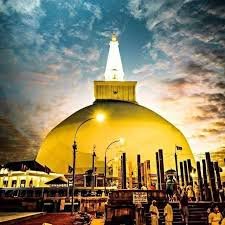
Sinhalese have been falsely made to believe and be content that they are the “majority.” They have been expected to think, speak, and behave accordingly. This illusion has lulled them into passivity, leaving the real threats in a globalized world unchallenged. It is time to break this illusion. Many may claim that being the “majority” gives security, but globally, Sinhalese are tiny in number: 17 million, geographically confined, with no second homeland, and no international voice advocating for their survival. Majority in name is not protection in fact. Numbers alone do not secure civilization; cultural continuity and defense have always required active stewardship, which only the Sinhalese can provide here.
Beyond the shores of Sri Lanka, the Sinhalese are the smallest, most geographically confined civilization in the world.
- 17 million Sinhalese
- 90 million Tamils
- 4 billion Muslims
Numbers and global networks matter.
While others have multiple homelands and billions of kin globally, the Sinhalese exist only here. Their civilization has no external protector — making them the real minority in the world.
Who is the real minority?
The Sinhalese speak one language, live on one island, have no second homeland, no external protector, and no global force to preserve their civilization.
The Sinhalese have only themselves.
These are facts that cannot be ignored.
Unlike traditions and languages that also exist across multiple homelands, the Sinhalese language, culture, and Buddhist civilizational identity are explicitly grounded in Sri Lanka.
Let us ask and history will answer:
- Which civilization planned and built the ancient irrigation networksof Anuradhapura and Polonnaruwa that still function today?
- Who established and sustained the continuous kingdomsof Anuradhapura, Polonnaruwa, and Kandy?
- Which language is recorded in the earliest inscriptionsacross the island, forming the foundation of administration, culture, and identity?
- Who built and protected the great Buddhist monumentssuch as Ruwanwelisaya, Jetavanaramaya, and Sri Dalada Maligawa?
- Which governance principles guided the rulersof this island for centuries, rooted in Buddhist philosophy and ethical statecraft?
- Which community defended, preserved, and sustained these systemsthrough invasions, internal conflicts, and colonial disruption?
- Where else in the world does this language, script, and civilizational frameworkexist outside this island?
Contributions of later arrivals do not replace the work of the founders.
Stewardship belongs to those who created and preserved this civilization — the Sinhalese.
Acknowledging contributions does not grant moral or civilizational ownership — stewardship remains with those who built and preserved this heritage.
This is not a claim to power — it is a claim to responsibility, a responsibility carried for centuries with pride and sacrifice.
A CLEAR TRUTH: SETTLERS ARE NOT FOUNDERS
Many communities came to this island later — as settlers, traders, or migrants.
Some of them made Sri Lanka their home over the centuries.
This is a historical fact — but it does not give them the right to dictate, claim, partition, or erase what was handed down by the Sinhalese. True ownership and moral responsibility remain with those who built and defended the island.
Modern political constructs and international agendas, temporary political agreements, or external pressure cannot transfer centuries of inherited responsibility.
Have you ever seen those who demand parts of Sri Lanka, or seek to claim pieces of it, come forward to defend the Nation — in Sri Lanka or abroad?
This alone reveals the true character of false owners.
The Sinhalese originated, built, and preserved this civilization.
Others may reside here as equal citizens, but the civilizational stewardship of what was historically built remains with the Sinhalese while peaceful coexistence continues without altering the core civilizational inheritance they are duty-bound to preserve.
Peace coexistence cannot redefine civilizational heritage or compromise the civilizational historical truth.
No community can claim ownership, no one can dismantle, partition, or erase what was handed down to the Sinhalese, because the responsibility and rights of stewardship belong to those who built it and that is why in times of trouble it is they who come forward to defend their Nation.
SRI LANKA IS NOT JUST A COUNTRY — IT IS THE SINHALA CIVILIZATION
This island is the only place where the Sinhalese created a civilization — a civilization they are tasked to preserve and pass forward.
Other communities may reside here peacefully, but the civilizational inheritance belongs to the Sinhalese. Respecting this does not deny residence rights; it acknowledges historical reality and stewardship responsibility.
- If the Sinhala languagedeclines here, it declines everywhere.
- If Sinhala cultureweakens here, it disappears globally.
- If Buddhist civilizational heritageerodes here, it is lost permanently.
- The Sinhalese must learn other languages and be proficient in them but their mother tongue or motherland cannot be sacrificed.
There is no backup.
For over 2,500 years, this island sustained:
- A Sinhala linguistic tradition
- A civilization guided by Buddhist principles in governance
- Engineering, irrigation, and social systemsthat still command global respect
None of this was gifted. It was built, defended, and preserved by the Sinhalese.
Everything that defines the Sinhalese civilization predates colonial arrivals by over 2,000 years — irrigation, monuments, inscriptions, governance systems.
Colonial presence did not create it; they temporarily overlaid it.
WHEN THE NATION WAS TESTED, WHO STOOD?
At every decisive moment in history:
- Invasions that sought control of the island
- Colonial powers dismantling indigenous systems
- Threats to sovereignty and territorial integrity
- Attempts to erase socio-religious and cultural values
It was the Sinhala-Buddhist foundation that rose, absorbed the pressure, and ensured the island did not fracture.
Only the Sinhalese consistently defended the island when its very civilization was under threat. Those who demand parts or autonomy have never sacrificed to protect it, revealing who the true custodians are.
They sacrificed life and limb, defended heritage, and ensured continuity.
History remembers them — and their descendants inherit that duty.
It runs through their veins, in historical memory, cultural duty, and inherited responsibility.
TODAY, THE BATTLE IS DIFFERENT — BUT MORE DANGEROUS
There are no invading armies. Instead, there is:
- Erosion of historical truth
- Dilution of cultural identity
- Subtle pressure to detach from heritage
- Narratives making pride appear as guilt
The minds of people are the battlefield. Psychological manipulation is the weapon.
Pride in one’s own heritage is not racism or extremism. It is self-preservation of a civilization.
Civilizations everywhere defend their heritage; the Sinhalese are no different. Labeling it ‘racism’ is a distortion of global norms
Other communities defend their civilizations globally — why should the Sinhalese apologize for theirs?
Sinhalese are being conditioned to believe:
- That asserting identity is “racism”
- That protecting heritage is “extremism”
- That being proud of civilization is shameful
- That progress began only with European colonizers, ignoring ancient achievements
- Mesmerized by terms like “reconciliation” “multiculturalism” all subtle manoevers and interim ploys to erase the Sinhala Buddhist civilization incrementally.
No strong civilization survives by apologizing for itself.
REJECT THE FALSE CHOICE
This is not a choice between pride or fairness.
This is not a choice between protecting identity or respecting others.
That is a false narrative.
A nation can be shared, but a civilization must be protected by those who inherit it.
Legal equality does not erase historical truth. The Sinhalese inherited this civilization; responsibility cannot be transferred by modern political constructs or international pressure.
International law and modern policy cannot rewrite centuries of civilizational stewardship or erase the historical record.
THE TRUTH CANNOT BE DENIED
Every other community in Sri Lanka has global allies, numbers, and international voices.
Integration and peaceful coexistence do not erase the fact that civilizational survival rests entirely on the Sinhalese.
No global network or ally will preserve the Sinhalese language, Buddhist heritage, or ancient monuments — only those who created them can.
If the Sinhalese do not defend their civilization, no one else will.
THIS IS THE TURNING POINT
The question is no longer whether the Sinhalese are a majority.
The real question is:
Will Sinhalese act like a passive majority — or rise as the custodians of a 2,500-year-old civilization?
Do not be misled.
Do not be silenced.
Do not be made to feel small about who you are.
Everything that defines the Sinhalese — their language, heritage, and civilization — exists only here.
And that means:
Its survival depends entirely on you.
Shenali D Waduge