INDIA’S SRI LANKA POLICY MAY BE CREATING THE VERY INSTABILITY INDIA CLAIMS IT NEEDS TO PREVENT
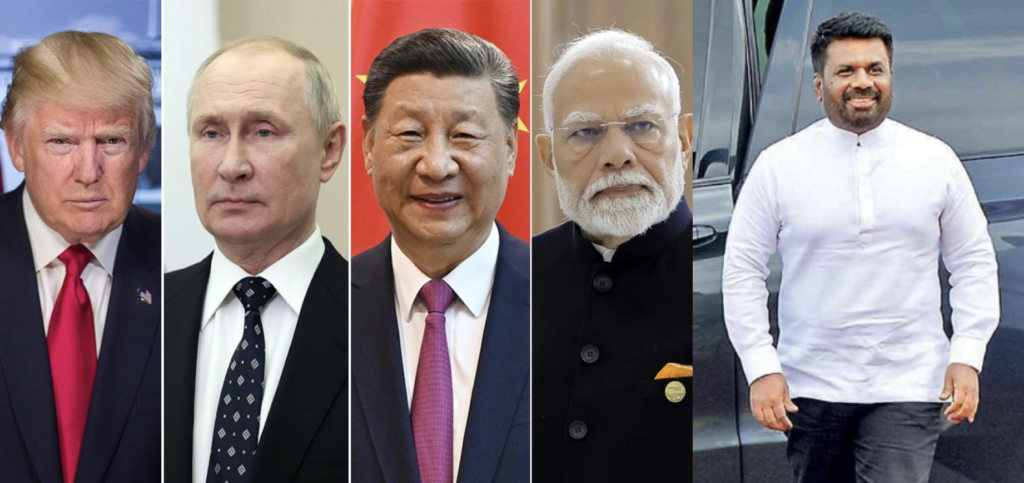
Before India seeks greater security influence over Sri Lanka, it should ask whether the way it exercises that influence is creating the very vulnerability it fears. India is a major power. It has nuclear capabilities, military power, India is a rising economic power & a major Indo-Pacific player. Sri Lanka has none though its armed forces became the only national army to militarily defeat a terrorist movement where India’s armed forces themselves failed. India’s Defence Minister Rajnath Singh is in Sri Lanka this week, with defence, maritime security and the wider bilateral partnership high on the agenda. India describes Sri Lanka as a close friend and repeatedly speaks of regional security and mutually beneficial cooperation. What if some of the policies India pursues in the name of securing Sri Lanka are actually contributing to the insecurity, suspicion and political polarisation that India says it wants to prevent? India must consider this question seriously.
INDIA IS POWERFUL — BUT POWER IS NOT INVULNERABILITY
India can care about what happens in Sri Lanka.
Sri Lanka sits in the Indian Ocean, close to India’s southern coast and astride important maritime routes.
India’s concern surround:
- China
- Terrorism (India cannot forget its training of Sri Lanka’s militants)
- Narcotics (most of which come to Sri Lanka from India)
- Illegal trafficking (most are steered through India)
- Maritime security.
- Foreign military access (India signing QUAD paved way for increasing US presence in Sri Lanka)
- Intelligence activity (this too was an outcome of India signing QUAD)
- Energy security.
The security of India’s sea lanes.
Sri Lanka does not dispute India’s right to protect its own national security.
But there is a difference between protecting legitimate security interests and turning a sovereign neighbour into an extension of another country’s security architecture.
That distinction has to be clearly understood by both India & Sri Lanka.
Because India is not simply strengthening bilateral relations with Sri Lanka.
India is using bilateral relations to expand its wider defence and maritime partnerships.
India’s own strategic literature describes an intensification of maritime security cooperation with Quad members and other Indo-Pacific partners, including exercises, intelligence-sharing, technology cooperation and maritime-domain awareness.
At what point does strategic multi-alignment become strategic exposure?
INDIA IS SECURING ITS NEIGHBOURHOOD IN A WAY THAT MAKES THE NEIGHBOURHOOD LESS SECURE
An important paradox for India to re-examine.
When India becomes concerned that Sri Lanka could fall under the influence of another power, India’s natural response is to deepen its own presence.
This results in:
- More defence cooperation.
- More maritime cooperation.
- More connectivity.
- More economic engagement.
- More strategic access.
- More security coordination.
From India’s perspective, this may appear logical.
But what does it look like from Colombo’s perspective?
If a smaller sovereign country begins to feel that it is being drawn into the strategic calculations of a much larger power, it will naturally begin looking for balance.
Not necessarily because it wants to oppose India.
But because sovereign states want to protect themselves against excessive dependence.
That is geopolitics.
And this is where India needs to be careful.
The attempt to prevent strategic dependence on China can itself produce Sri Lankan resistance to dependence on India.
And resistance creates diversification.
And diversification creates space for other powers.
The result can be the exact opposite of what India intended.
The manner India’s decision makers land in Sri Lanka at regular intervals does not help India’s cause at all neither would any secret rendevous’ either.
THE CHINA PARADOX
India sees Chinese involvement in Sri Lanka as a strategic concern.
Why must Sri Lanka choose its friends – more importantly why must Sri Lanka choose the friends India wants?
Let us remind India – once upon a time India was no friend of the US & India forced Sri Lanka not to allow US presence in Sri Lanka. Today, India & US are signing strategic pacts.
Sri Lanka’s national interest is not identical to India’s national interest.
Sri Lanka has to survive among all of them as a sovereign state. Sri Lanka must be given that space.
If India attempts to eliminate that space, Sri Lanka will inevitably seek it elsewhere.
That is not anti-India behaviour. It is the instinct of sovereignty.
THE ETHNIC QUESTION
India has legitimate cultural, historical and people-to-people connections with Sri Lankan Tamils and numerous other communities – Bohras, Sindhis, Malayalis etc.
But India cannot support these communities and turn their identity into a leverage for India.
Sri Lanka has experience.
India having trained Sri Lankan Tamil militants secretly in India, forcing Sri Lanka to sign the Indo-Lanka Accord, sending Indian army, forcing amendment of Sri Lanka’s Constitution (13tha), allowing Tamil Nadu to become a logistics hub for Sri Lankan militants, began using the “Tamil” card for political advantage.
Eventually over time, Tamils in Sri Lanka themselves began to feel the bullying nature of India.
India should understand the danger of repeating the same strategic psychology as it attempts to move from Tamils to “Malayali” and to promote a new narrative in the form of a
“ Chola civilization”.
When a majority population sees an external power using minorities to influence sovereign political structure the outcome is the opposite of what India aspires. Does such a scenario serve India’s security interest?
INDIA SHOULD ASK ITSELF ONE UNCOMFORTABLE QUESTION
Imagine another major power telling India – that they want greater access to their community in India.
Would India accept that?
Would India regard it as legitimate?
Wouldn’t India immediately ask:
Who gave you the right to interfere in India’s internal political arrangements?
If so, India should understand why Sri Lanka asks the same question. Successive Govts may have no spine to do so, but the ordinary people are not hesitant to ask.
A principle of sovereignty cannot apply differently according to the size of the country.
If it is unacceptable when applied to India, it should be unacceptable when applied to Sri Lanka.
THE PRECEDENT INDIA MAY BE CREATING
If a powerful country establishes the principle that it may intervene in a neighbouring country’s domestic political arrangements because a particular ethnic or religious community has historical links with that powerful country, that principle does not stop at one border.
It becomes a precedent.
India is one of the world’s most diverse countries. This leaves scope for issues related to language, religion, ethnicity, regional identity to become internationalized.
India must protect the principle of sovereign equality.
Because the doctrine India uses against a smaller country today can become a doctrine used against India tomorrow.
INDIA’S REAL VULNERABILITY IS NOT SIZE
India is vulnerable because it is becoming strategically important on too many fronts at once.
India is balancing China.
Managing Pakistan.
Maintaining its relationship with Russia.
Deepening its relationship with the United States.
Participating in the Quad.
Working through BRICS.
Remaining within the SCO.
Building ties with ASEAN.
Seeking greater influence in South Asia.
Increasing its Indian Ocean role.
Protecting its energy supplies.
Expanding its defence industry.
Managing terrorism and internal security.
And simultaneously pursuing economic transformation.
This is an enormous strategic burden.
India’s own strategic analysts recognise that its post-Galwan maritime balancing has required deeper cooperation with Quad and other partners while still attempting to preserve strategic autonomy.
The question is whether India can remain strategically autonomous while accumulating an ever-growing number of strategic commitments.
INDIA’S ENERGY VULNERABILITY SHOULD BE A WARNING
India imports around 89% of its crude-oil requirements, according to recent analysis, and around 40% of its crude imports have been moving through the Strait of Hormuz.
The current disruption in the Middle East has already demonstrated the vulnerability.
Hormuz traffic has slowed dramatically amid the current conflict.
India has been forced to diversify.
India cannot control every route upon which its power depends.
The same principle applies to maritime security.
India may possess a powerful navy.
But it cannot move the Indian Ocean.
It cannot move the Strait of Hormuz.
It cannot move the Bab el-Mandeb.
It cannot move the Malacca Strait.
And it cannot move Sri Lanka.
THIS IS WHY SRI LANKA MATTERS
India’s geography gives it enormous strategic advantages.
Sri Lanka sits at the southern edge of the Indian subcontinent, in the middle of the Indian Ocean.
India cannot change that.
How can India ensure that Sri Lanka never has a reason to become hostile to India?
INDIA’S QUAD CALCULATION CONTAINS ANOTHER RISK
India is not a treaty ally of the United States.
India has deliberately avoided formal alliance dependence while deepening defence and maritime cooperation with the United States, Japan and Australia.
But Indian strategists themselves have identified a risk:
What happens if the strategic calculations of India’s partners change?
The US may change administrations.
American priorities may change.
US-China policy may change.
Russia may change its relationship with China.
Europe may change its Indo-Pacific priorities.
The Middle East may change.
ASEAN may change.
And India’s own leadership will eventually change.
A recent analysis of the post-Modi question notes that by the 2029 election Modi will be 78, while the identity and political direction of his eventual successor remain uncertain.
India cannot assume that today’s strategic environment will remain tomorrow’s strategic environment?
MODI WILL LEAVE. GEOGRAPHY WILL NOT.
Narendra Modi has given India extraordinary political visibility and strategic confidence.
But Modi is not India.
He will eventually leave office.
The BJP will eventually confront succession.
The next government may have different priorities.
The next leadership may interpret the United States differently.
Russia differently.
China differently.
The Quad differently.
Sri Lanka differently.
And this is precisely why Sri Lanka must be cautious about entering into arrangements that have consequences extending for decades.
Governments change. Strategic agreements remain.
Leaders change. Geography remains.
Alliances change. National interests remain.
NOW THE QUESTION INDIA SHOULD REALLY FEAR
India worries about China gaining strategic influence in Sri Lanka.
But suppose India’s own policies make Sri Lankan people increasingly believe that India wants strategic control over their country.
What happens then?
The Sri Lankan public has always been suspicious of India.
Political forces begin mobilising around sovereignty.
India becomes the subject of domestic political resistance.
Other powers become attractive precisely because they offer an alternative.
India responds by forcing more commitments from Sri Lanka.
Sri Lankan suspicion grows further. Anger towards India only increases.
And the cycle continues.
That is a security dilemma.
And a security dilemma can create instability without either side actually wanting war.
Yet policies designed by both sides in the name of security can produce greater insecurity for both.
Let India not forget the power of the masses in a Nation that is antagonistic towards India.
DO NOT TURN MINORITIES INTO GEOPOLITICAL INSTRUMENTS
This is where India needs to think beyond today’s political calculations.
A Tamil Sri Lankan should not have to choose between:
being Sri Lankan
and
having a relationship with India.
A Muslim Sri Lankan should not have to choose between:
being Sri Lankan
and
having international religious connections.
A Christian Sri Lankan should not have to choose between:
being Sri Lankan
and
having relationships with international Christian institutions.
Sri Lanka’s communities must belong first to Sri Lanka.
It is the foundation of a functioning sovereign state.
And India, a country of diversity, should understand this better than most.
THE CHURCH, EXTREMISM AND FOREIGN INFLUENCE — THE QUESTION INDIA SHOULD ASK
Sri Lanka has experienced both religious extremism and the growing influence of transnational institutions.
Who is operating across borders, through which institutions, with what funding, with what political objectives and with what influence over local communities?
- religious organisations
- NGOs
- diaspora organisations
- advocacy networks
- international development agencies
- political organisations
- security networks
- and extremist financing structures.
India itself faces the same problem.
If India wants to understand foreign influence in Sri Lanka, it should also recognise that India is not immune to foreign influence.
And if India establishes mechanisms to protect itself from external interference, it should understand why Sri Lanka needs the same sovereign right even protecting itself from India.
INDIA’S GREAT-POWER MOMENT COULD BECOME ITS GREAT-POWER TRAP
India has reached a point where almost every major power wants something from it.
- Washington wants India as an Indo-Pacific partner.
- Moscow wants to preserve India as a strategic and economic partner.
- China must account for India as its principal Asian competitor.
- Japan wants a stronger India.
- Europe wants a stronger India.
- ASEAN wants India engaged.
- The Global South wants India represented.
- South Asia expects Indian leadership.
- And the Indian Ocean increasingly features in India’s strategic planning.
It creates a new problem.
Everyone’s strategic calculation can eventually become India’s strategic problem.
If Washington and Beijing clash, India is affected.
If Russia and the West clash, India is affected.
If the Middle East erupts, India is affected.
If shipping routes are disrupted, India is affected.
If Pakistan destabilises, India is affected.
If China expands maritime activity, India is affected.
If Sri Lanka becomes politically unstable, India is affected.
SO WHAT SHOULD INDIA DO?
India should change the method.
Cooperate without controlling.
Assist without creating dependency.
Protect security interests without redesigning another country’s internal politics.
Engage minorities without turning them into geopolitical instruments.
Work with Sri Lanka’s government rather than around it.
Respect Sri Lanka’s strategic autonomy.
Allow Sri Lanka to have relations with India, China, Russia, Japan, the United States and others without interpreting every relationship as an Indian security threat.
Build a Sri Lanka that trusts India rather than a Sri Lanka that fears and hates India.
Because the difference is enormous.
INDIA DOES NOT NEED A DEPENDENT SRI LANKA
India does not need a weak Sri Lanka.
It does not need a divided Sri Lanka.
It does not need a frightened Sri Lanka.
It does not need a Sri Lanka permanently balancing against India.
India needs a Sri Lanka that is:
stable
sovereign
economically viable
internally cohesive
and confident enough to cooperate with India without becoming subordinate to India.
That Sri Lanka is actually India’s strongest strategic asset.
Because a country that trusts India has less reason to invite competing powers.
A country that feels threatened by India will search for alternatives.
India is the cause of its own problems.
BEFORE INDIA SPEAKS OF SECURITY, INDIA SHOULD THINK OF SOVEREIGNTY
India has every right to protect India.
Sri Lanka has exactly the same right to protect Sri Lanka.
India has the right to choose its partnerships.
Sri Lanka has the right to choose its partnerships.
India has the right to maintain relations with the United States, Russia, China, Japan, Europe and ASEAN.
Sri Lanka has that same sovereign right.
India cannot ask the world to respect India’s strategic autonomy while expecting Sri Lanka to surrender its own.
Strategic autonomy cannot be a privilege reserved for great powers.
It must also belong to smaller sovereign states too
INDIA’S REAL SECURITY ASSET IN SRI LANKA
India may believe that its greatest security asset in Sri Lanka is:
access.
influence.
defence cooperation.
maritime surveillance.
But India’s greatest long-term security asset in Sri Lanka is something much simpler.
Trust.
Because access can be cancelled.
Agreements can be renegotiated.
Governments can change.
Defence relationships can shift.
Foreign powers can come and go.
But a neighbour that genuinely trusts you is much harder for another power to turn against you.
MODI WILL GO.
INDIA WILL REMAIN. SRI LANKA WILL REMAIN.
That is why India must think beyond the present moment.
Beyond Modi.
Beyond Rajnath Singh.
Beyond today’s government.
Beyond today’s China policy.
Beyond today’s American partnership.
Beyond today’s Quad.
Beyond today’s Indian Ocean strategy.
Because the decisions made today will be inherited by governments that neither India nor Sri Lanka can yet predict.
And the question those future generations may ask is very simple:
Did India use its power to build trust in its neighbourhood — or did it use its power to make its neighbours afraid of its intentions?
Resistance creates opportunities for India’s competitors.
INDIA, LOOK AT THE UNINTENDED CONSEQUENCE
India does not need to weaken Sri Lanka to secure itself.
It does not need to manipulate Sri Lanka’s internal divisions.
It does not need to make Sri Lanka choose between India and other powers.
It does not need to turn minorities into strategic instruments.
It does not need a Sri Lanka that depends upon India.
India needs a Sri Lanka that does not fear or hate India.
Because there is a strategic paradox India should not ignore:
The more India tries to secure Sri Lanka through pressure, the more it may encourage Sri Lanka to seek security from elsewhere.
If India’s policies begin creating the very instability India says it is trying to prevent, who is actually making India less secure?
India’s greatest strategic danger may not be that Sri Lanka chooses China. It may be that Sri Lanka decides it must remain strategically independent of everyone — including India.
The strategic objective for India should therefore not be to prevent Sri Lanka from having alternatives. It should be to make India the neighbour Sri Lanka does not need to balance against.
ShenalI D Waduge