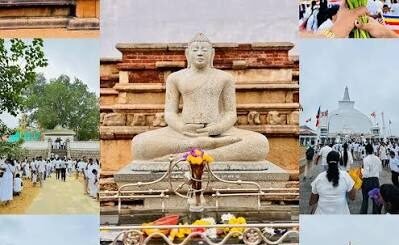
INTERNATIONAL APPEAL: SAVE ANURADHAPURA – WITHDRAW THE PROPOSED DEVELOPMENT PROJECT THAT THREATENS TO COMMERCIALISE A SACRED BUDDHIST HERITAGE CITY
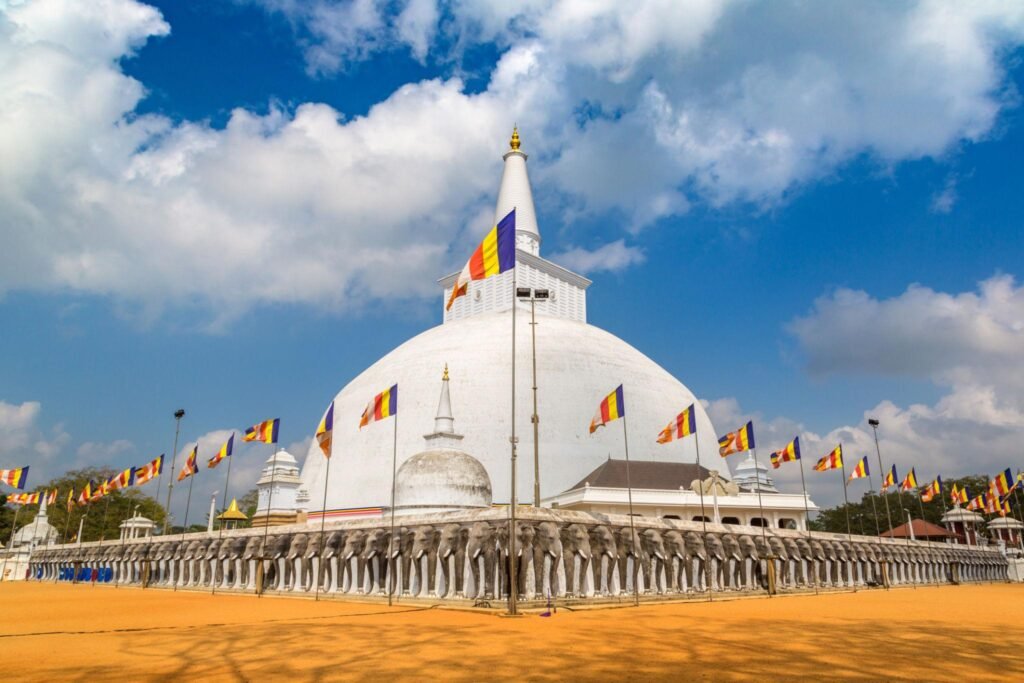
PROTECT AN ANCIENT BUDDHIST CIVILISATION. DO NOT TURN ITS SACRED LANDSCAPE INTO A COMMERCIAL DEVELOPMENT ZONE.
Anuradhapura is not an ordinary city. It is one of the world’s great centres of Buddhist civilisation, with over two millennia of history, sacred monuments, ancient monasteries, stupas, inscriptions, reservoirs and a living Buddhist tradition.
It is a sacred pilgrimage destination and an irreplaceable archaeological heritage landscape. Its significance lies not merely in individual monuments, but in the historic environment, religious continuity and cultural identity that connect them.
Anuradhapura is not simply a collection of ancient buildings to be maintained while the surrounding land is reorganised for commercial purposes.
Its sacred landscape, historical setting, archaeological environment, religious traditions and continuity of Buddhist worship are themselves part of the heritage that must be protected.
Yet the proposed Anuradhapura Sacred Area Development Plan, published under Gazette Extraordinary No. 2477/44 of 27 February 2026, sets out a wider development framework that includes:
- Commercial stalls, retail outlets, restaurants and guest houses.
- Tourist-oriented facilities and an eco-tourism zone at Ranmasu Uyana.
- Vehicle parks, road development and internal transport facilities.
- Proposed fencing and physical barriers affecting access to and the setting of sacred locations, including Ruwanweliseya
- Relocation provisions affecting residents in archaeological and sensitive areas.
- A designated economic-development zone.
These are not the essential requirements of archaeological and cultural heritage preservation.
-
WHAT ANURADHAPURA ACTUALLY NEEDS
Anuradhapura requires a dedicated heritage-conservation programme prioritising:
- Protection of all archaeological sites, ancient monuments and undiscovered archaeological remains.
- Conservation of stupas, monasteries, inscriptions, sculptures and historic structures.
- Protection of ancient tanks, reservoirs, canals, waterways and the historic landscape.
- Preservation of the original setting and relationship between sacred monuments.
- Unrestricted and dignified access for Buddhist devotees, pilgrims and the Maha Sangha.
- Clean water, sanitation, waste management, first aid and essential facilities for pilgrims.
- Scientific archaeological research, conservation, monitoring and long-term protection.
- Protection of ancient Buddhist sites, forest monasteries, meditation locations and associated religious traditions.
- Respect for the Maha Sangha, religious institutions and communities connected with the Sacred City.
- Protection of residents and communities whose lives and livelihoods are historically connected with the area.
These are preservation priorities.
Commercial accommodation, retail outlets, tourist parks, economic-development zones and expanded commercial visitor infrastructure are development choices, not prerequisites for protecting an ancient Buddhist civilisation.
-
THE HISTORIC LANDSCAPE IS PART OF THE HERITAGE
Anuradhapura cannot be preserved by protecting individual monuments while transforming the environment around them.
A stupa is not simply a physical structure. A monastery is not merely an archaeological building. A sacred route is not just a road.
The relationship between sacred monuments, monasteries, ancient water systems, historical settlements, religious practices and the surrounding landscape forms an interconnected heritage environment.
Changing that environment can compromise the historical and religious significance of a place even where individual monuments remain physically intact.
The international principles of heritage conservation recognise the importance of authenticity, integrity, setting, use, traditions, spirit and cultural continuity.
The UNESCO World Heritage framework requires the protection of the attributes that express a property’s Outstanding Universal Value.
Any proposed development must not compromise the property’s Outstanding Universal Value
Preserving the stones while changing the sacred character of the landscape is not heritage preservation.
-
THE LEGAL AND CONSTITUTIONAL DUTY TO PROTECT HERITAGE
Sri Lanka already has important legal and constitutional principles supporting the protection of its heritage.
- Sri Lankan Supreme Court – Bulankulama v Secretary, Ministry of Industrial Development (2000), 3 Sri LR 243 – Eppawela Case
In this landmark judgment, the Supreme Court addressed a proposed development project in the Anuradhapura District involving ancient tanks, irrigation channels, archaeological locations, ancient villages and areas near Sri Maha Bodhi and Ruwanweliseya.
The Court recognised the principles of public trust, sustainable development and intergenerational equity and held that an imminent infringement of fundamental rights had been established.
The judgment is directly relevant to the principle that the State cannot treat heritage, resources and the interests of future generations as disposable assets in development arrangements.
- Article 9 of the Sri Lankan Constitution
Article 9 requires the State to give Buddhism the foremost place and makes it the duty of the State to protect and foster the Buddha Sasana while assuring the constitutional rights of other religions.
The Supreme Court’s 2023 constitutional determination on the Ayurveda Bill addresses the wider constitutional scope of the Buddha Sasana, including its religious institutions, the Sangha, temples, practices and associated property.
Anuradhapura is among the most important historic centres of that living Buddhist heritage.
The constitutional duty to protect and foster the Buddha Sasana must be reflected in decisions affecting its sacred places.
- Supreme Court of India – M.C. Mehta v Union of India (Taj Mahal cases)
The Indian Supreme Court intervened to protect the Taj Mahal and its surrounding environment from damaging activities and infrastructure.
Its subsequent orders recognised the need for impact assessments, traffic regulation and conservation of the wider environment around the monument.
The principle is important: protecting a heritage monument requires protecting its surroundings too.
- UNESCO World Heritage Convention and Operational Guidelines
The UNESCO framework recognises authenticity and integrity as essential heritage values.
These include the location and setting of a property, its use and function, traditions, cultural practices, spirit and feeling, and the relationship between its various attributes.
Development must therefore be examined for its impact on the entire heritage environment, not simply the physical condition of individual monuments.
-
WHY WE ARE CONCERNED ABOUT THIS PROPOSED PROJECT?
The proposed planning area reportedly expands from approximately 28 to 38 square kilometres.
The Government has also discussed relocation affecting 331 families.
A proposal involving Indian financial assistance has been prepared. Yet the public must be given the complete project documentation, including maps, budgets, funding arrangements, archaeological assessments, proposed commercial activities and the full list of interventions.
Anuradhapura New Development Plan 2026
The following questions demand answers:
- Why introduce commercial and tourism facilities into a sacred Buddhist heritage landscape?
- Why create an economic-development zone within the expanded planning framework?
- What will happen to archaeological land, ancient water systems, historic routes and the setting of sacred monuments?
- What is the justification for proposed fencing and physical barriers around Ruwanweliseya, and how will their extent and impact on traditional religious access be determined?
- Will these interventions restrict, regulate or otherwise alter the traditional religious use and access of devotees?
- Why are vehicle parks, new roads and commercial infrastructure being prioritised over essential heritage conservation?
- What happens to the 331 families reportedly affected by relocation? What are their rights, compensation arrangements and resettlement provisions?
- Have the Maha Sangha, archaeological experts, heritage conservation specialists and affected communities been properly consulted?
- Has a comprehensive heritage impact assessment been undertaken, including cumulative impacts on the wider sacred landscape?
- Why is financial assistance being directed towards a broad development programme rather than clearly identified and independently assessed heritage conservation needs
The public has a right to know what is being planned, who has approved it, who will implement it, who will benefit and what the long-term consequences will be.
-
OUR DEMAND: WITHDRAW THE ENTIRE PROPOSED PROJECT
- We demand the withdrawal of the entire proposed Anuradhapura Sacred Area Development Project under the present framework.
- No component should proceed under this programme, including commercial facilities, tourist developments, vehicle parks, fencing, road works, relocation or other proposed interventions.
- We are not demanding the abandonment of essential facilities for pilgrims or the maintenance of Anuradhapura.
- We are demanding that these needs be addressed through a separate, transparent and scientifically grounded heritage-conservation programme, developed with the participation of the Maha Sangha, archaeological authorities, heritage specialists and affected communities.
Anuradhapura needs conservation, not commercial redevelopment disguised as preservation.
-
OUR APPEAL TO THE INTERNATIONAL COMMUNITY
We call upon:
UNESCO and the World Heritage Committee
To examine the implications of the proposed interventions for Anuradhapura’s Outstanding Universal Value, authenticity, integrity and historic setting, and to seek clarification from the Sri Lankan Government regarding the proposed planning framework and its heritage impact assessments.
The International Buddhist Community
To stand up for the protection of one of Buddhism’s most sacred historic centres. Anuradhapura is part of the shared inheritance of Buddhists across the world.
India and Other Funding Partners
To ensure that financial assistance does not support interventions that compromise Sri Lanka’s Buddhist heritage. Funding intended for heritage protection should be directed towards genuine archaeological conservation, restoration, research and the protection of sacred sites.
Archaeologists, Historians and Heritage Conservation Experts
To independently examine the proposed interventions, assess their cumulative implications and publicly raise concerns wherever heritage values are at risk.
International Cultural Heritage Organisations
To recognise that the protection of Anuradhapura requires preserving not only its monuments but also the historic landscape, religious continuity and cultural identity that give those monuments their meaning.
The Sri Lankan Government
To withdraw the proposed development project and replace it with a dedicated heritage-conservation programme that respects the Constitution, archaeological laws, international heritage obligations and the wishes of the people connected with the Sacred City.
-
DIVERT THE FUNDS TO ACTUAL HERITAGE PRESERVATION
If the principal objective is genuinely to protect Anuradhapura, the financial resources allocated to this project should be redirected towards:
- Archaeological excavation and protection of undiscovered remains.
- Restoration and structural conservation of ancient monuments.
- Protection of ancient tanks, canals and hydraulic systems.
- Preservation of the sacred landscape and historic settings.
- Scientific documentation and digital mapping of archaeological sites.
- Conservation of inscriptions, sculptures and Buddhist artefacts.
- Sanitation, drinking water, waste management and basic facilities for pilgrims.
- Long-term maintenance, monitoring and protection of sacred locations.
- Establishment of a dedicated Research Centre for Buddha Sasana, its history, institutions and heritage.
Every rupee spent in the name of Anuradhapura should contribute to preserving Anuradhapura.
OUR FINAL MESSAGE
Anuradhapura survived centuries of destruction, invasions and political upheaval.
Its stupas, monasteries, sacred monuments, ancient irrigation systems and religious traditions remain because generations of people protected, restored and transmitted this inheritance.
We have inherited a civilisation. We have not inherited the right to redesign it for commercial convenience.
Governments change. Development policies change. Funding agreements come and go.
But Anuradhapura must remain Anuradhapura.
No government, institution, developer or foreign funding partner should be permitted to compromise its sacred Buddhist identity, archaeological integrity, historic setting or continuity of religious practice.
We owe this heritage not only to those who preserved it before us, but to generations who have yet to be born.
STOP THE PROPOSED DEVELOPMENT PROJECT.
WITHDRAW THE PLAN.
DIVERT THE FUNDS TO ACTUAL CULTURAL AND HERITAGE PRESERVATION.
PROTECT ANURADHAPURA’S SACRED BUDDHIST IDENTITY FOR FUTURE GENERATIONS.
Anuradhapura is not ours to commercialise. It is ours to protect.
Stand with the People of Sri Lanka and Fellow Citizens around the world who value heritage and its preservation.
Shenali D Waduge